
Can Africa trade within itself? The connectivity challenge behind AfCFTA
As AfCFTA enters its implementation phase, stronger cargo connectivity, seamless logistics networks and efficient cross-border movement will drive intra-African trade.
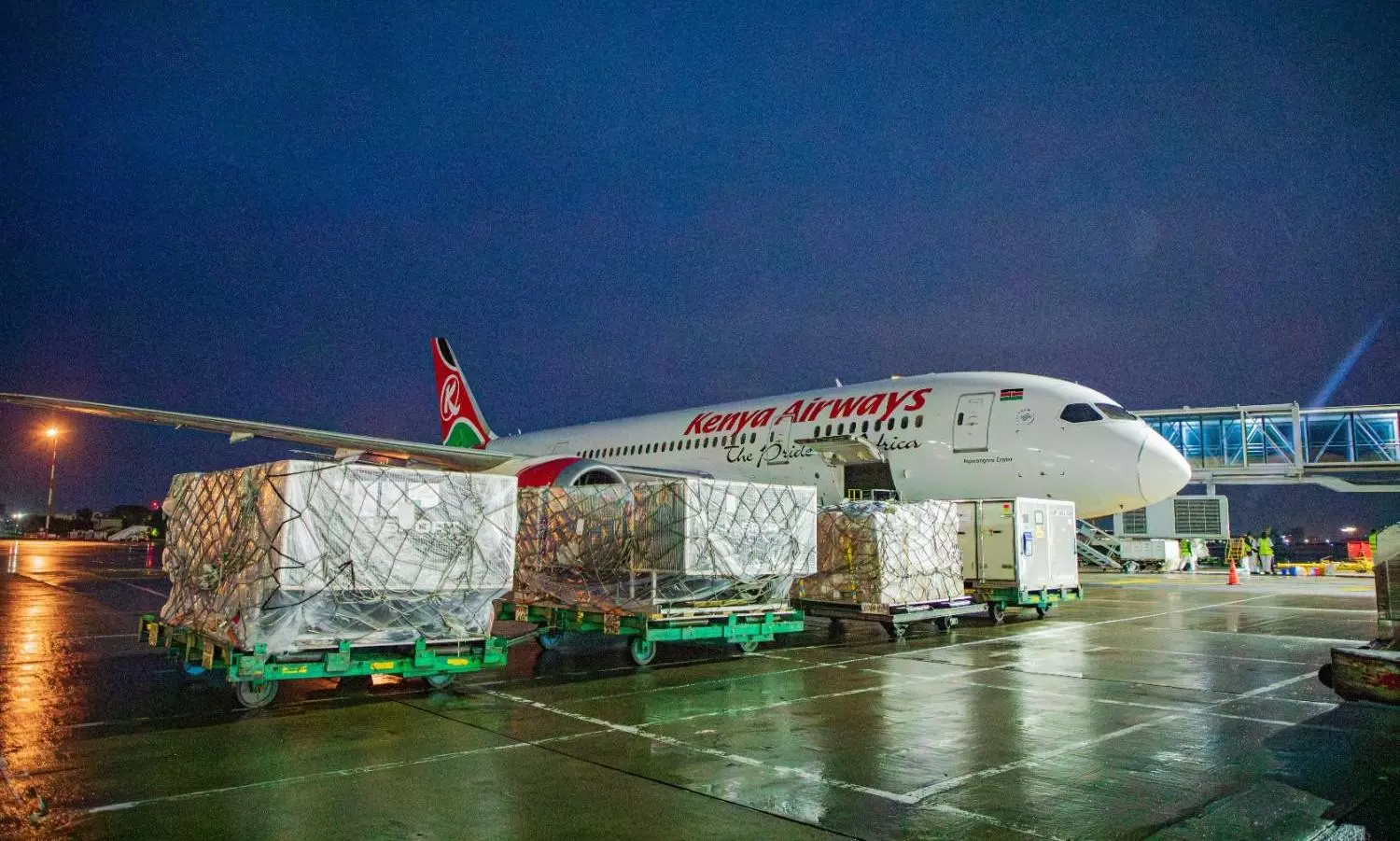
Picture a shipment of medical supplies leaving Nairobi for Lagos. On paper, this is a journey within the same continent, between two of Africa's biggest economies. In practice, that shipment may well fly north to Dubai or Amsterdam first, then come back down to West Africa. It arrives days later than it should, at a cost far higher than the distance justifies.
This is the quiet contradiction sitting at the heart of Africa's biggest trade experiment. The African Continental Free Trade Area, known as AfCFTA, promises a single market of 1.4 billion people. But a trade deal on paper does not move a single box of cargo. Roads, ports, aircraft, customs officers and border posts do that work. And right now, many of them are not ready.
What AfCFTA actually promises
AfCFTA is the world's largest free trade area by the number of countries involved. It brings together 54 of Africa's 55 nations, everyone except Eritrea, into one trading bloc worth more than three trillion dollars. The idea is simple to explain, even if it is hard to deliver. Instead of dozens of separate national markets, each with its own tariffs, rules and paperwork, Africa would function as one connected economic space, much like the European Union does for goods moving between France and Germany.
The agreement was signed in 2018 and became operational in 2021. Since then, the story has mostly been about negotiation. Countries have spent years agreeing on tariff schedules, on rules that decide which products count as genuinely African-made, and on the legal architecture needed to make preferential trade possible. That long negotiating phase is now largely behind them. What comes next is harder. It is the physical, unglamorous work of actually moving goods from one African country to another, efficiently and affordably.
The paradox of the detour
Sanjeev Gadhia, Chief Executive Officer of Astral Aviation, has spent years building cargo networks across the continent, and he sees this paradox play out constantly. According to him, large parts of Africa, including Central Africa, the Sahel, the Horn of Africa and several island states, still lack scheduled cargo flights that connect them directly to their neighbours. Cargo bound for a nearby African country often has to route through Europe or the Middle East first. Gadhia explains that this adds transit time, pushes up logistics costs and makes supply chains more complicated than they need to be.
We believe regional cargo hubs linked by scheduled freighter services are essential to unlocking intra-African trade and supporting the objectives of the African Continental Free Trade Area.
Sanjeev Gadhia, Astral Aviation
It is worth pausing on why this happens. Many secondary and smaller African cities, despite having real agricultural, pharmaceutical or mining potential, are simply not served by dedicated freighter aircraft. Exporters in these places are left depending on whatever cargo space happens to be available in the belly of a passenger aircraft, or on expensive charter flights booked at short notice. Neither option is reliable enough to build a proper supply chain around. Gadhia believes the answer lies in regional cargo hubs linked by scheduled freighter services, built specifically around Africa's own trade patterns rather than borrowed from routes designed to serve trade with Europe or Asia.
Rules of origin, explained simply
To understand why AfCFTA has taken so long to move from signing ceremonies to actual cargo flow, it helps to understand rules of origin. Put simply, these are the rules that decide whether a product genuinely counts as African-made, and therefore qualifies for the lower tariffs that AfCFTA promises. A shirt sewn in Ghana from fabric imported from outside Africa, for example, needs to meet a certain threshold of local processing before it can be called African in the eyes of customs officers.
Agreeing these rules, product by product, across 54 countries with very different economies, has been slow and technical work. For years, negotiators made steady progress but kept missing their own deadlines on the trickiest sectors, particularly automotive parts, clothing and textiles. That changed in February 2026, when the African Union Assembly finally adopted the outstanding rules covering these sectors. For the first time, all rules of origin under AfCFTA are agreed. More than 12,000 certificates of origin have already been issued under the agreement, and over 40 countries are now in a position to issue them.
This matters more than it might sound. Without an agreed answer to the question of what counts as African-made, businesses could not confidently plan cross-border supply chains, because they did not know which products would actually benefit from lower tariffs. That uncertainty has now been removed, at least on paper.
Tariffs are coming down, but slowly and unevenly
The tariff side of AfCFTA works on a simple principle. Countries have agreed to eliminate duties on 90% of the products they trade with each other, phased in gradually over 5 to 10 years depending on how developed each economy is. A further 7% of products are treated as sensitive and given longer timelines, while a small 3% can be excluded from liberalisation altogether, subject to periodic review.
The effect of these reductions is beginning to show in trade figures. Intra-African trade is expected to grow by around 10% this year, reaching close to 230 billion dollars. That sounds like solid progress, and it is. But it still leaves trade between African countries at roughly 16% of the continent's total commerce. Compare that with Europe, where trade between neighbouring countries makes up more than 60% of the total, or with the Americas and Asia, where the figure sits above 55%, and the scale of the gap becomes clear. Tariffs are only one part of the puzzle, and cutting them does not automatically mean goods start moving.
Africa's skies remain surprisingly closed
If rules of origin and tariffs are the paperwork side of AfCFTA, air connectivity is where the physical limitations become obvious very quickly. Many people assume that once a trade agreement is signed, airlines simply start flying more routes between member countries. In reality, most African countries still control who can fly where through old bilateral agreements between individual governments, agreements that often restrict how many flights, which airlines and how much cargo capacity is allowed on a given route.
The Single African Air Transport Market, or SAATM, was created specifically to fix this. It is meant to open up African skies the way AfCFTA is meant to open up African trade, by removing these restrictive bilateral agreements and letting African airlines compete and connect more freely. Around 38 African countries have signed up to SAATM in principle. Turning that commitment into daily reality at each airport is where things slow down.
Jambojet's De Havilland Canada Dash 8-400 being loaded with cargo in Kenya.
Fitsum Abadi Gebrehawaria, Managing Director of Cargo at Kenya Airways, sees this gap play out on specific routes. He points to the corridor linking Kenya, Uganda, Rwanda and Tanzania with Zambia, Malawi, Zimbabwe, Botswana and Mozambique as one of the clearest examples of a connectivity gap that AfCFTA is meant to solve. Even though major hubs such as Nairobi, Addis Ababa, Johannesburg and Lagos are reasonably well connected to the rest of the world, cargo moving between these secondary East African and Southern African markets often passes through several transit points along the way, adding cost and time at every stage. Gebrehawaria says these routes also suffer from uneven customs processes and patchy cargo handling capacity, on top of the limited direct flight options.
Gadhia agrees that the barriers holding back African air cargo rarely come down to just one issue. He describes it as a combination of three problems working against each other at once: regulatory fragmentation between countries, inadequate cargo infrastructure at many airports, and inconsistent implementation of the SAATM framework itself. Several airports, he notes, still lack modern cargo terminals, temperature controlled storage or digital customs systems, which slows down every shipment that passes through them regardless of how liberal the airspace rules technically are.
What is actually working on the ground
Away from the skies, some progress is visible on Africa's land corridors, though it remains patchy from route to route. Egidio Monteiro, chief executive of DHL Global Forwarding for Sub-Saharan Africa excluding South Africa, argues that the biggest obstacle to a seamless African supply chain is not any single factor like infrastructure or customs on its own. Rather, it is the lack of coordination between all of these elements across different countries. Each nation, he explains, tends to run its own processes, its own documentation requirements and its own border procedures, which makes crossing from one country into another far more complicated than the distance involved would suggest.
Monteiro does point to real improvement on several specific corridors. The Beira Corridor, which serves landlocked markets such as Zimbabwe, Zambia and Malawi, has become more structured and reliable over recent years. The Lobito Corridor is reshaping logistics for Southern Africa's mining sector, linking the copper and critical minerals regions of the Democratic Republic of Congo and Zambia to international markets, with the potential to cut transit times and simplify what has historically been a complex journey. In East Africa, Mombasa remains a strong gateway into Uganda and South Sudan, while Dar es Salaam continues to serve the wider region well. Durban, meanwhile, remains a historically important gateway for Southern Africa as a whole.
What separates a corridor that is genuinely improving from one that is still stuck, according to Monteiro, is not the quality of any single piece of infrastructure. It is how well the port, the road or rail link, the border post, the customs paperwork and the shipment tracking all work together as one connected journey. Where those elements are becoming better coordinated, transit times are coming down. Where they are not, delays persist no matter how good any one piece of the chain might be on its own.
Partnerships, not just more aircraft
One encouraging theme running through the industry's response to these gaps is that airlines and logistics providers are finding ways to improve connectivity without waiting for entirely new infrastructure to be built. Gebrehawaria highlights Kenya Airways' recent interline agreement with CemAir as an example. By linking Kenya Airways' network across Africa with CemAir's footprint in Southern Africa through Johannesburg and Cape Town, the two airlines can offer smoother cargo and passenger movement across more markets using capacity that already exists, rather than requiring new aircraft to be added to either fleet.
He points to a similar logic behind Kenya Airways Cargo becoming FedEx's ground handling partner at Nairobi's Jomo Kenyatta International Airport. For Gebrehawaria, this partnership is as much a statement about Nairobi's position as it is about the two companies involved. Nairobi sits at a genuinely useful crossroads between Africa, Europe, the Middle East, Asia and North America, and is already an established gateway for time sensitive cargo such as flowers, pharmaceuticals and perishables. A global logistics leader choosing to work through Nairobi reinforces the city's role as a hub for African cargo more broadly, not just traffic passing through on its way elsewhere.
Interline and commercial partnerships help reduce indirect routing, improve access to secondary cities, lower logistics friction, and support regional value chains.
Fitsum Abadi Gebrehawaria , Kenya Airways
Gebrehawaria's broader point is one worth sitting with. He argues that Africa's problem is not simply a shortage of aircraft. It is a shortage of smart connectivity, meaning the partnerships, interline agreements and coordinated hubs that allow existing capacity to serve more routes and more customers.
From negotiating to actually building it
Perhaps the clearest sign that AfCFTA is entering a new phase came in February 2026, when African heads of state inaugurated a new committee dedicated purely to implementation, chaired by Kenya's president William Ruto. Its job is not to negotiate further terms, since most of that work is now done, but to keep pressure on member states to turn agreed rules into working systems at actual borders and airports.
Aviation has followed a similar path. In June 2026, ministers and industry leaders gathered in Lomé, Togo, for the first African Air Transport Convention, where they adopted a formal declaration and action plan aimed at accelerating SAATM implementation and developing regional cargo corridors. Former Nigerian president Olusegun Obasanjo, speaking at the convention, put the challenge bluntly. Africa, he said, does not need another declaration that gathers dust on a shelf. It needs decisions that cut costs, open routes, connect capitals, move cargo and allow the continent to function as one economic area.
Is connectivity the missing link
Taken together, the picture that emerges is one of a trade agreement that has done its foundational work. The rules are largely settled. The tariff schedules are moving in the right direction. What remains unfinished is the physical and operational layer underneath, the aircraft routes, the border posts, the customs systems and the coordination between all of them that actually let a shipment travel from one African country to another without leaving the continent first.
As Gadhia, Monteiro and Gebrehawaria each describe from their own corner of the industry, the barriers are not mysterious. They are well understood, and in some places, genuinely improving. The Beira and Lobito corridors are getting better. Certificates of origin are being issued in growing numbers. Partnerships like the one between Kenya Airways and CemAir are stretching existing capacity further than before. But the scale of what remains, roads still unpaved, cargo terminals still missing temperature control, bilateral air agreements still restricting who can fly where, means the answer to whether Africa can truly trade with itself is still being written. For now, connectivity remains the piece AfCFTA cannot legislate into existence. It has to be built, corridor by corridor, airport by airport, border post by border post.