
Egypt advances national SAF plans
A new feasibility study will assess sustainable aviation fuel production and use, laying the groundwork for a domestic SAF industry.
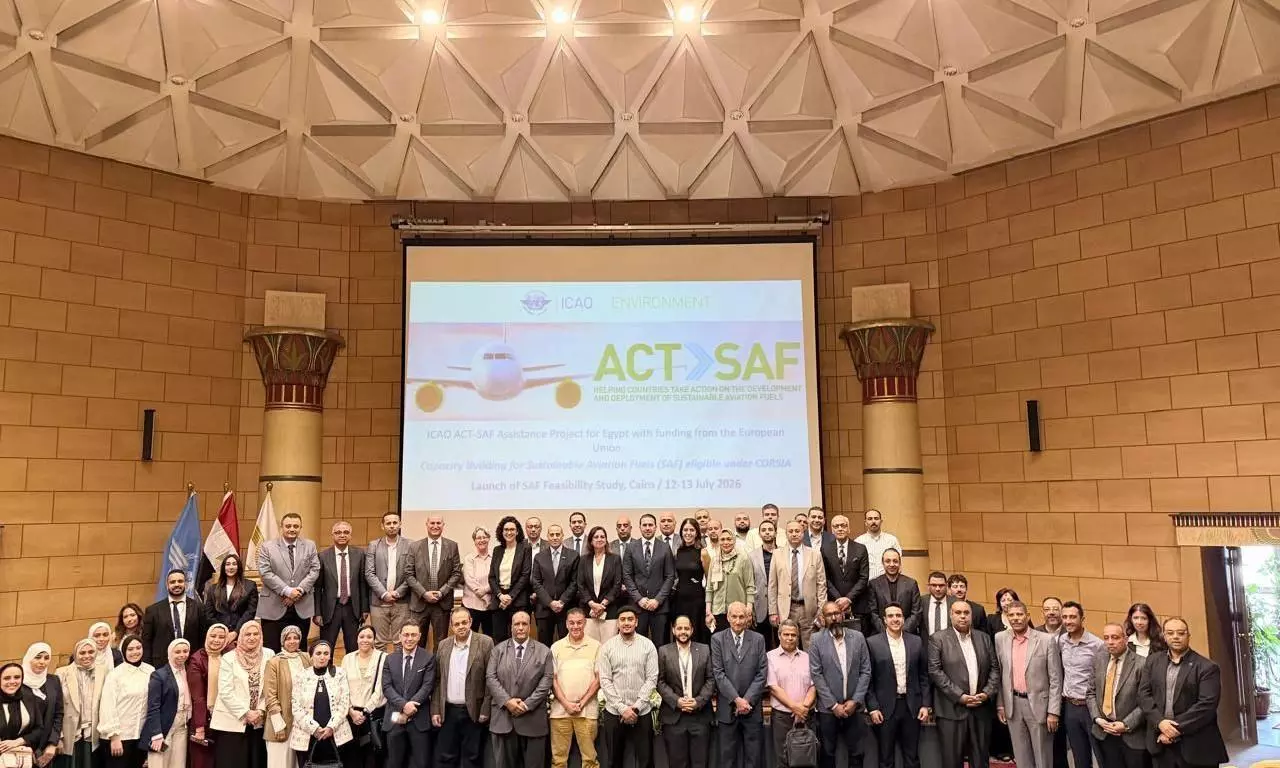
Egypt has taken a step towards developing a sustainable aviation fuel (SAF) ecosystem by launching a project to assess the feasibility of producing and using SAF in the country.
The initiative was announced during a two-day workshop organised by the Ministry of Civil Aviation in cooperation with the International Civil Aviation Organisation (ICAO) and supported by the European Union under the ACT-SAF programme. The event brought together representatives from government agencies, international organisations and the private sector to discuss the development of a national SAF roadmap.
Speaking at the workshop, Civil Aviation Minister Sameh El-Hefny said sustainability is a key pillar of Egypt's strategy to enhance the competitiveness of its national economy. He noted that the Ministry is implementing an integrated vision aligned with international standards to build a more efficient, resilient and sustainable civil aviation sector capable of adapting to rapid changes in the global air transport industry.
El-Hefny added that the initiative reflects Egypt's commitment to adopting innovative solutions and clean technologies while strengthening the country's position as a regional leader in sustainable aviation.
The feasibility study is expected to evaluate the potential for local SAF production and its integration into Egypt's aviation sector as the country works towards reducing aviation emissions and supporting global decarbonisation goals.
Civil Aviation Minister Sameh El-Hefny said the launch of Egypt's first national feasibility study on the production and use of sustainable aviation fuel (SAF), in line with International Civil Aviation Organisation (ICAO) standards, marks a strategic milestone in developing a domestic SAF industry. He said the initiative will help diversify energy sources for the aviation sector, strengthen the competitiveness of the national economy and support Egypt's efforts to reduce carbon emissions in line with ICAO's target of achieving net-zero emissions from international aviation by 2050.
The workshop was attended by representatives from ICAO, the European Union and the International Air Transport Association (IATA), alongside officials from the Ministry of Civil Aviation, the Egyptian Civil Aviation Authority, government ministries and organisations, as well as companies from the aviation, energy, biofuels and investment sectors.