
From storage to strategy: Africa’s warehousing transformation
As trade volumes rise across Africa, modern warehousing is emerging as a critical pillar of logistics infrastructure.
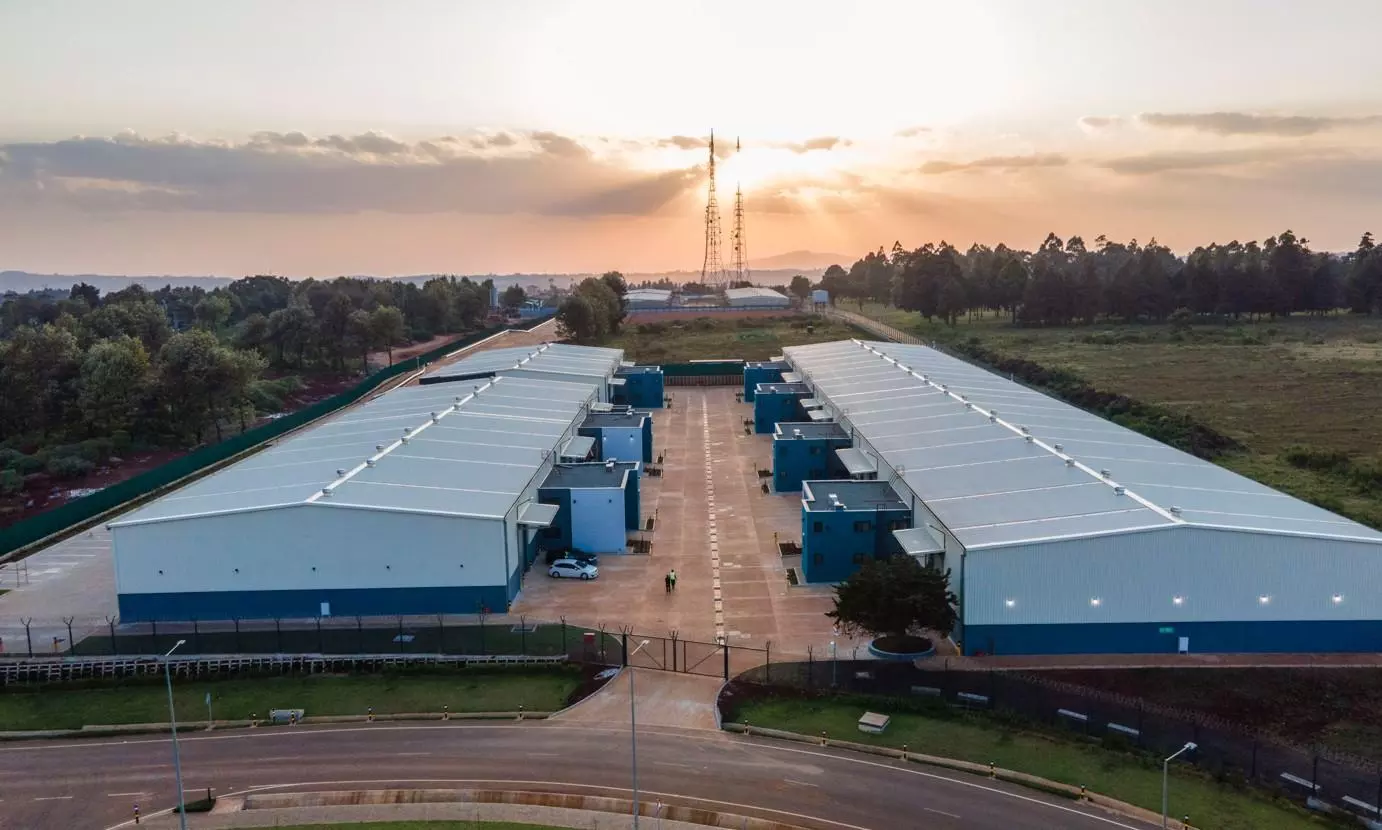
Africa's logistics landscape is experiencing a transformation that few could have predicted a decade ago. Modern warehousing, once considered a luxury reserved for multinational corporations, has become essential infrastructure driving economic growth across the continent. As supply chains evolve and consumer expectations rise, the demand for institutional-grade warehousing facilities is reshaping how goods move through African markets.
The shift is visible in the numbers. According to data, warehouse occupancy across Africa reached 83% in the first half of 2025, up from 75% just a year earlier. This represents not merely incremental growth, but a fundamental recalibration of how businesses approach logistics infrastructure on the continent. According to data from Mordor Intelligence, the Middle East and Africa freight and logistics market is estimated to be worth $321.36 billion in 2026, up from $305.07 billion in 2025, and is projected to reach $416.75 billion by 2031, growing at a CAGR of 5.34% during 2026–2031.
The evolution of grade-A warehousing demand
“Demand for modern, grade-A warehousing across Africa has grown steadily over the past several years and continues to trend upward,” says Raghav Gandhi, CEO of Africa Logistics Properties (ALP). “This growth is being driven by structural shifts in how goods are stored, moved, and distributed, particularly the expansion of formal retail, e-commerce, FMCG, pharmaceuticals, and regional distribution models that require reliable, compliant, and scalable facilities.
Gandhi notes that historically, much of Africa’s existing warehouse stock was not designed for today’s supply chain requirements. “Today, both multinational and strong regional players are increasingly prioritising quality over purely low-cost space. As a result, we’re seeing higher demand for facilities with clear heights, efficient layouts, professional asset management, and strong environmental and safety standards.”
The continent’s e-commerce boom has been a powerful catalyst for growth. Nigeria alone has an e-commerce sector valued at around $8.5 billion, with an estimated growth rate of about 11.8% through 2033, according to the report. South Africa’s domestic e-commerce market is significantly larger, valued at more than $35 billion in 2024. It is expected to double by 2033, according to data published by the Consultancy.Africa. By 2026, Africa’s overall digital commerce market is projected to reach $72 billion, driven by leading markets including Egypt, Kenya, Morocco, Nigeria, and South Africa.
This digital commerce expansion places immense pressure on distribution networks, driving demand for climate-controlled warehouses and last-mile delivery facilities that simply did not exist in adequate numbers across most African markets.
“At ALP, we are also seeing tenants take a longer-term view, with greater emphasis on finding long-term partners who can deliver scalable, future-ready logistics infrastructure that supports operational efficiency and business continuity. This evolution has made grade-A warehousing not a “nice to have,” but an essential infrastructure for companies looking to grow sustainably across African markets.”
Addressing infrastructure challenges through design
Infrastructure constraints remain a reality in many African markets. Power reliability, road connectivity, and utilities continue to present concerns in parts of the continent. According to Gandhi, ALP designs with these challenges in mind from day one. Rather than treating them as external risks, the company proactively integrates mitigation measures into its developments.
From a design perspective, ALP facilities are built with flexibility and resilience in mind. This includes provision for backup power solutions, efficient internal circulation to manage high truck volumes, and robust water and utility systems that reduce reliance on inconsistent municipal services. These are not afterthoughts but foundational elements of the development strategy.
“Location selection is equally critical. ALP places strong emphasis on sites with good arterial road access and proximity to key transport corridors, ports, and urban centres. A good example is ALP West, located within Tilisi Developments along the Nairobi–Nakuru highway, one of Kenya’s key logistics corridors. The site was deliberately selected for its access to a major arterial route connecting Nairobi to the wider Rift Valley and Western Kenya, reducing last-mile risk for occupiers,” Gandhi adds.
He concludes: “By combining strategic site selection with practical, tenant-centric design, ALP ensures that its developments remain reliable operating environments even in markets where infrastructure is still evolving.”
Over the next three to five years, ALP sees strong growth opportunities in markets where consumer demand, trade flows, and supply chains are becoming more formalised.”
Raghav Gandhi, Africa Logistics Properties (ALP)
The AfCFTA effect: regional integration and logistics growth
The implementation of the African Continental Free Trade Area has added a new dimension to warehousing demand across the continent. Trading under AfCFTA rules began in January 2021, creating a single market of 1.4 billion people.
A study by the UN Economic Commission for Africa (UNECA) indicates that AfCFTA could drive a 28% increase in intra-African freight demand by 2030, necessitating substantial investment in logistics infrastructure. This includes millions of additional trucks, rail wagons, aircraft, and vessels to bridge existing infrastructure gaps and support rising trade in sectors such as automotive parts, pharmaceuticals, and agro-processed goods, while encouraging a shift of some freight from road to rail alongside significant growth in air cargo.
This regional integration is creating demand for distribution hubs strategically positioned to serve multiple markets. The World Economic Forum has identified transport and logistics as one of four priority sectors under AfCFTA. For warehousing developers, this translates into requirements for facilities that can handle increased volumes, support cross-border consolidation, and meet varying regulatory standards across multiple jurisdictions.
Growth opportunities across the continent
Over the next three to five years, Gandhi sees strong growth opportunities in markets where consumer demand, trade flows, and supply chains are becoming more formalised. East Africa remains a key focus, driven by regional integration, infrastructure investment, and Nairobi’s role as a logistics and distribution hub.
“We are also closely watching select West African markets, where large populations, urbanisation, and expanding ports are creating demand for modern logistics facilities that can serve both domestic consumption and regional trade,” says Gandhi. West Africa’s logistics market was valued at $48.0 billion in 2025 and is projected to reach $73.6 billion by 2034. According to IMARC Group, the market is expected to grow at a compound annual growth rate (CAGR) of 4.85% during the 2026–2034 period.
“In Southern Africa, opportunities continue to exist in well-located nodes that support manufacturing, retail, and cross-border distribution,” adds Gandhi.
This demand is already materialising. In 2024, Rhenus Logistics announced significant warehousing expansion in South Africa, including new facilities in Samrand and modernised operations in Port Elizabeth.
The expansion of specialised sectors is opening up new warehousing opportunities across the continent. Cold chain logistics, which are critical for pharmaceuticals and perishable goods, are among the fastest-growing segments. In South Africa, the cold chain market generated revenues of $8,641.6 million in 2025, according to data from Grand View Horizon. Meanwhile, World Bank data shows that agriculture accounts for about 32% of Africa’s GDP and employs roughly 65% of the continent’s labour force. The African Development Bank (AfDB) highlights that greater value addition in areas such as cotton-to-textile production can increase raw value capture by up to 600%, underscoring the catalytic role of agro-processing.
The path to institutional capital
Gandhi notes that there is growing institutional interest in stabilised logistics assets across Africa. “ALP’s progression toward an ALP REIT reflects this shift and underscores our long term commitment to developing, owning, and managing high-quality warehousing infrastructure that supports Africa’s economic growth,” he says.
In December 2025, the Capital Markets Authority of Kenya approved the establishment of the ALP Industrial Real Estate Investment Trust, marking a significant development in the country's commercial property and capital markets landscape. . The REIT will be the first industrial-focused investment trust in East Africa and the first-ever security denominated in US dollars on the Nairobi Securities Exchange.
The REIT structure offers professional investors exposure to income-generating logistics assets while helping to mitigate currency risk in a market where hard-currency instruments remain limited. Its seed assets consist of logistics and industrial properties located along key logistics corridors around Nairobi, including parts of logistics parks in Limuru and Tatu City, registered in favour of ALP West Limited and ALP West Two Limited.
The transaction, involving the issuance of up to 45 million units at $1 per unit, demonstrates that institutional capital is increasingly recognising African logistics real estate as a viable, income-generating asset class. This is a departure from the historical view of African warehousing as inherently risky or speculative.
Looking ahead
The fundamentals supporting modern warehousing demand across Africa remain robust. Urbanisation continues at pace, with Africa's urban population expected to double by 2050. The continent’s young, tech-savvy population is driving e-commerce adoption, while increasing internet penetration and smartphone usage expand access to online platforms.
Sector-specific drivers are equally compelling. The pharmaceutical industry requires temperature-controlled storage that meets global standards, including ISO, HACCP, and Good Manufacturing Practices. Fast-moving consumer goods companies are consolidating fragmented distribution networks into centralised, efficient facilities.
The transition from informal to formal warehousing infrastructure represents one of Africa's most significant economic opportunities over the coming decade. As companies seek not simply low-cost space, but long-term partners who can deliver the scalable, resilient infrastructure that modern supply chains require, developers like ALP are positioned to play a crucial role in shaping the continent's logistics future.
For companies willing to invest in quality facilities, navigate infrastructure challenges through smart design, and position themselves along strategic corridors, the opportunities are substantial. The warehouse occupancy rates, institutional capital flows, and e-commerce growth trajectories all point in the same direction: Africa’s warehousing sector is entering a period of sustained, structural growth that will reshape how goods move across the continent for generations to come.