
How do perishables travel from African farms to European shelves?
Air cargo is powering Africa’s fresh produce trade, moving time-sensitive goods to Europe while supporting jobs, exports and supply chain growth.
How can the taste of fresh fruit or even meat change from one country to another? They can’t, right? Even I thought that. But that thinking of mine changed when I went to Africa for the first time in my life.
In the spring of 2024, I travelled to Kenya for Perishable Logistics Africa by Logistics Update Africa, in Nairobi. At the breakfast buffet, overlooking the vast expanse of Nairobi National Park, I picked up a bowl full of watermelon and passion fruit, along with some freshly grilled chicken, an egg omelette, and a cup of African tea with milk.
I can honestly say, everything, from eggs to watermelons to milk, tasted different. Fresher. Richer. Almost as if it had travelled no distance at all from farm to plate. Maybe that’s the magic of African perishables. And perhaps that’s one of the biggest reasons why the world, especially Europe, can’t get enough of fresh fruits, vegetables, flowers, and even meat from African countries.
And, numbers justify that too. Studies show that Kenya’s horticulture exports reached $195.6 million in Q3 2025, with the Netherlands leading at $68.7 million, followed by the United Kingdom ($27.9 million). Other key markets included the United Arab Emirates ($15.8 million), France ($15.4 million), and Germany ($12.5 million). Additional demand came from Spain, Saudi Arabia, and Kazakhstan. Flowers remained the top export, followed by vegetables and fruit, with Europe as the primary market.
The sector, driven largely by smallholder farmers, generates over $1.2 billion annually and supports more than 200,000 jobs.
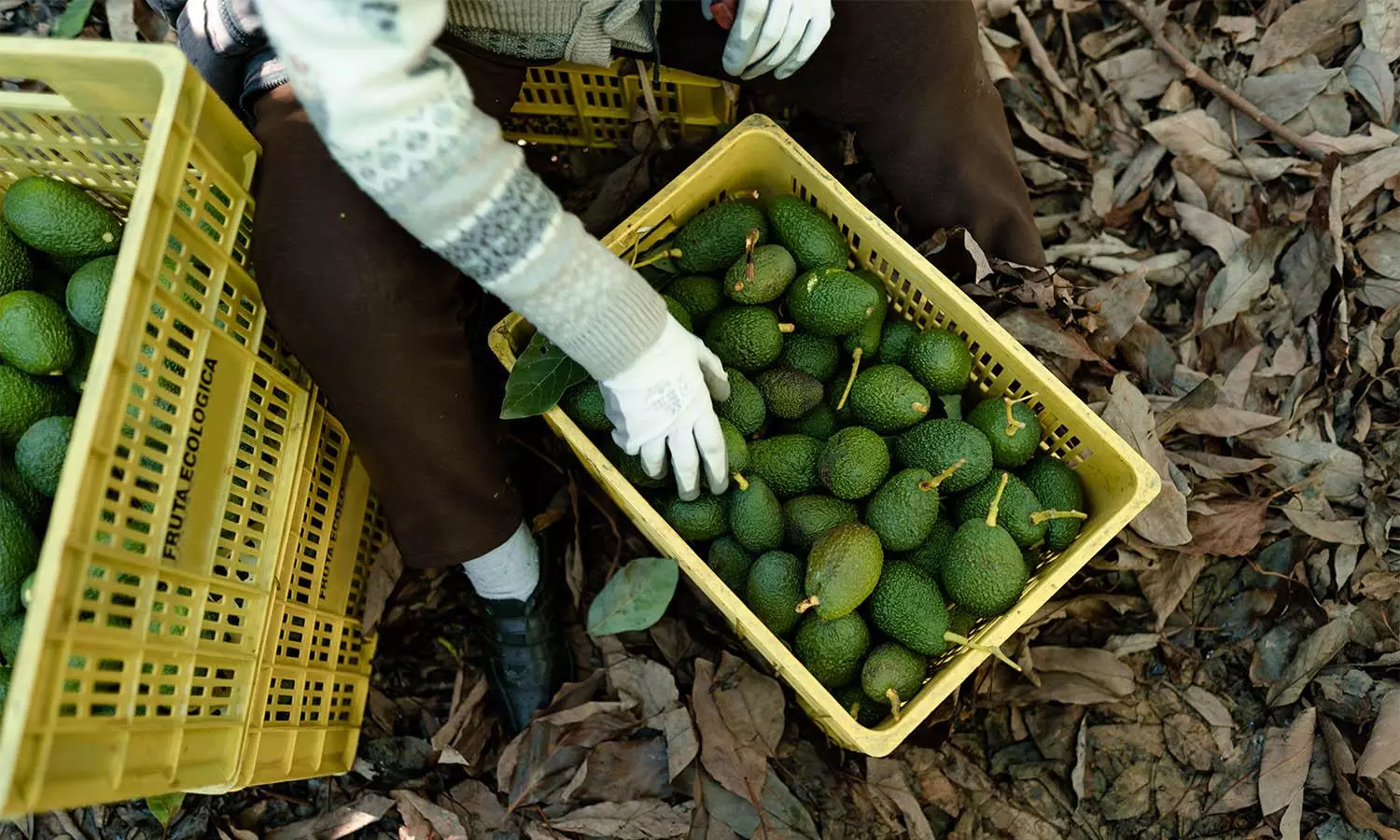
But what makes this even more fascinating is how these products travel. Considering the highly perishable and time-sensitive nature of these goods, a significant share moves by air. This export-driven agricultural ecosystem, supported by air cargo, is quietly powering economies, connecting rural farms to global markets, and sustaining livelihoods across the continent.
“Air cargo is thus not just an airport statistic; it feeds into broader economic activity and livelihoods across Kenya,” says Jacob Bwana, Commercial Manager, Cargo at Jomo Kenyatta International Airport.
The foundation of an air bridge
What I experienced at that breakfast table is exactly what European consumers are paying for: freshness that feels immediate, almost local, even after travelling thousands of kilometres. That expectation has quietly shaped one of the most specialised and fastest-growing air cargo corridors in the world: the Africa–Europe perishables air bridge.
“These perishables make up over 80–83% of total export cargo volume passing through JKIA.”
Jacob Bwana, Jomo Kenyatta International Airport
At the centre of this system is Kenya, where perishables are not just a major commodity, they define the cargo ecosystem.
“Perishable exports, especially horticultural products like cut flowers, fruits, vegetables, meat and fish, constitute the vast majority of JKIA’s air cargo traffic. These perishables make up over 80–83% of total export cargo volume passing through JKIA,” says Bwana.
He adds, “Flowers alone account for more than half of export cargo volume. Fruits and vegetables together form a large share after flowers.”
This concentration is significant. In most global markets, cargo is diversified across industrial goods, electronics, pharmaceuticals, and e-commerce. At Jomo Kenyatta International Airport, perishables are the dominant driver of both volume and infrastructure development.
According to Bonface Muse, Cargo Commercial Officer at JKIA, perishables account for 77% of average monthly cargo handled at the airport, which recorded a total throughput of 404,240 tonnes in 2025.
Beyond volume, the value contribution is equally critical.
“Flower exports alone can generate over 100 billion Kenyan shillings ($800 million+) annually in export revenue, supporting hundreds of thousands of jobs in farming, logistics, processing and export support services,” Bwana notes.
Growth driven by perishables
Africa’s rise in global air cargo is closely tied to this perishables strength.
According to the International Air Transport Association (IATA), African air cargo demand grew 6.0% year-on-year in 2025, with December recording a 10.1% increase. The momentum accelerated into 2026, with January registering an 18.2% surge, significantly above the global average.
“The trade lane for perishables between Africa and Europe is significant and forms about one-third of the total volume of perishables exported from Africa.”
Khalid Al Hinai, Emirates SkyCargo
While Africa accounts for a relatively small share of global cargo tonne-kilometres, it is currently the fastest-growing region. The explanation lies in the nature of its exports.
“These products are high-value relative to their weight, which is why air freight is the preferred transport mode, it preserves quality and freshness and enables export markets to pay premium prices,” Bwana explains.
The perishables segment, flowers, fruits, vegetables, seafood, and meat, is uniquely suited to air transport. Shelf life is limited, and value is directly linked to freshness. Any delay translates into financial loss.
Airlines shaping the corridor
Airlines have responded by building dedicated networks and specialised solutions around this demand.
At Emirates SkyCargo, Africa has long been a strategic focus.
“Africa is home to a number of major agricultural markets, and perishables are one of the most important commodities exported, forming over 85% of the total cargo exported on our aircraft from Africa to our global network,” says Khalid Al Hinai, VP Cargo Commercial – Africa, UAE and Middle East, Emirates SkyCargo.
He further explains the importance of the European trade lane: “The trade lane for perishables between Africa and Europe is also significant and forms about one-third of the total volume of perishables exported from Africa.”
The network spans multiple origins, including Nairobi, Cairo, Entebbe, Accra, and Johannesburg.
Growth across this corridor remains strong. “The Africa- Europe trade lane continues to remain strong and between CY 2024 and CY 2025 experienced a growth in volume of nearly 13%. We continue to see this growing trend between 2025 and 2026 as well,” Al Hinai says.
At Lufthansa Cargo, Africa is equally important from a network perspective. “Lufthansa Cargo is very present in the African market. The strategic relevance is displayed in freighter capacity with our own freighter fleet to Cairo, Algiers, Casablanca and Tunis as well as in the broad belly capacity network with around 145 weekly connections to African destinations, which we are offering within Lufthansa Group’s airlines,” says Hanno Burwitz, Head of Commercial Middle East, Africa, South Asia & CIS at Lufthansa Cargo.
Perishable Center Frankfurt, Lufthansa Cargo
“With our own freighter fleet of B777F and A321F as well as the belly capacities of Lufthansa Airlines, Austrian Airlines, Brussels Airlines, Discover Airlines, ITA Airways and SunExpress, we are able to steer our global network along our customers’ demands even on short notice. With that, we are able to offer our customers additional capacities during Valentine’s Day peak, prior to International Women’s Day or during high demand for strawberry shipments from Egypt each year,” adds Burwitz.
Diversity in commodities
One of the defining features of the Africa–EU perishables corridor is its diversity.
“There are a number of major markets across Africa that focus on the export of perishables and there is a wide range of products that are exported that cover the entire spectrum from fruits and vegetables to seafood and meat,” Al Hinai explains.
He continues: “For example, if you look at Kenya, flowers tend to be the top perishable commodity exported. However, Kenya also exports important volumes of fruits and vegetables and meat. From South Africa, we see fruits, vegetables, berries, seafood and meat while from Uganda we see fish in addition to fruits and vegetables. Egypt is another key market for perishables exports with around the year exports of fruits and vegetables along with seasonal products such as grapes and strawberries.”
At Lufthansa Cargo, the trend is consistent. “In general, we see a broad mix of commodities from Africa, such as fruits, vegetables, flowers, fish or seafood, which all show equal growth,” Burwitz notes.
This diversity ensures year-round cargo flows, balancing seasonal peaks and stabilising capacity utilisation.
Connectivity and hub efficiency
The efficiency of this corridor depends heavily on connectivity.
Emirates leverages its hub in Dubai to link African origins with European destinations.
“We see destination points for perishables from Africa spread all across Europe. Some of the important points include Amsterdam, London, Oslo, Brussels, Dublin, Frankfurt and many more. Emirates SkyCargo is extremely well-positioned to facilitate this trade and transport perishables rapidly from origin points to destinations in Europe. We’re offering more than 170 passenger flights and three freighter flights from 20 African origins every week. If you look at Cairo, for example, we have five daily flights which can uplift perishables and then fly to our hub. From Dubai, we have connectivity on passenger flights to more than 40 destinations across Europe and some destinations like London, we have multiple daily frequencies, meaning that we are in a position to rapidly connect time and temperature-sensitive perishable cargo arriving from Africa onto flights going to European destinations,” says Al Hinai.
Lufthansa Cargo’s model centres around its European hubs, particularly Frankfurt.
“At our Frankfurt hub (FRA), this commitment is reinforced through close collaboration with the Perishable Center Frankfurt (PCF). A dedicated Lufthansa Cargo team stationed onsite at the PCF continuously monitors all perishable consignments and can respond immediately should any irregularities occur,” Burwitz explains.
Cold chain precision
Temperature control is at the heart of perishables logistics.
Emirates SkyCargo has developed a structured approach through its Emirates Fresh product suite.
“We have a unique three-tiered solution under Emirates Fresh that allows for perishable commodities to retain optimal freshness during their journey from origin to destination. The different tiers include Fresh for everyday perishables not affected by minor temperature fluctuations, Fresh Breathe for delicate products like flowers that need to breathe and Fresh Active for products that cannot withstand even the slightest change in temperature, like fine cheese and wine or ice cream,” Al Hinai explains.
He adds, “Minimising tarmac exposure, ensuring rapid ramp transfers, and maintaining consistent handling standards across stations are critical factors in preserving product freshness on long-haul routes.”
At Lufthansa Cargo, digitalisation is playing a growing role.
“IATA implemented ONE Record since the beginning of this year. Lufthansa Cargo has been actively working on pushing this new data standard within the industry. It will enable more detailed temperature monitoring or keeping customers up to date with further information and making real-time data exchange possible in the future,” Burwitz says.
Operational bottlenecks
Despite advancements, challenges remain, particularly around dwell time.
“All perishable exports must be cleared by customs before they can be released for export. Manual checks or incomplete documentation can lead to delays at arrival or departure, extending dwell time in cargo facilities,” Bwana explains.
Mango consignments being prepared for loading onto an aircraft at Jomo Kenyatta International Airport
He continues, “Perishables, especially horticultural products, require certification that they meet plant health and pest control standards of the destination country. Inspection includes paperwork review and physical checks, which can slow processing if there are incongruities or backlogs.”
Security adds another layer. “To mitigate risks, security procedures require cargo to be screened before aircraft loading. Security equipment or personnel shortages can lead to queueing of cargo, increasing handling time.”
These delays have direct consequences, higher costs, increased spoilage risk, and reduced export value.
Infrastructure and future readiness
To sustain growth, infrastructure investment is accelerating.
The Kenya Airports Authority is leading a major expansion of JKIA. “Large-scale JKIA redevelopment: The Government of Kenya, through KAA, is pushing ahead with a comprehensive modernisation and expansion of JKIA, with construction set to begin in 2026. This includes a new world-class terminal, airfield upgrades, and logistics infrastructure designed to significantly improve both passenger and cargo capacity,” mentioned Bwana.
This includes expanded cargo terminals, a second runway, and improved cold chain facilities. Talking about investments, he further mentioned, “Investment in high-capacity cold storage and automated cargo handling reduces dwell times by enabling faster transfer from aircraft to storage and onward. Data systems track temperature and status in real time, allowing customs and inspection agencies to process cargo more efficiently.”
Regional development is also part of the strategy, with airports such as Eldoret being upgraded to support cargo operations and decentralise flows. “Eldoret International Airport runway extension: A major upgrade to accommodate larger cargo aircraft, helping decentralise perishable exports outside Nairobi and reducing pressure on JKIA,” Bwana says.
“In general, we see a broad mix of commodities from Africa, such as fruits, vegetables, flowers, fish or seafood, which all show equal growth.”
Hanno Burwitz, Lufthansa Cargo
Another factor that accelerates that export-drive agriculture in Africa and investments in overall infrastructures are strategic deals between governmemts like Kenya-UK economic partnership signed in 2025, which further opens up markets for African fresh produce.
Sustainability and efficiency
Sustainability is becoming increasingly important in perishables logistics.
“The Emirates Group is committed to sustainability across all our businesses and activities. Emirates operates one of the youngest aircraft fleets in the industry which results in a number of environmental benefits, including lower engine emissions. Additionally, improving cool chain efficiency plays an important role in our sustainability approach. In perishables logistics, reducing spoilage and minimising temperature deviations directly contributes to lowering waste across the supply chain,” says Al Hinai.
A corridor built on livelihoods
Ultimately, the Africa, EU perishables air bridge is not just about cargo, it is about people.
“Perishable cargo from Kenya is time-sensitive and bound mainly for Europe, the Middle East and other global markets where fresh produce commands premium prices. Efficient air cargo from JKIA ensures Kenyan exporters can maintain competitiveness and reach these markets quickly,” Bwana says.
This ecosystem supports farmers, exporters, logistics providers, and airlines, creating a chain of value that stretches across continents.
Back to the beginning
As I think back to that breakfast in Nairobi, overlooking Nairobi National Park, the difference in taste now feels less surprising.
It was not just freshness. It was a system, an air bridge built on speed, precision, infrastructure, and coordination.
And somewhere between that first bite of watermelon and a shelf in Europe lies one of the most dynamic and impactful supply chains in global logistics today.
Note: The interviews cited in this article were conducted in February 2026, prior to the escalation of geopolitical tensions in the Middle East.


