
How is JKIA preparing to handle 860,000 tonnes of cargo by 2045?
A new airport blueprint aims to more than double freight volumes while easing congestion and strengthening Nairobi’s role in global supply chains.
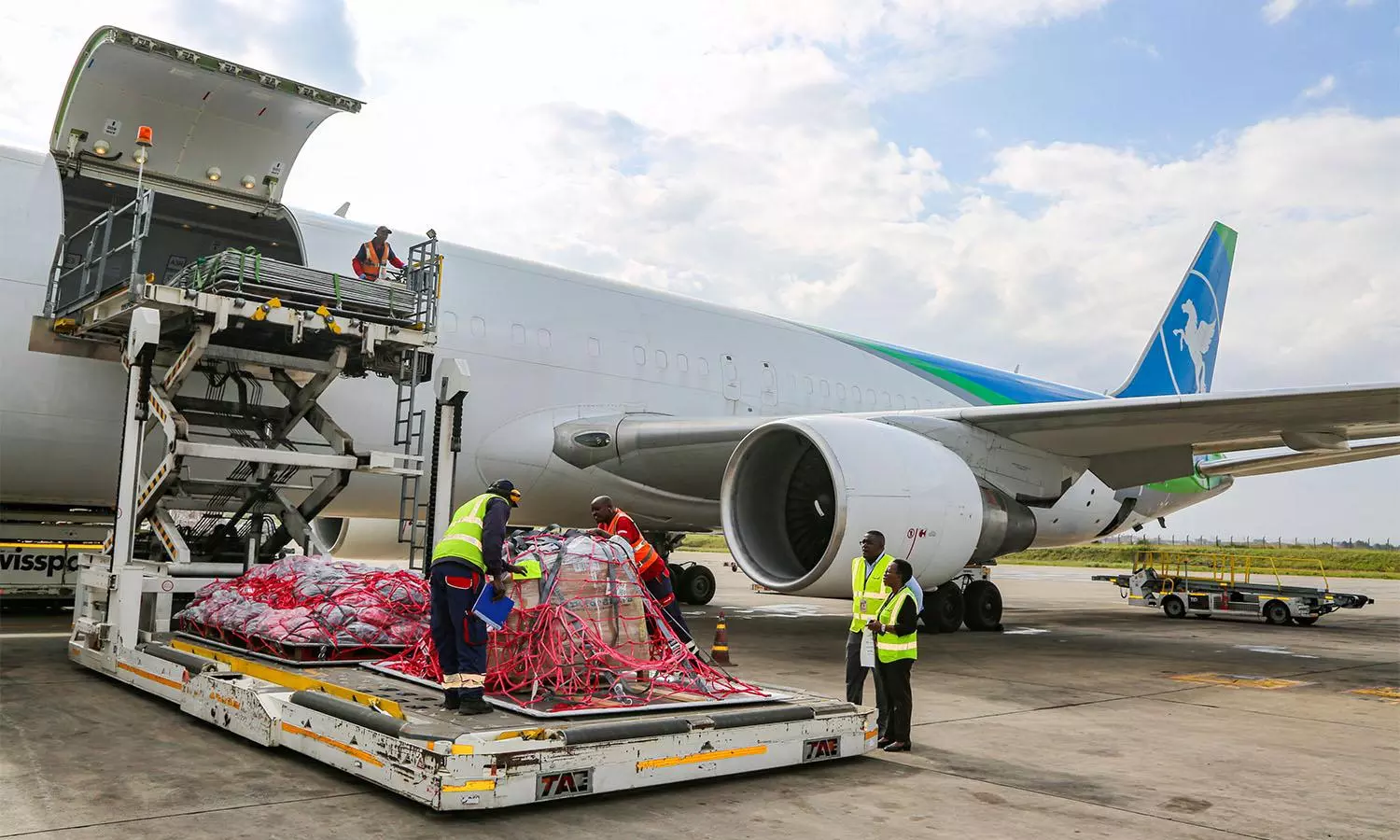
Jomo Kenyatta International Airport (JKIA), East Africa’s busiest aviation gateway, is preparing for a significant transformation as Kenya positions Nairobi as a leading air cargo hub for the continent. The newly finalised JKIA Master Plan, completed on 26 February 2026 by Sidara Company for the Kenya Airports Authority (KAA), lays out a 20-year development roadmap designed to support rapidly growing cargo volumes and future aviation demand.
Using 2024 as the baseline year, the plan notes that JKIA handled 390,000 tonnes of air cargo shipments, with 71% transported on dedicated freighters and the remainder in passenger aircraft belly capacity. Cargo throughput is projected to more than double to approximately 860,000 tonnes by 2045, driven primarily by export growth.
Exports are expected to expand at 4% annually, outpacing imports, which are forecast to grow at 3% annually. This growth reflects Kenya’s strengthening position in horticulture exports, pharmaceutical logistics, and regional trade consolidation under the African Continental Free Trade Area (AfCFTA).
Through phased infrastructure upgrades, including runways, taxiways, aprons, cargo precincts, and multimodal connectivity, the master plan aims to transform JKIA into a world-class cargo and logistics hub serving Africa, Europe, and Asia.
Traffic forecasts drive phased infrastructure development
Cargo demand projections form the backbone of the master plan’s development strategy. According to the JKIA Master Plan, from the 2024 baseline of 390,000 tonnes, volumes are expected to grow steadily to around 500,000 tonnes in the early 2030s, before reaching 860,000 tonnes by 2045.
The plan also projects that freighter aircraft will continue to dominate cargo operations. This reflects JKIA’s established role as a key export gateway for time-sensitive perishables such as cut flowers, fresh vegetables, and seafood, particularly on routes connecting Kenya with Europe and the United Kingdom.
The projections assume sustained growth in Kenya’s economy, continued international expansion by Kenya Airways, and increasing domestic connectivity through Jambojet, a brand of Kenya Airways. Operating out of JKIA, Jambojet is a low-cost carrier connecting domestic destinations like Mombasa and Kisumu, among others. Growth in general aviation cargo movements is also expected to contribute to overall throughput.
- To manage this demand, the master plan introduces a phased infrastructure development model:
- Short-term phase (2026–2029): optimisation of existing infrastructure to address immediate capacity constraints
- Medium-term phase (2030–2039): construction of major infrastructure, including a second runway and expanded terminal capacity
- Long-term phase (post-2040): additional apron, cargo, and landside expansions to accommodate future traffic growth
By linking infrastructure investments to specific traffic thresholds, the strategy aims to reduce financial risk while ensuring operational capacity keeps pace with demand.
Runway and airfield expansion to address capacity constraints
JKIA currently operates with a single runway, a configuration that the master plan warns will become a significant constraint as traffic continues to increase. According to the plan, airfield capacity could reach saturation as early as 2027.
Immediate improvements planned for the 2026–2029 phase focus on improving operational efficiency rather than building new runways. These include:
- A new runway-end taxiway
- An additional connecting taxiway
- Two rapid exit taxiways
These improvements are expected to reduce runway occupancy times, allowing more aircraft movements per hour, particularly during peak night operations when flower export flights depart for Europe.
The most significant airfield development will take place during the 2030–2039 phase, when a new parallel runway measuring 4,500 metres by 60 metres will be constructed alongside a full parallel taxiway system and cross-taxiways.
This configuration will allow independent or semi-independent runway operations, effectively doubling airfield capacity while providing redundancy during maintenance or adverse weather conditions.
For cargo operators, this will significantly improve schedule reliability, particularly for wide-body freighters, which dominate JKIA’s export operations.
Dedicated cargo precinct and apron expansion
One of the most important structural changes in the master plan is the creation of a dedicated cargo precinct located south of the passenger terminals.
Currently, cargo activities operate in close proximity to passenger facilities, leading to operational congestion and limited space for expansion. The new cargo precinct will allow segregation of freight operations from passenger traffic, improving efficiency and scalability.
The plan also reserves additional land for “Cargo Future Expansion”, allowing for the development of new warehouses, logistics parks and freight forwarding facilities as cargo volumes increase.
Apron expansion is another key component of the development strategy.
The new Passenger Terminal Building (PTB) planned for 2030–2039 will add:
- 40 narrow-body aircraft stand
- 9 wide-body stands
Additional apron infrastructure includes:
- 59,474 square metres for MRO apron facilities
- 24,160 square metres for ground support equipment storage
- 30,000 square metres for airside bus storage
- 6,900 square metres for aircraft washing facilities
These upgrades will significantly increase aircraft parking capacity, enabling multiple wide-body freighters to operate simultaneously without delays, a major improvement over current apron constraints.
Support facilities strengthen cargo handling capacity
Efficient cargo operations depend not only on aircraft infrastructure but also on backend support systems.
The master plan, therefore, includes major upgrades and new construction across several operational facilities.
Key developments include:
New electrical substations will also support these facilities, ensuring adequate power supply for cold storage, cargo handling equipment and aircraft servicing operations.
These upgrades are expected to reduce aircraft turnaround times, an important factor for perishable exports and pharmaceutical shipments that rely on strict cold-chain integrity.
Multimodal connectivity: Rail and road integration
Landside connectivity is another critical focus of the master plan.
Currently, more than 90% of cargo arriving or departing JKIA is transported by road, leading to frequent congestion along Mombasa Road, the main freight corridor linking Nairobi with the port of Mombasa.
To address this challenge, the master plan proposes a range of road improvements including:
- Widening primary access roads
- New traffic lanes
- Signalised intersections serving terminals and cargo facilities
Parking infrastructure will also expand to include 870 short-term spaces and 600 long-term spaces.
More significantly, the plan integrates rail connectivity into the cargo ecosystem.
The Line 5 Commuter Railway will extend to:
- The cargo precinct
- Airport City
- Ruai
The line will also connect with the Standard Gauge Railway (SGR) network, allowing containerised cargo arriving from Mombasa Port or inland logistics hubs to move directly to the airport.
Bus Rapid Transit (BRT) links and upgrades to Matatu Route 34 will further improve accessibility for airport workers and logistics personnel.
Rail connectivity could significantly reduce truck congestion, lower transport costs and cut emissions, while strengthening JKIA’s role as an integrated logistics gateway.
Transforming cargo operations
Taken together, the planned developments represent a significant shift in how cargo will move through JKIA.
Today, cargo operations must navigate single-runway limitations, constrained apron space, and heavy dependence on road transport. Passenger traffic growth has also placed additional pressure on shared airport infrastructure.
Under the master plan, these bottlenecks will gradually be eliminated.
Taxiway improvements will increase runway efficiency in the short term, while the second runway will dramatically increase airfield capacity by the 2030s. Expanded aprons will allow more freighter aircraft to operate simultaneously, and the dedicated cargo precinct will streamline freight handling operations.
Rail integration and road upgrades will reduce landside congestion, allowing cargo to move more quickly between the airport and regional markets.
Together, these measures will support JKIA’s ability to handle up to 860,000 tonnes of cargo annually, positioning Nairobi as a key logistics hub connecting Africa with global markets.
Strategic implications for airlines and exporters
For airlines, the expansion will create additional slots, improved reliability and greater capacity for long-haul freighter services, particularly on routes linking Africa with Europe and Asia.
Ground handlers and logistics companies will benefit from modernised infrastructure and expanded operational space, while freight forwarders will gain improved multimodal connectivity through the planned rail links.
Most importantly, Kenya’s export industries, especially horticulture producers shipping flowers and fresh produce to European markets, stand to gain from faster transit times, improved cold-chain infrastructure and reduced logistics costs.
While challenges remain, including financing large-scale infrastructure investments and managing phased construction alongside ongoing operations, the demand-driven development strategy outlined in the master plan helps mitigate these risks.
If successfully implemented, the JKIA Master Plan could transform Nairobi from a regional cargo gateway into one of Africa’s most important air logistics hubs over the next two decades.


