
Is the Middle East conflict straining humanitarian aid logistics?
Escalating conflict in the Middle East, combined with shrinking global aid budgets and disrupted trade corridors, is forcing humanitarian organisations to redesign supply chains in real time to keep critical relief cargo moving worldwide.
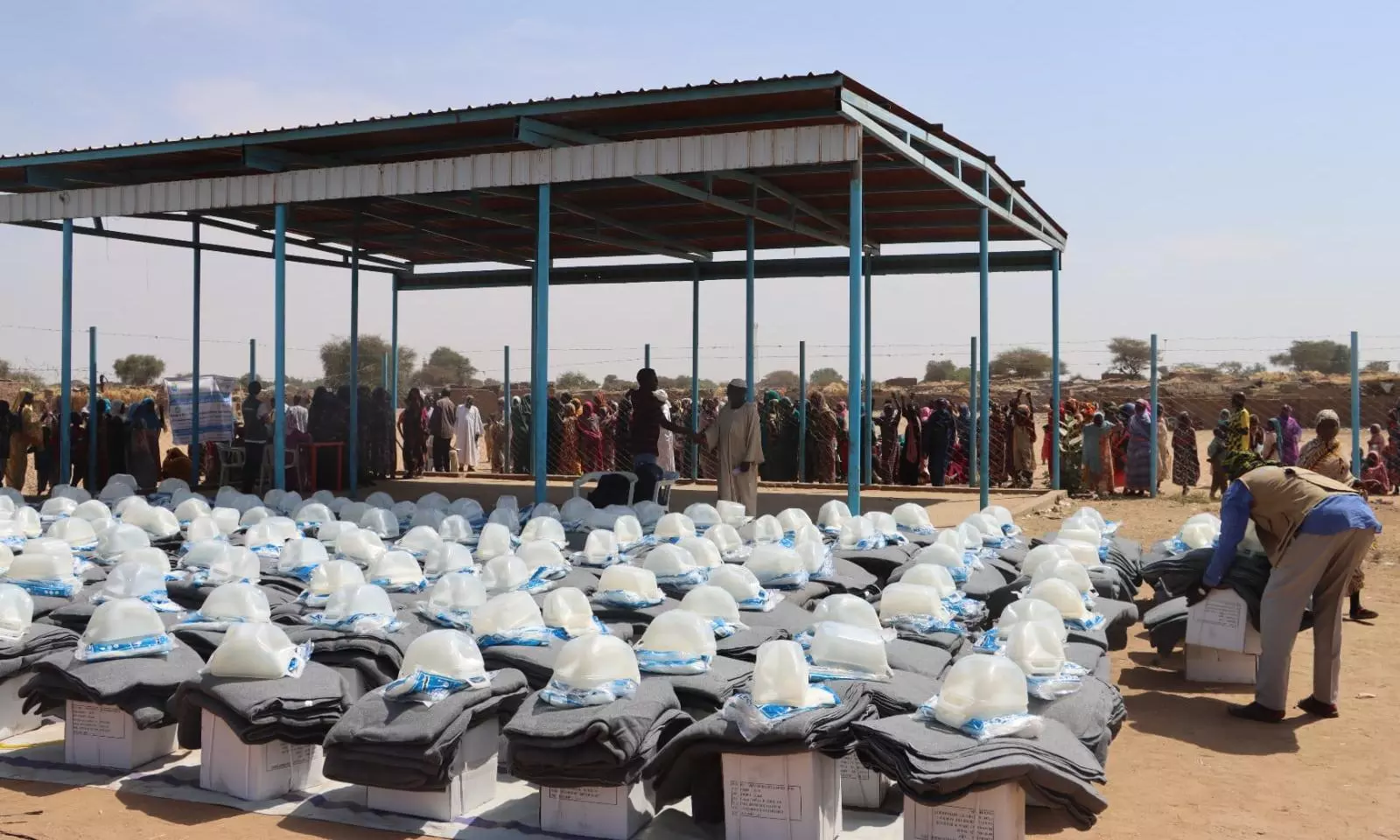
“Since the escalation of the conflict in the Middle East, UNHCR relief item shipment volumes have remained steady, although the booking of some sea shipments has been delayed due to maritime disruptions around the Strait of Hormuz," said Carlotta Wolf, spokesperson for UNHCR.
The escalation of conflict in the Middle East on February 28, 2026 has triggered severe disruption across global humanitarian logistics networks, affecting air, sea and land transport routes alike. Maritime diversions, airspace restrictions, rising fuel costs and increasing insurance premiums are delaying shipments of medicines, vaccines and emergency relief supplies while driving up operational costs worldwide.
Aid organisations, freight operators and UN agencies are now redesigning logistics strategies in real-time to sustain cargo flows into crisis-affected regions. The situation has emerged at a particularly difficult moment for the humanitarian sector, following the July 2025 shutdown of USAID, which had already weakened global aid funding systems, particularly across Africa, leaving humanitarian agencies operating with fewer resources and mounting logistical challenges.
“USAID’s withdrawal has had a huge impact on funding flows and on public health in general in Africa.”
Caroline Barber, Transaid
And each life is dependent on a delicate thread of a carefully woven string of humanitarian aid logistics. According to Jean-Cedric Meeus, UNICEF’s Chief of Global Transport and Logistics, "For the world’s most vulnerable children, every minute can mean the difference between life and death. That’s why humanitarian cargo must be prioritised at every stage, so lifesaving supplies reach children and their families on time.”
A regional conflict with global supply chain consequences
Humanitarian organisations have long relied on the Middle East, particularly Gulf logistics hubs, as a strategic bridge connecting aid operations across Europe, Asia and Africa. Large volumes of commercial and humanitarian cargo routinely move through Gulf hubs before being redistributed into conflict zones and disaster-affected regions through multimodal transport networks.
That system is now under severe strain. According to UNICEF, the ongoing conflict in the Middle East is disrupting humanitarian logistics far beyond the immediate region. The organisation stated that volatility across global supply chains is intensifying as disruptions along key trade corridors, including the Red Sea, Suez Canal and the Gulf, force carriers to reroute and reorganise operations. “Air transport is also being affected by airspace restrictions, reducing capacity and operational flexibility.”
These corridors form a critical backbone for international humanitarian supply chains linking manufacturing centres in Europe and Asia with aid operations across Africa and the Middle East. UNICEF estimates that disruptions linked to the conflict could delay critical humanitarian supplies by up to six months, while maritime diversions away from high-risk zones are increasing congestion across alternative routes. The organisation also warned that rising oil prices, projected to increase by up to 20%, could significantly raise manufacturing and transport costs for essential supplies such as vaccines and nutrition products.
"For the world’s most vulnerable children, every minute can mean the difference between life and death. That’s why humanitarian cargo must be prioritised at every stage, so lifesaving supplies reach children and their families on time.”Jean-Cedric Meeus, UNICEF
According to the International Federation of Red Cross and Red Crescent Societies, sea freight costs have risen by around 70%, with spikes of up to 300% on some routes, while land transport costs across GCC corridors have increased between 20% and 30%. Airfreight rates have also surged by approximately 50% to 70% because of limited capacity and volatile fuel surcharges.
Air freight becomes a necessity despite soaring costs
To prevent disruptions to humanitarian operations, aid agencies are increasingly shifting critical cargo onto air freight despite significantly higher costs. Traditionally, humanitarian organisations relied on ocean freight for large-volume aid movements because of its cost efficiency. However, maritime disruptions and longer transit schedules are now forcing agencies to prioritise speed and reliability. According to UNICEF, alternative air, land and sea corridors, along with additional logistics hubs, have been activated to maintain the movement of critical supplies. These operational adjustments have resulted in higher transportation costs and longer delivery times.
One example involves vaccine deliveries into Iran. Before the conflict escalation, vaccines were shipped directly into Iran by air from offshore suppliers. UNICEF stated that vaccines now have to be flown to Türkiye and then transported by road into Iran to maintain immunisation programmes. The organisation also noted that it is increasingly relying on air freight for time-sensitive supplies, even though air transport can cost up to 50 times more than sea freight. UNICEF recently airlifted syringe shipments into Nigeria to avoid delays affecting vaccination campaigns.
UNHCR expands emergency operations amid worsening displacement
At UNHCR, emergency logistics activity has intensified significantly since the Middle East conflict escalated, especially due to maritime disruptions around the Strait of Hormuz.
The agency says Lebanon has become one of the primary focal points of emergency replenishment activity. Talking about United Nations High Commissioner for Refugees operations, Wolf stated that the agency has significantly increased emergency supply replenishment efforts in Lebanon, where more than 1 million people have been displaced since March 2. She noted that UNHCR has already distributed over 200,000 relief items, supporting more than 150,000 displaced people.
The organisation initially responded using pre-positioned stocks already available within Lebanon and later received two emergency airlifts carrying donated supplies from the European Union, Italy and Ireland. In addition, UNHCR is transporting 40 trucks of relief cargo from its global stockpile facility in Dubai while continuing to maintain life-saving assistance for displacement emergencies in other regions despite ongoing global logistics disruptions.
“Disruptions in the Middle East are likely to have knock-on effects for operations in parts of Africa, where several major humanitarian emergencies are ongoing and where supplies are commonly routed through Gulf logistics hubs or maritime corridors connected to the region.”
Carlotta Wolf, UNHCR
The organisation currently operates seven global stockpiles located in Dubai, Termez, Copenhagen, Accra, Douala, Nairobi and Panama City. Together, these facilities are capable of supporting up to one million people during emergencies. Despite the operational pressure generated by the Middle East conflict, UNHCR says it is continuing support for displacement crises elsewhere.
“At the same time, we are ensuring that ongoing displacement emergencies in other regions continue to be supplied with life-saving assistance, despite the ongoing global logistical challenges,” Wolf said.
Africa increasingly exposed to logistics disruption
Although the Middle East conflict is the immediate driver of operational disruption, humanitarian organisations warn that African aid operations are becoming increasingly vulnerable to secondary impacts.
“The Middle East currently represents a major focus for humanitarian logistics activity, driven by conflict and displacement, as well as access constraints,” Wolf said. “At the same time, Africa continues to see very high demand due to overlapping displacement crises due to conflict, climate shocks and protracted instability.”
Many humanitarian operations across Africa depend heavily on Gulf-based logistics corridors and maritime routes linked to the Middle East. Disruptions affecting those corridors are now beginning to create ripple effects across African humanitarian supply chains.
“In early March, close to 60% of (Airlink’s) planned shipments (more than 170 tonnes of aid) had been significantly delayed or put on hold due to widespread flight suspensions and airspace restrictions.”
Bethany Holland, Airlink
“Disruptions in the Middle East are likely to have knock-on effects for operations in parts of Africa, where several major humanitarian emergencies are ongoing and where supplies are commonly routed through Gulf logistics hubs or maritime corridors connected to the region,” Wolf explained.
To reduce exposure to disruptions, humanitarian organisations are increasingly relying on regional warehousing, pre-positioned inventory and local procurement strategies. “UNHCR is relying on pre-positioned stocks, regional and country-level warehousing, diversified sourcing and flexible routing,” Wolf said. “Wherever markets allow, direct financial assistance and local procurement reduce dependency on long international supply chains.”
The shift towards regionalisation reflects a growing recognition that global humanitarian logistics networks can no longer rely solely on centralised transport corridors.
Charter markets experience extreme volatility
The disruptions have significantly reshaped the commercial charter market, according to Gerhard Coetzee, Vice President Cargo – IMEA at Chapman Freeborn. “Operators remain cautious about flying into the region due to elevated risk assessments and insurance restrictions, which continue to constrain supply.” As a result, aircraft availability across the Gulf has become highly volatile, with freight rates rising sharply and operational planning windows shortening considerably.
Coetzee explained that aircraft availability can change within hours, forcing customers to make rapid decisions to secure capacity. During the peak disruption period, Chapman Freeborn recorded nearly four times more charter inquiries than normal weekly volumes, driven by reduced commercial bellyhold capacity, maritime disruptions and urgent demand for project cargo, line-stop shipments and essential industrial supplies.
“Operators remain cautious about flying into the region due to elevated risk assessments and insurance restrictions, which continue to constrain supply.”
Gerhard Coetzee, Chapman Freeborn
Coetzee explained that shipments unable to fly directly into Dubai were rerouted through Saudi Arabia or Oman before moving onward by road freight. While helping maintain cargo continuity, the approach is increasing transit times and costs. Coetzee added that war-risk insurance premiums are adding tens of thousands of dollars per flight. He also noted that Boeing 747 and 767 freighters are gradually returning to selected Middle East routes as conditions stabilise.
Airlink redesigns transport operations in real time
For Airlink, the operational environment now requires constant route redesign and contingency planning. The organisation works with more than 50 airlines and logistics partners while coordinating with over 250 nonprofit organisations to secure low-cost or donated transportation for humanitarian cargo and personnel.
“In early March, close to 60% of (Airlink’s) planned shipments (more than 170 tonnes of aid) had been significantly delayed or put on hold due to widespread flight suspensions and airspace restrictions,” said Bethany Holland, Director for Humanitarian Programmes at Airlink.
To maintain deliveries, Airlink has used alternative solutions including airlifting cargo into regional hubs for onward sea freight or cross-border trucking, and splitting large consignments into smaller shipments to utilise available aircraft capacity. Around 75% of the initially disrupted shipments have since resumed movement through revised routing strategies.
Airlink has supported humanitarian operations across Palestine, Syria, Lebanon, Yemen and Iraq for nearly a decade, transporting around 3,700 tonnes of relief cargo including medicines, field hospitals, nutrition supplies and shelter materials. Holland also noted that over 60% of humanitarian supply chains depend on Dubai, amplifying operational risks amid ongoing disruptions.
USAID shutdown had already weakened humanitarian systems
Long before the latest Middle East disruptions emerged, humanitarian organisations were already confronting severe financial strain following the shutdown of USAID in July 2025.
The agency had historically been one of the largest contributors to humanitarian assistance globally, particularly across Africa. According to Caroline Barber, Chief Executive Officer of Transaid, the consequences of the withdrawal have been severe.
“USAID’s withdrawal has had a huge impact on funding flows and on public health in general in Africa,” Barber said. “USAID has been a major contributor for so long, with around 30% of USAID’s foreign assistance going to Africa in 2024, with a significant portion of that funding going to health and humanitarian programmes.” “USAID has also historically funded specific initiatives to strengthen supply chains for health commodity logistics in Africa and was a major contributor to platforms such as The Global Fund and Gavi.”
Barber says the operational consequences are now visible across healthcare systems. “There are shortfalls everywhere we look right now — clinics have closed, widespread stockouts of drugs and many NGOs have closed their doors,” she said. “Of course, this is most painful for the people who depend on lifesaving medicines that are so suddenly unavailable.”
Africa’s humanitarian needs continue rising
Humanitarian organisations warn that Africa remains severely underfunded despite rising operational demands. Peter Frey, Sub-Saharan Africa Programme Manager at Airlink, said Burkina Faso, Cameroon, Malawi, Mali, Niger and Somalia together account for more than 20 million people requiring assistance. He added that Sudan remains Sub-Saharan Africa’s most severe humanitarian crisis, with over 33 million people needing urgent aid. Airlink, working with Qatar Airways, Royal Air Maroc and Astral Aviation, has transported more than 230 metric tonnes of relief cargo across Africa in 2026.
Despite the growing complexity of global transport disruptions, aid organisations say the final stage of humanitarian delivery remains one of the sector’s greatest operational challenges. Transaid’s MAMaZ Against Malaria at Scale project in Zambia demonstrated how transport systems can directly influence healthcare outcomes. The programme integrated community healthcare with emergency transportation systems to improve access to treatment for severe malaria cases. In fact, “The pilot saw a remarkable 96% reduction in the severe malaria case fatality rate,” Barber said. The programme later reduced severe malaria deaths among children under five by 90% across eight districts.
A structurally different future for humanitarian logistics
The humanitarian logistics sector is now operating within a convergence of overlapping crises: conflict-driven transport disruption, shrinking donor support, rising operating costs and increasingly fragmented global trade routes.
For aid agencies worldwide, the challenge is no longer solely about moving humanitarian supplies efficiently. It is increasingly about maintaining resilient, adaptive and financially sustainable logistics systems capable of functioning in an environment where disruption has become the new operational reality.


