Egypt-South Korea pact targets customs digitisation and logistics flow
The two sides will work on modernising Egypt’s customs systems to reduce clearance times and improve service delivery.
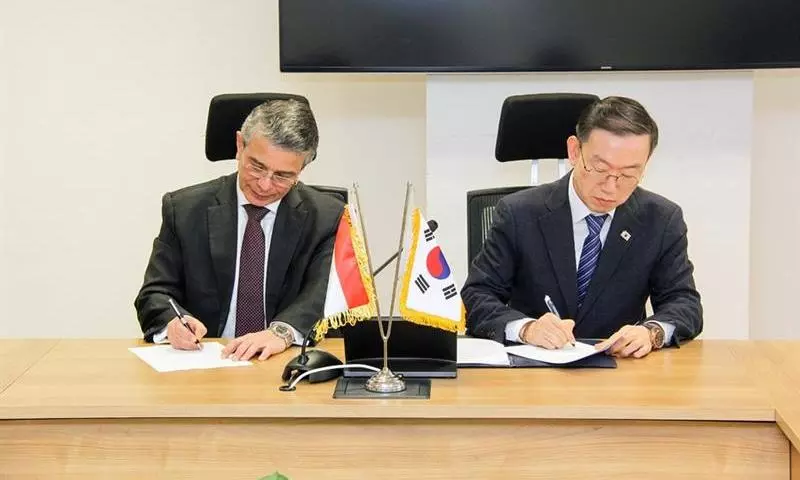
Egypt has signed a cooperation agreement with South Korea aimed at upgrading customs technology and strengthening logistics processes linked to trade and e-commerce. The memorandum of understanding was concluded between the Egyptian Customs Authority and the Korea Customs Service, signalling a renewed focus on digital customs operations and cross-border efficiency.
According to the agreement, the two sides will work on modernising Egypt’s customs systems to reduce clearance times and improve service delivery. Speaking at the signing ceremony on December 23, Head of the Egyptian Customs Authority Ahmed Amoui said the MoU aims to enhance efficiency across customs operations while supporting the growth of e-commerce-linked supply chains.
The agreement places emphasis on applying Korean technological expertise to develop smart systems and modern logistics services within Egypt’s customs framework. This includes upgrades that support faster processing of cargo flows and tighter integration between customs, logistics operators and digital trade platforms.
Capacity building also forms part of the cooperation, with plans to train customs staff and improve integrated logistics for express mail and parcel shipments. These measures are expected to directly impact last-mile and cross-border e-commerce logistics by streamlining inspection and release procedures.
Amoui said the partnership reflects Egypt’s broader digital transformation strategy and its push to expand technical cooperation with international partners. Customs digitisation has been positioned as a central element in facilitating trade, reducing procedural delays and supporting investment-linked supply chains.
As part of the engagement, delegations from the two customs authorities held technical meetings last week to exchange expertise and discuss smart customs systems. The Korean delegation also reviewed Alexandria’s technology ecosystem and e-commerce operations to identify areas for system upgrades and logistics integration.
The agreement aligns with Egypt’s wider plans to introduce new customs facilitation measures, recently referenced by Finance Minister Ahmed Kouchouk, though no implementation timeline has been announced. These measures are intended to ease customs and tax procedures for traders and logistics operators.
Customs reform remains a key pillar of Egypt’s programme with the International Monetary Fund, focusing on digitalisation, simplified procedures and reduced bureaucratic delays. The reforms are also linked to Egypt’s ambition to position itself as a manufacturing and export hub serving Africa, Europe and Asia.
The push comes amid volatility in trade performance. Egypt’s trade contracted by 27.6 per cent year on year to $3.3 billion in September 2025, even as exports rose by 28.2 per cent to $4.9 billion, highlighting the need for logistics and customs reforms to support sustained trade flows.