
How Africa’s e-commerce boom is rewriting the rules of logistics
As online shopping spreads across the continent, logistics networks are evolving through pickup stations, hybrid fulfilment and local innovation.
A customer would place an order and then wait for a phone call from a delivery rider asking for directions. Homes often did not have clear street names or exact addresses. Deliveries were guided by landmarks instead of maps. A shop near the church, the blue gate after the petrol station, the second turn after the market, these were the instructions that moved parcels from one point to another.
For years, this informal system worked because it had to work. Africa’s logistics networks grew around local realities, not around perfect infrastructure. Independent riders, small delivery agents and local transport operators became the backbone of commerce. They knew the streets, the shortcuts, the traffic and the people.
But today, something much bigger is happening.
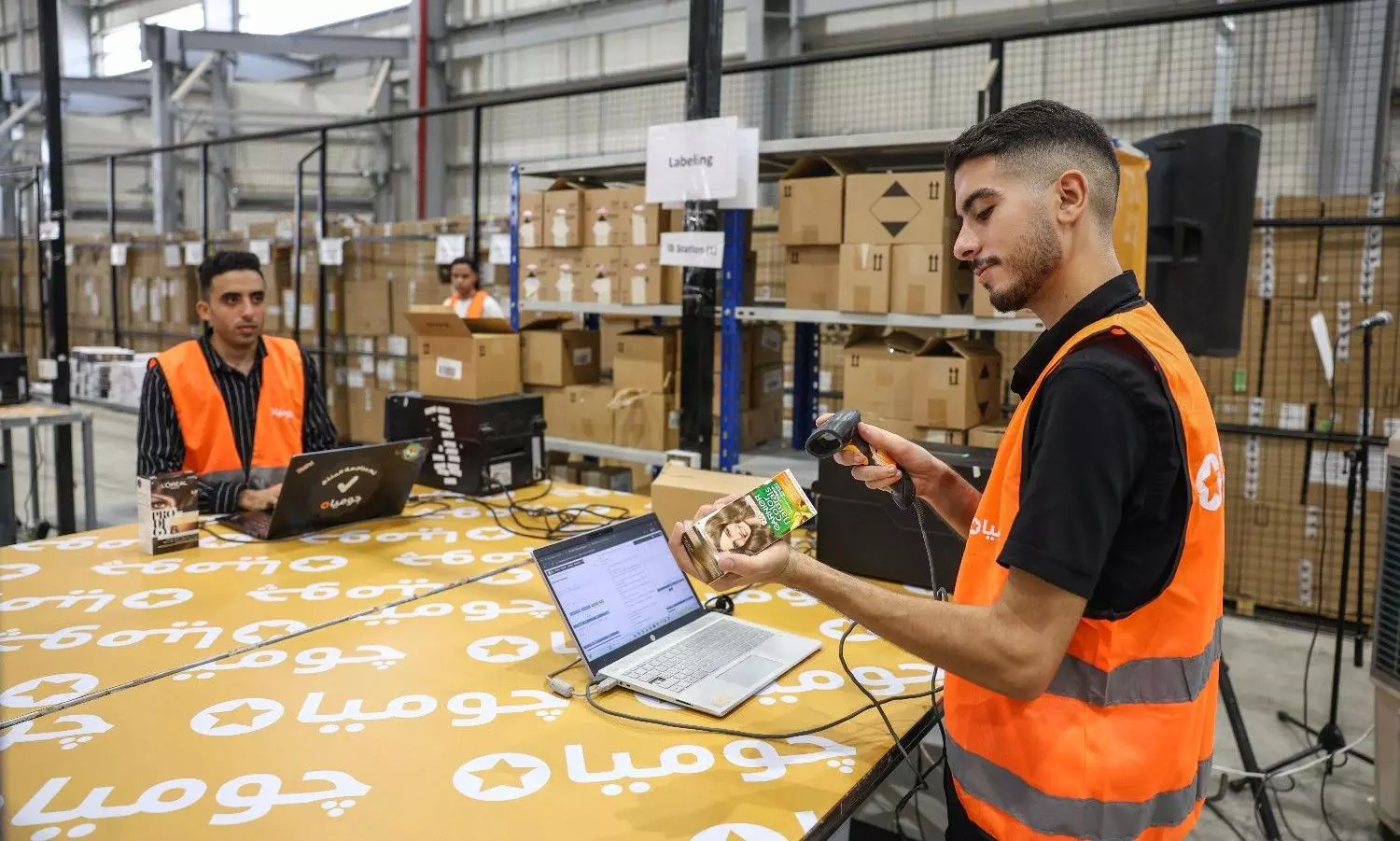
Across the continent, e-commerce is no longer just changing how people shop. It is changing how logistics itself operates. Warehouses are moving closer to cities. Pickup stations are becoming the new delivery address. Technology platforms are organising thousands of informal delivery players into coordinated systems. Last-mile networks are becoming smarter, faster and more structured. And perhaps most importantly, Africa is not copying Europe or the United States. It is building its own model. That model is flexible, hybrid and deeply connected to local realities.
The transformation can already be seen in cities like Lagos, Nairobi, Johannesburg and Dakar, where online shopping volumes are rising quickly and logistics companies are racing to keep up with customer expectations.
According to Ken Research, the African e-commerce logistics automation market is expanding as companies invest in fulfilment centres, warehouse technology and delivery systems to support growing online retail demand across the continent. Ken Research is a global market research and consulting firm that provides industry analysis, forecasts and business intelligence across sectors and regions. But behind every statistic is a much more human story. It is the story of how millions of people are trying to make deliveries faster, simpler and more reliable in markets where logistics has never been easy.
From informal networks to organised systems
To understand the scale of change, it is important to first understand how logistics traditionally worked across many African markets.
For decades, deliveries depended heavily on informal systems. Small operators, freelance riders and independent transport providers handled most movements. These networks were flexible and deeply local, but they were also fragmented. Tracking was limited. Delivery timelines were uncertain. Warehousing infrastructure was often underdeveloped.
As e-commerce volumes began growing, these systems started facing pressure. Customers wanted quicker deliveries. Sellers needed visibility. Platforms required consistency. Suddenly, logistics could no longer depend only on phone calls and local knowledge.
This is where the transition began.
According to Mbene Faye, Head of Logistics at Jumia Senegal, the company has gradually evolved from relying heavily on informal delivery systems into operating a more structured, technology-enabled fulfilment network.
Today, Jumia operates an asset-light, partner-enabled logistics network, combining its own infrastructure with a broad ecosystem of third-party logistics partners.
Mbene Faye, Jumia
But interestingly, the goal was never to remove informal logistics players completely. Instead, the focus was on organising them.
“Rather than replacing informal logistics players, Jumia has focused on organising them, bringing independent couriers, third-party providers and local delivery networks into a coordinated, platform-driven model,” Faye explained.
That single statement captures what is happening across Africa today. The future of African logistics is not fully formal and not fully informal either. It is becoming a hybrid system where technology platforms bring structure, visibility and coordination to existing local delivery ecosystems.
The rise of the hybrid logistics model
This hybrid approach is now becoming one of the defining features of African e-commerce logistics.
Instead of building expensive asset-heavy delivery fleets in every country, companies are combining their own infrastructure with local partners. Jumia, for example, now operates what it describes as an asset-light, partner-enabled logistics model. The company works with third-party logistics providers and local delivery partners while still maintaining control through routing systems, fulfilment infrastructure and technology platforms.
This allows flexibility in markets that differ greatly from one another.
Africa is not one single market. Delivery realities in South Africa are very different from those in Nigeria, Kenya or Senegal. Infrastructure quality, consumer behaviour, payment systems and urban density all vary widely. Because of this, logistics companies are learning that success depends on adaptation.
Mathys Enslin, Executive Vice President for Contract Logistics Africa at DP World Logistics, explained that the traditional model of large centralised warehouses serving retail stores is slowly giving way to a more decentralised fulfilment system.
“The new priorities are clear, faster delivery times, direct-to-consumer fulfilment and managing a broader and more complex range of SKUs,” he said.
That shift is now visible across several African cities. Urban fulfilment hubs, smaller warehouses close to dense populations and last-mile distribution centres are becoming increasingly common. Companies are trying to place inventory closer to consumers to reduce delivery times and improve efficiency.
Raghav Gandhi, CEO, Africa Logistics Properties, said e-commerce is fundamentally changing how warehouse networks are being designed across African cities. According to him, the traditional model of large, centrally located distribution hubs is increasingly being supplemented by a more distributed, city-led fulfilment structure. He explained that logistics operators are now prioritising proximity to consumers, retail clusters, industrial zones and transport corridors in order to reduce delivery times and improve last-mile efficiency.
Well-located logistics parks on the edge of major cities are becoming increasingly attractive.
Raghav Gandhi, Africa Logistics Properties
He added that this is creating growing demand for logistics parks located on the edge of major cities or along key transport routes into urban markets. These facilities offer a balance between accessibility, scalability and operational efficiency without the cost pressures of core urban land. According to Gandhi, this shift is also influencing how Africa Logistics Properties selects development sites, with a stronger focus on urban connectivity and long-term scalability.
In South Africa especially, the transformation is happening quickly. Enslin noted that the country’s structured warehousing systems, established courier networks and growing on-demand delivery platforms have made it one of the continent’s most advanced e-commerce logistics markets.
Pickup stations become the new address
One of the biggest challenges in African logistics has always been address identification systems.
In many areas, formal addresses are incomplete, inconsistent or difficult to locate. For logistics companies, this creates failed deliveries, delays and higher costs. But instead of waiting for perfect infrastructure, companies are creating alternatives.
Pickup and drop-off stations are now becoming one of the most important parts of Africa’s e-commerce delivery ecosystem.
Jumia currently operates around 2,380 pickup stations across its markets, and according to the company, nearly 74% of shipped packages move through these points.
This is not just a logistics adjustment. It is a major structural shift. These pickup locations are effectively becoming the continent’s alternative address identification network.
Customers collect parcels from trusted nearby points rather than waiting for home deliveries that may be difficult to complete. It reduces failed delivery attempts and improves efficiency for logistics operators.
According to Jumia, pickup stations are also becoming one of the most cost-effective fulfilment tools in African e-commerce. The company said its expansion strategy relies heavily on its pickup station network because it helps keep delivery costs low while also allowing it to reach consumers in remote and underserved areas.
At the same time, Jumia noted that customer expectations are evolving differently in dense urban markets. While pickup stations continue to dominate in many areas, urban consumers are increasingly demanding faster home delivery services. To respond to this shift, the company said it is maintaining next-day home delivery services in capital cities and is also piloting premium same-day delivery models in selected markets.
DP World is also investing heavily in this area. Through partnerships with companies like Pargo, DP World now has access to thousands of pickup points across South Africa. Additional parcel lockers are also being rolled out to strengthen customer access networks. These systems are quietly reshaping how delivery works in Africa. Instead of trying to force Western delivery models onto African cities, companies are building systems around how people actually live, move and shop.
Last-mile delivery is where the real battle is happening
The final stage of delivery, the last mile, remains the most difficult and expensive part of e-commerce logistics almost everywhere in the world.
In Africa, those challenges become even more complex. Traffic congestion, road conditions, limited connectivity and long travel distances all affect delivery performance. Yet this is also the stage that customers remember most. If a parcel arrives late, damaged or not at all, the customer experience breaks down immediately.
That is why logistics companies are investing heavily in last-mile innovation.
According to Jasen Smallbone, Senior Director Key Accounts and E-commerce at DHL Express Sub Saharan Africa, last-mile innovation is now critical to logistics strategy across the continent.
“In e-commerce, the last mile is where customer experience is won or lost,” he explained.
What makes Africa particularly interesting is the creativity being used to solve these problems.
In Lagos, for example, DHL introduced boats to move shipments between the mainland and Victoria Island, avoiding severe road congestion. In other markets, companies are using motorbikes, scooters, lockers and pickup points to improve delivery speed. This is creating a logistics ecosystem that looks very different from traditional global models. The solutions are local, practical and deeply connected to everyday realities.
Chinese platforms are reshaping the market
Another major force influencing African logistics today is the rapid rise of Chinese e-commerce platforms.
Companies like Temu are increasing cross-border parcel flows into African markets and changing how fulfilment systems operate. According to DP World, these platforms are driving strong growth in direct-to-consumer shipments from China while increasing demand for air freight and parcel consolidation hubs.
This trend is also changing warehousing strategies. Instead of relying heavily on local inventory storage, many platforms are moving towards hybrid global-local fulfilment systems supported by courier partners and local delivery networks.
Enslin explained that Chinese platforms are placing pressure on African logistics operators to compete on both speed and price. As a result, companies are being forced to rethink everything from customs clearance to parcel sorting and last-mile coordination. This shift is also creating demand for regional logistics hubs in cities such as Nairobi and Johannesburg.
The human side of logistics evolution
Behind all the infrastructure, technology and strategy discussions lies a more personal reality. For many small businesses across Africa, better logistics means access to opportunity.
A seller in Dakar can now reach customers in other cities more reliably. A small fashion brand in Nairobi can deliver faster through pickup networks. Informal delivery riders who once worked independently are now becoming part of organised digital ecosystems.
DHL says programmes supporting SMEs and digital trade are becoming increasingly important as online commerce expands across the continent. Mobile payment systems such as M-Pesa and PayPal are also helping connect more businesses and consumers into digital commerce networks.
This matters because e-commerce growth is not only about convenience. It is also about access.
Better logistics allows small businesses to participate in larger markets. It helps consumers access products that may not exist locally. It creates jobs across warehousing, transportation and fulfilment services. And perhaps most importantly, it gives structure to systems that were previously fragmented.
The informal economy is not disappearing
Even with all this progress, Africa’s logistics transformation remains incomplete.
Infrastructure gaps continue to slow expansion in many regions. Rural connectivity remains difficult. Customers are highly price-sensitive. Cash or pay-on-delivery systems still dominate several markets.
According to DP World, only around 30% to 40% of Africa’s e-commerce logistics ecosystem can currently be considered fully structured. Another large portion still operates through semi-structured hybrid systems, while a significant share remains informal.
That balance is expected to shift over the next few years as investment increases and logistics networks expand. But companies operating in Africa understand that informality will not disappear overnight. In fact, many now recognise that local flexibility is one of the system’s greatest strengths. The future will likely belong to businesses that can combine formal infrastructure with local adaptability. That means using technology without losing flexibility. It means building structure without ignoring local realities.
Africa is creating its own logistics model
For years, global conversations around logistics often focused on automation, robotics and massive fulfilment centres in developed markets.
Africa’s story is different.
The continent is building a logistics ecosystem shaped by mobile payments, pickup stations, hybrid fulfilment systems, informal delivery integration and local innovation.
That evolution is also changing the physical design of warehouses themselves. Gandhi explained that as fulfilment operations replace traditional bulk storage models, tenants are demanding more flexible warehouse layouts that can support sorting, packaging, light manufacturing and value-added distribution activities.
According to Gandhi, occupiers are also placing greater importance on efficient truck circulation, improved loading infrastructure and building layouts that reduce internal handling time. Sustainability and energy efficiency are becoming increasingly important as multinational occupiers seek to align African logistics operations with global ESG standards.
At the same time, Gandhi said demand is beginning to emerge for smaller and more flexible fulfilment facilities, especially from e-commerce, FMCG and retail operators. However, he noted that fully embedded urban micro-fulfilment centres are still at an early stage in many African markets. Instead, the current focus remains on mid-sized distribution facilities capable of serving both urban consumers and wider regional markets.
He added that over time, hybrid fulfilment structures are likely to become more common, combining large regional hubs with smaller urban satellite facilities as delivery expectations continue to rise.
It is not following a straight line.
It is leapfrogging.
That is perhaps the most fascinating part of this transformation.
The future of African e-commerce logistics will not look exactly like Europe, China or the United States. It will reflect Africa’s own economic realities, infrastructure gaps and consumer behaviour.
And slowly, delivery by delivery, that future is already taking shape.
Every pickup station opening in a busy neighbourhood, every rider using a digital routing system, every warehouse moving closer to urban consumers and every parcel crossing borders more efficiently is part of a much larger evolution.
What was once an informal network built on local knowledge is becoming a coordinated logistics ecosystem supported by technology, infrastructure and regional trade growth.
The journey is far from complete.
But across Africa, logistics is no longer simply about moving parcels. It is becoming the system that connects businesses, consumers and opportunity across the continent.