
How Gulf trade nodes meet Africa’s surging signage and LED demand
Gulf transshipment hubs and year-round digital sourcing are helping African importers bridge severe supply bottlenecks.
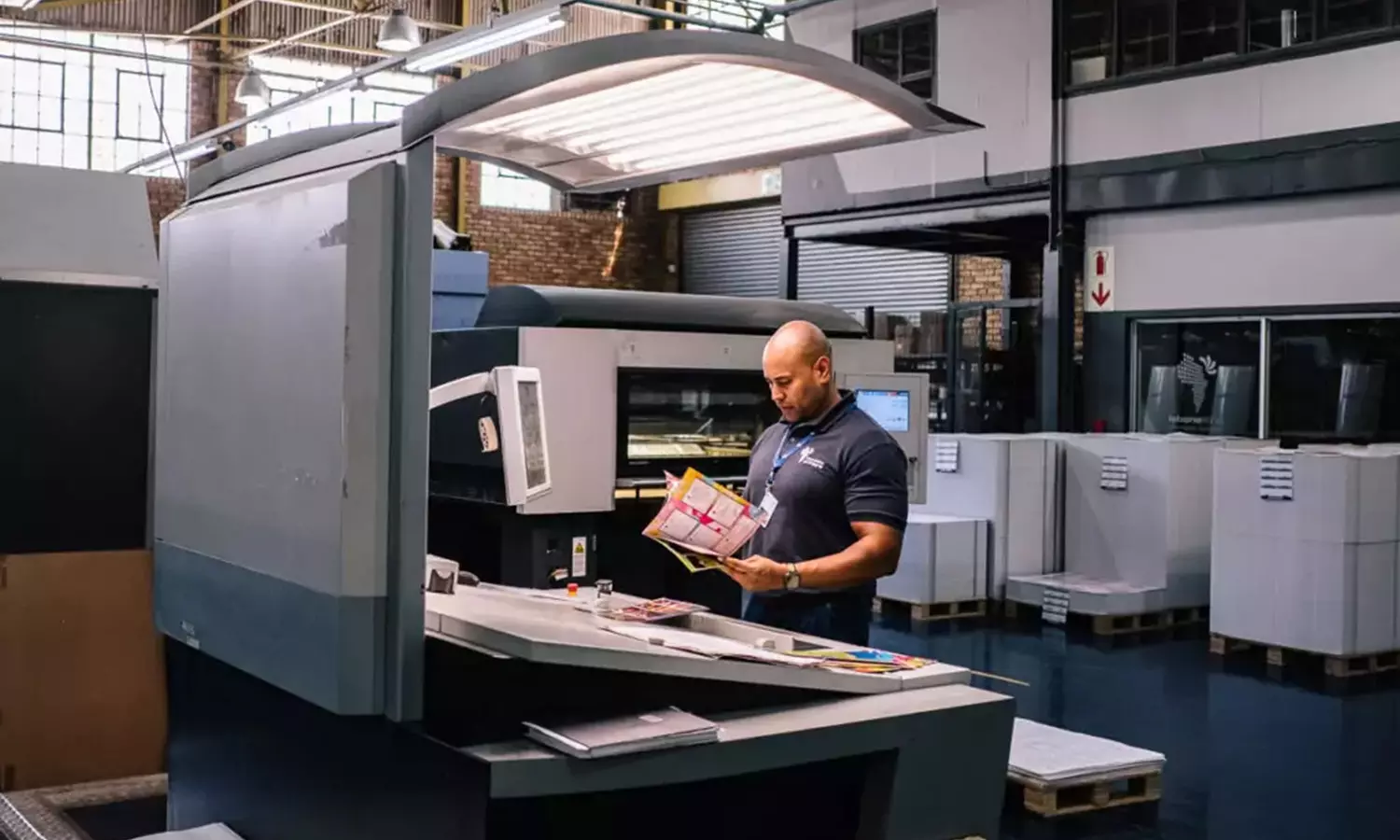
Across Africa’s rapidly expanding urban centres, commercial visual communications, digital printing, and outdoor advertising are undergoing an unprecedented structural transformation. Driven by widespread urban infrastructure rollouts, retail modernisation, and telecom expansion, high-brightness displays and industrial print systems have transitioned from niche marketing tools into essential civic and commercial infrastructure. Industry trade data compiled by SGI MENA indicates that the African Digital Out-Of-Home (DOOH) advertising market is expected to reach approximately $9.7 billion by 2031, while the broader African digital signage sector is projected to touch $4.5 billion. Within the digital signage domain, buyer demand remains heavily concentrated on illuminated dimensional letters, high-resolution LED video walls, and custom acrylic fabrications. Simultaneously, broader printing trade forecasts highlight that the continent's digital printing market is expanding at a 13.7% compound annual growth rate (CAGR), projected to grow from $4.9 billion to $10.6 billion by 2031. Within this print landscape, digital textile printing is rising at a 7.2% CAGR to support surging regional demand for wide-format soft signage, commercial packaging, and localised garment production.
This broad-based growth across print and signage builds upon a massive baseline hardware expansion across the continent. According to research from market intelligence firm IndexBox, Africa’s large-format display market, covering commercial-grade screens used in digital signage, control rooms, and stadiums, is estimated at $650 million to $800 million in 2026 and projected to reach $1.8 billion to $2.4 billion by 2035, reflecting a compound annual growth rate of 12% to 15%. IndexBox data further estimates that the continent's broader LED display, lighting, and fixtures market is larger still, valued between $3.8 billion and $4.2 billion in 2026 and forecast to approach $8.5 billion to $9.5 billion by 2035. In addition, market analysis from Mordor Intelligence flags Africa as the fastest-growing territory within the Middle East and Africa digital signage market overall, expanding at close to 11.7% annually as power and telecommunications upgrades unlock new commercial deployments.
Despite this extraordinary market momentum, local industrial manufacturing capacity remains severely constrained. IndexBox analysis reveals that import dependence across the continent exceeds 85% for finished display units and climbs past 95% for specialised LED modules and driver integrated circuits, with Chinese manufacturers supplying roughly 70% to 80% of total imported volume. IndexBox trade tracking further indicates that South Africa, Nigeria, and Kenya together account for roughly 60% to 65% of regional large-format display demand, with East Africa rapidly emerging as a secondary growth pole tied to Gulf trade routes.
This near-total reliance on long-distance overseas manufacturing leaves African fabricators and media operators completely exposed to global maritime friction points. Logistics provider Dachser highlights that vessel anchorage waits at major coastal gateways such as Cape Town have repeatedly extended up to 10 days, while recurring port congestion, slow customs clearance procedures, and weak inland road and rail connectivity regularly disrupt supply chains across Nigeria, Cameroon, and Tanzania. These operational bottlenecks are compounded by severe financial penalties. According to figures from the United Nations Conference on Trade and Development (UNCTAD), cited by the Africa Trade Fund, African importers pay up to 40% more than the global freight average due to limited shipping lines, smaller cargo volumes, and elevated marine insurance premiums tied to perceived regional risk. For an African buyer managing a time-sensitive retail rollout or municipal display contract, these freight delays translate into idle installation crews, excessive safety stock, and inflated project capital costs.
Faced with these persistent logistics barriers, the Gulf Cooperation Council (GCC) trade corridor, anchored by Dubai’s transshipment ecosystem, has emerged as a vital operational bridge connecting Asian manufacturing hubs with African end-markets. Rather than navigating the unpredictable timelines of direct ocean freight from East Asia, regional buyers are increasingly utilised Middle Eastern supply chains to source equipment and materials. Port profile data from Jebel Ali shows that nearly half of all imports entering Dubai are re-exported onward to secondary markets across Africa, Central Asia, and South Asia. The port maintains direct ocean feeder connections to critical East African gateways including Berbera, Aden, Djibouti, Mombasa, Dar es Salaam, and Durban.
By maintaining inventory within GCC free zones, Middle Eastern suppliers effectively position equipment closer to African destinations, drastically compressing total transit times and mitigating destination port uncertainties. The SGI MENA platform actively caters to African visual communications brands by bridging the gap between Asian manufacturing hubs, spanning Chinese machinery original equipment manufacturers (OEMs) alongside Indian and Korean LED component producers, and regional African buyers seeking verified quality and predictable delivery timelines.
Historically, the procurement of heavy capital equipment across the graphic arts, signage, and display sectors was compressed into brief, three-day annual trade exhibitions. While these physical events provided an essential space for face-to-face networking, relying solely on an annual show floor created significant operational friction. Vetting unfamiliar overseas vendors, verifying machinery specifications, negotiating payment terms, and conducting pre-shipment compliance checks often required months of tedious back-and-forth communication after the show concluded. When superimposed onto already stretched African supply chains, these administrative delays added unnecessary risk to multi-quarter procurement schedules.
To eliminate this structural disconnect, SGI MENA expanded its operational scope beyond its flagship annual show through the launch of the SGI Marketplace, a 365-day digital sourcing platform designed to complement its 29th physical exhibition, scheduled for December 7 to 9, 2026, at the Dubai World Trade Centre. Addressing the core challenge faced by regional fabricators, Ashik Thomas Joseph, Exhibition Director at SGI MENA, explained that signage equipment demand across Africa is growing fast, but sourcing from unfamiliar suppliers eats up weeks of back-and-forth before buyers can even lock in shipments. He emphasised that the SGI Marketplace connects African fabricators year-round with vetted GCC distributors like Masonlite, the official channel for global OEM suppliers including leading Chinese machinery brands, ensuring less time spent vetting and faster turnaround from order to delivery.
For nearly 30 years, the Sign & Graphic Imaging Exhibition has served as the definitive meeting ground where African and Middle Eastern buyers discover cutting-edge equipment and establish long-term supplier relationships. SGI Marketplace extends that trusted legacy beyond the annual event by facilitating continuous trade through established industry leaders like Masonlite, which has built three decades of credibility on the show floor. This permanent digital portal ensures that African buyers can source hardware, spare parts, and consumables continuously whenever project demands arise, rather than waiting for the next physical event cycle.
A major advantage of this modernised sourcing framework is its direct, friction-free engagement model tailored specifically for African importers. The platform eliminates unnecessary intermediaries by allowing African buyers to submit product-level inquiries directly to established suppliers at zero additional cost, without hidden platform fees or purchasing commitments. Through this direct digital connection, importers can thoroughly pre-qualify equipment specifications months before booking ocean or air freight. Buyers can confirm technical parameters such as voltage compatibility, power consumption, IP-rated weatherproofing for outdoor displays, Raster Image Processor (RIP) software integration, printhead configurations, and consumable availability. Pre-qualifying these critical details upstream eliminates the costly risk of discovering specification mismatches or compliance failures after equipment has arrived at a congested African port.
Once equipment is pre-qualified and orders are locked in, logistics managers can deploy optimised multimodal transport strategies tailored to cargo urgency and weight. Heavy machinery, large-format flatbed printers, CNC routers, structural aluminum frames, and bulk acrylic sheets are predominantly routed via containerized ocean freight on direct feeder lines out of Jebel Ali. Conversely, high-value, time-critical components, such as LED driver ICs, main control boards, power supplies, and replacement printheads, are increasingly moved via dedicated air freight operators like Emirates SkyCargo, Ethiopian Cargo, and Astral Aviation to prevent costly operational downtime during major commercial rollouts. In time-sensitive scenarios, hybrid Sea-Air operations allow bulk machinery to move via ocean to GCC free zones like JAFZA for staging, while urgent component assemblies are transferred directly to Dubai World Central for rapid air uplift into African hubs.
By organising suppliers across six core sectors, Sign & Display, Print & Pack, LED & Digital, Audio & Light, Retail & Event, and Smart Tech, SGI MENA aligns its platform with the complex, multi-category procurement requirements of modern African enterprises. In a trade landscape where physical port infrastructure and inland transportation links will take years to fully modernise, combining Gulf transshipment gateways with continuous digital pre-qualification provides an indispensable operational workaround. Shifting discovery, vetting, and compliance upstream allows African visual communications businesses to bypass costly delays, protect project schedules, and power the continent's rapid display and print expansion.