The relentless logistical siege of the Sudan humanitarian crisis
Airlink coordinates air logistics to deliver life-saving aid to 30mn people facing Sudan’s displacement crisis.
As the conflict in Sudan enters a harrowing new phase in early 2026, the nation has become the epicenter of the world's most severe displacement crisis. The statistics are staggering, yet they barely capture the human toll: nearly 30 million people are now in need of urgent assistance, with millions more displaced as violence surges across major urban hubs. For the logistics community, Sudan is no longer just a theater of operation; it is a testament to the life-saving necessity of coordinated air corridors and strategic partnerships.
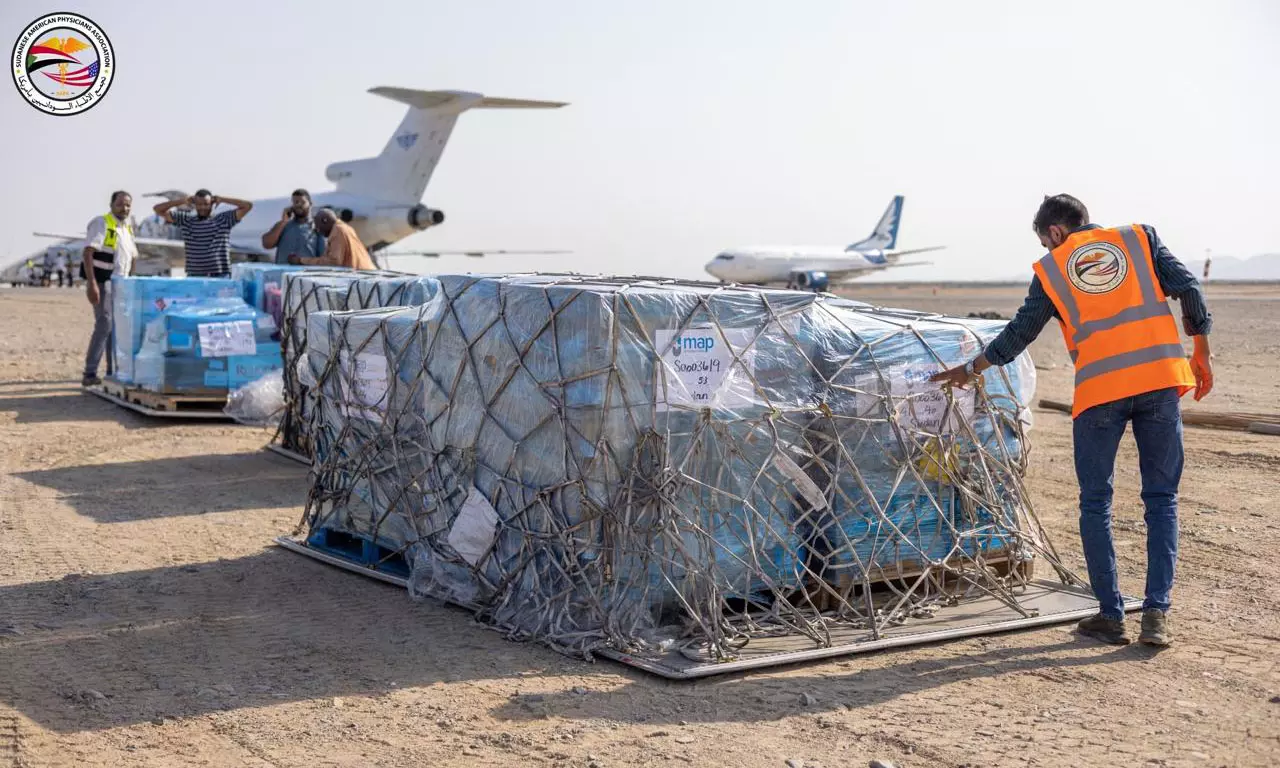
At the heart of the 2025 relief effort is Airlink, the global humanitarian nonprofit that serves as the essential bridge between the aviation industry and the NGO community. For Airlink, Sudan has emerged as its largest and most complex theater of operation this year, requiring a level of logistical precision that few other crises demand. By leveraging a powerful network of airline partners,including Qatar Airways, United Airlines, American Airlines, and Astral Aviation, Airlink has orchestrated a massive, continuous flow of critical supplies into some of the world’s most restrictive environments.
The scale of this intervention is a blueprint for modern humanitarian response. Throughout 2025, the alliance successfully transported over 277 tonnes of cargo, a feat that provided more than $2.6 million in transportation savings directly to NGOs. These are not merely financial figures; they represent a "logistics subsidy" that allows nonprofits to redirect their limited budgets from freight costs to direct service delivery on the ground. The cargo manifests reflect the dire needs of a population under siege, featuring high-priority shipments of hygiene kits, surgical equipment, and specialized medical tools designed to rebuild depleted clinical care systems. Furthermore, the delivery of water filtration units and Ready-to-use-Therapeutic Foods (RUTF) has been instrumental in addressing the twin threats of disease outbreaks and acute malnourishment that now stalk displacement camps.
However, the delivery of these goods is fraught with systemic hurdles that turn every mission into a "puzzle with missing pieces." The logistical infrastructure in Sudan has been shattered, leaving traditional supply chains in ruins. Fuel scarcity and widespread damage to transport hubs mean that even reaching a primary airport like Port Sudan is a high-stakes endeavor. In recent months, intermittent closures due to security threats and drone attacks have forced logistics planners to remain in a state of constant, agile redirection. This volatility is compounded by a widening "funding cliff." Despite the escalating violence and the resulting spike in need, NGOs are navigating a landscape of decreased international funding. This financial pressure has made the role of Airlink even more critical; by subsidizing the high costs of air freight, the alliance prevents the total collapse of the aid pipeline for organizations that otherwise could not afford the logistical premium of operating in a war zone.
The geographical complexity is perhaps best illustrated by the Chad-Sudan corridor. With violence intensifying across Darfur, the border town of Adre in Chad has been transformed into a critical staging ground for the regional response. Logistics teams must now navigate the arduous task of coordinating "last mile" deliveries from Chadian airfields into the heart of remote displacement camps. These routes are the only way to reach vulnerable populations who are increasingly isolated by military advancements. In these regions, the arrival of a single cargo plane carrying medical supplies or emergency shelter is often the only barrier between a community and a total humanitarian blackout.
The success of these missions relies on a diverse and deeply integrated ecosystem of nonprofit partners. Airlink acts as the logistical backbone for a "who's who" of international aid, supporting organizations such as INTERSOS, Medair, Relief International, ShelterBox, Samaritan’s Purse Canada, and the IFRC. The collaboration extends to medical specialists like International Medical Corps, Medical Teams International, and Partners for World Health, as well as nutritional experts from Action Against Hunger. By consolidating the shipping needs of these various groups, Airlink creates an economy of scale that maximizes every cubic meter of cargo space provided by their airline partners.
This collaborative model is the only way to meet a crisis of this magnitude. As Peter Frey, Airlink’s Humanitarian Program Manager for Sub-Saharan Africa, notes: “Today, Sudan is experiencing the largest displacement crisis in the world; it is also Airlink’s largest relief effort in 2025. While our organization, in partnership with a core group of NGOs, have successfully delivered immense amounts of aid, the community continues to face an uphill battle. NGOs continue to navigate decreased funding as spikes in violence drive ever-growing need and displacement. Airlink has seen an increase in requests to transport shelter, food, and medical supplies in recent months, and increased investments from philanthropy and the private sector will be needed to meet the growing demands of the nearly 30 million people and families in need of our urgent help.”
As we look toward the remainder of 2026, the logistical mission in Sudan remains a race against time. The convergence of conflict, depleted resources, and a struggling global funding environment means that the private sector’s role in humanitarian logistics is more vital than ever. The 277 tonnes delivered thus far are a monumental achievement, but they are only a fraction of what is required to sustain a nation of 30 million in peril.
For the aviation and logistics industries, Sudan represents the ultimate test of their commitment to humanitarian principles. It is a reminder that the world’s most sophisticated supply chains are at their most powerful when they are used to deliver hope to the places where the world’s most vulnerable people are waiting. The bridge built by Airlink and its partners is still standing, but its continued strength will depend on the sustained support of the global community to ensure that no family is left beyond the reach of life-saving aid.