
DP World posts $24.4 billion revenue and $6.4 billion EBITDA in 2025
Total group gross throughput increased 5.8 per cent to 93.4 million twenty-foot equivalent units.
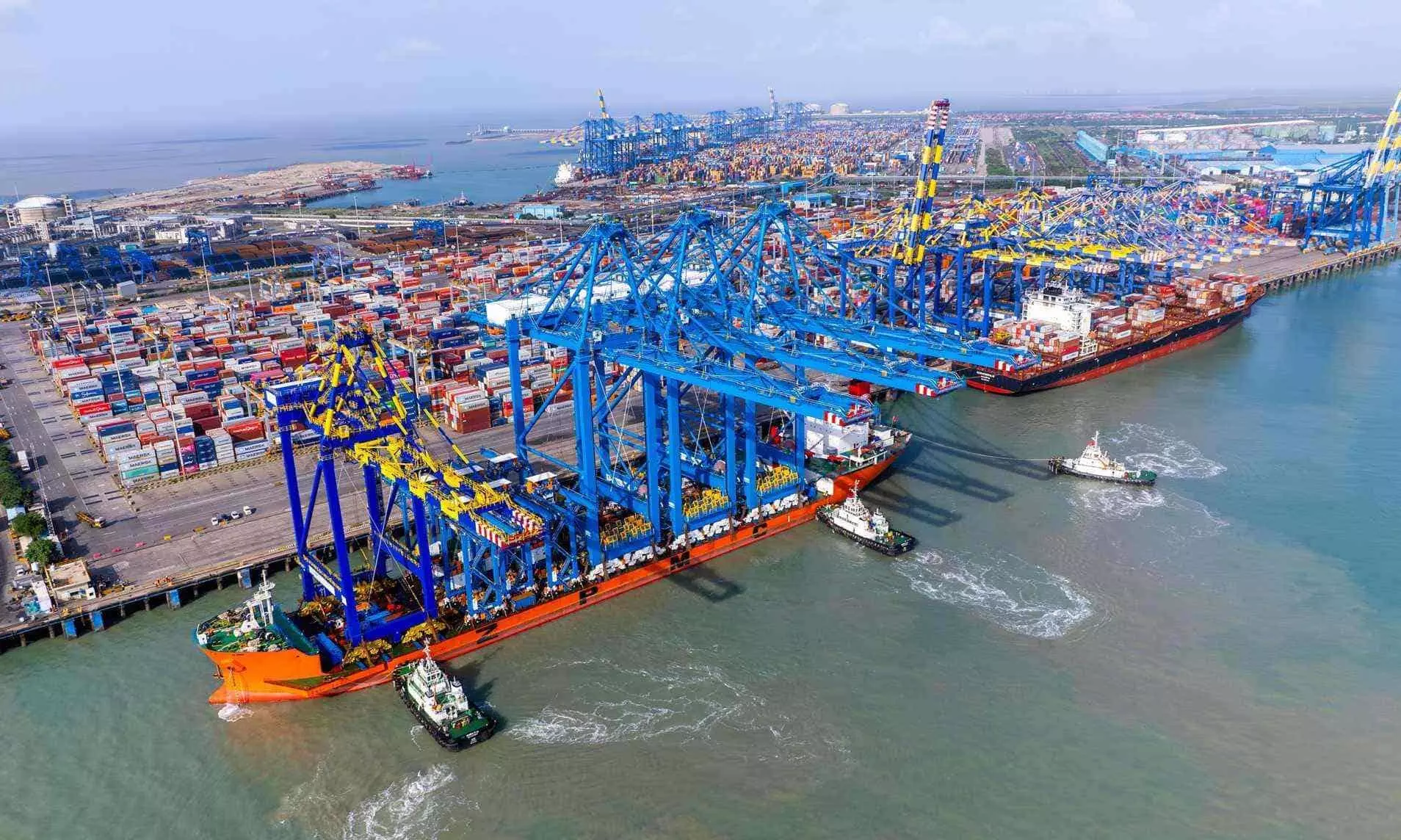
DP World reported revenue of $24.4 billion for 2025, an increase of 22 per cent compared to the previous year, while adjusted EBITDA rose 18 per cent to $6.4 billion with a margin of 26.3 per percent. The company said the growth was supported by performance across its Ports and Terminals and Logistics businesses.
Total group gross throughput increased 5.8 per cent to 93.4 million twenty-foot equivalent units. Profit for the year rose 32.2 per percent to $1.96 billion, while operating cash flow increased 14 per cent to $6.3 billion.
H.E. Essa Kazim, Chairman of the Board of Directors at DP World, said the results reflected the company’s ability to navigate changing trade conditions. “In an environment defined by heightened uncertainty and changing trade dynamics, our diversified portfolio, disciplined capital allocation and focus on high-yield cargo enabled us to deliver resilient earnings and strong cash flow. These results reflect the strength of our integrated platform and our ability to adapt as supply chains reconfigure.”
Ports and Terminals operations recorded higher volumes and improved yield during the year. The company reported that, like-for-like, revenue per TEU increased by 8.5 per cent.
Yuvraj Narayan, Group CEO of DP World, said the group continued to strengthen its integrated logistics platform. “Ports & Terminals performed strongly, supported by healthy volumes, improved yield and disciplined cost management, with like-for-like revenue per TEU increasing by 8.5%. In 2025, we unified our Marine Services business under a single DP World brand, strengthening our position as a fully integrated global logistics provider. Across Logistics and our broader trade platform, we continued to scale capabilities and deepen collaboration through our ‘One DP World’ operating model. We remain focused on disciplined capital allocation, operational excellence and customer-centric execution—supporting customers through near-term uncertainty while investing selectively to deliver sustainable long-term growth.”
Return on Capital Employed increased to 9.9 per percent in 2025 from 8.9 per cent in 2024, reflecting higher earnings during a period marked by geopolitical and trade uncertainty.
DP World invested $3.1 billion in capital expenditure in 2025, compared with $2.2 billion in the previous year, to support capacity expansion and productivity improvements across its global operations. Port capacity increased to 109 million TEU during the year.
For 2026, the company has set a capital expenditure budget of about $3 billion. Investments will focus on projects at Jebel Ali, Drydocks World, Tuna Tekra in India, London Gateway in the United Kingdom, Ndayane in Senegal and Jeddah in Saudi Arabia.
DP World also reported progress in reducing emissions. Scope 1 and Scope 2 emissions declined 14 per cent compared with a 2022 baseline, while about 67 per cent of global electricity consumption is sourced from renewables.
India remained an important contributor to group performance in 2025. DP World said its India operations recorded their strongest Ports and Terminals performance to date. The company’s economic zones in Chennai, Mumbai and Kochi have crossed 80 per cent occupancy.
DP World is also investing in multimodal infrastructure in India to strengthen rail and inland connectivity between ports and inland markets. Construction of the 2.19 million TEU Tuna Tekra container terminal in Gujarat is progressing according to schedule.
The company also announced plans to invest an additional $5 billion in India to expand its integrated supply chain network that supports export and domestic trade.
Rizwan Soomar, CEO and Managing Director for Subcontinent, Central Asia, Levant and Egypt at DP World, said the company sees long-term potential in the Indian market. “India remains a key growth market for DP World, and our continued investments reflect our confidence in the country’s long-term trade potential. From expanding our ports and logistics infrastructure to further strengthening multimodal connectivity and developing world-class economic zones, we are committed to enhancing an integrated supply chain network that supports both international and domestic trade. These initiatives will enhance efficiency, unlock new opportunities for businesses, and further contribute to India’s economic growth.”