
Egypt aligns export policy and gold banking to reshape logistics flows
These measures are expected to reduce friction in export logistics by improving preparedness before cargo enters international supply chains.
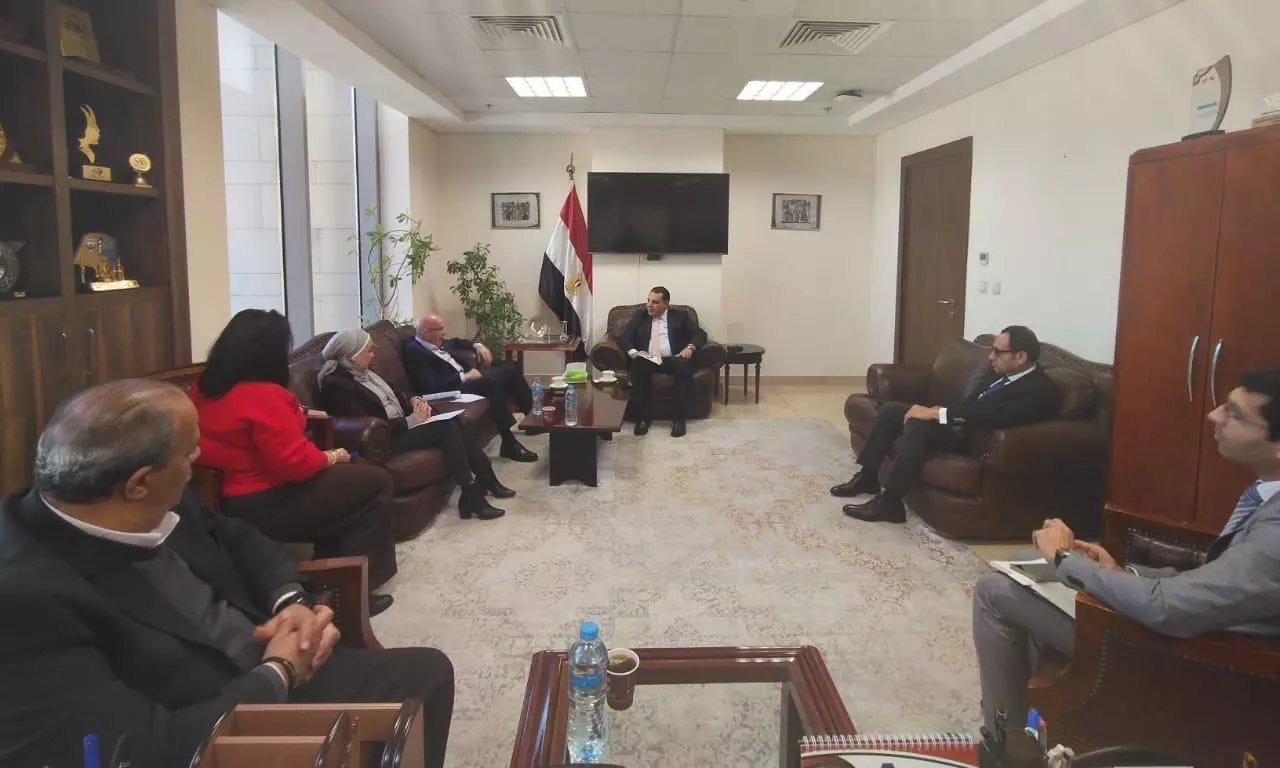
Egyptian trade and financial authorities moved in parallel this week to strengthen export-led logistics flows, as the Egyptian Commercial Service and the Central Bank of Egypt advanced initiatives aimed at improving market access, trade facilitation and regional value chains.
The Egyptian Commercial Service held discussions with the Egyptian Exporters Association (Expolink) to expand cooperation focused on supporting Egyptian exports into global markets, with logistics coordination emerging as a core element of the talks. The meeting brought together ECS head Abdel Aziz El-Sherif and Expolink chairman Mohamed Qassem to review mechanisms that link exporters with overseas commercial offices, trade missions and market-entry processes.
El-Sherif said the coming period would see intensified cooperation with Expolink through targeted action plans in international markets, reflecting a push to improve how exports are prepared, registered and routed through foreign jurisdictions. The ECS said it is working to align exporters with established market-entry mechanisms and to identify new export opportunities, a process that has direct implications for freight planning, documentation and compliance-driven logistics.
The ECS described Expolink as a strategic partner and highlighted the need to expand the exporter base while focusing on high value-added sectors, a shift that typically increases demand for specialised logistics, tighter transit timelines and better coordination across ports, airports and inland networks.
Qassem said the transformation underway in global industry includes a gradual shift from Asia to Africa, positioning Egypt to capture rising export and investment flows. He said Egypt’s location supports this transition and has already contributed to higher investment interest and demand for Egyptian exports, trends that place additional pressure on export infrastructure and cross-border logistics capacity.
Expolink said it has expanded its activities to include promoting investment for export, which can be coordinated with ECS offices abroad to attract foreign direct investment into export-orientated industrial sectors. Executive Director Ahmed Taha outlined how promotional programmes and trade missions, organised with commercial offices, are being used to connect exporters with overseas buyers, requiring structured logistics support to convert leads into sustained trade flows.
The ECS said it will organise regular virtual meetings with its offices abroad to address company enquiries and raise awareness of foreign market requirements, including product registration and regulatory authorities. Such measures are expected to reduce friction in export logistics by improving preparedness before cargo enters international supply chains.
In a parallel development, the Central Bank of Egypt signed a memorandum of understanding with the African Export–Import Bank to explore the creation of a pan-African gold bank, a move that could reshape bullion logistics and secure value chains across the continent.
Under the agreement, the two institutions will commission a feasibility study on establishing an integrated gold banking and refining hub in a designated free zone in Egypt. The project could include an accredited refinery, secure vaulting facilities and related trading and financial services, with the stated aim of reducing Africa’s reliance on overseas refining and trading centres.
“The partnership also builds on a shared vision between the CBE and Afreximbank to support domestic manufacturing, enhance sustainable development, and deepen regional financial and trade integration, fostering a robust and advanced African economic ecosystem,” the CBE said.
CBE Governor Hassan Abdallah said the project could evolve into a broader pan-African framework involving governments, central banks and market participants, subject to regulatory approvals. He said Egypt’s role as a potential hub reflects confidence in its ability to host large continental projects, linking Africa, the Middle East and Europe, with implications for high-security transport, storage and cross-border movement of precious metals.
Afreximbank President George Elombi said the initiative is intended to reshape how gold is extracted, refined, stored and traded within Africa. “We make a bold declaration that Africa’s gold must serve African people,” Elombi said.
The export-focused engagement between the ECS and Expolink and the gold banking initiative led by the central bank point to a broader strategy to anchor trade flows within Egypt, placing logistics, compliance and infrastructure at the centre of efforts to expand exports and regional integration.