
Egypt pushes auto localisation to strengthen logistics and exports
The aim is to increase the competitiveness of Egypt’s free zones as logistics and export hubs.
Egypt is moving to deepen automotive localisation as part of a broader strategy to strengthen industrial logistics, expand exports and attract foreign investment, with the government targeting global manufacturers and scaling up production-linked infrastructure.
Prime Minister Mostafa Madbouli said the state is prioritising the localisation of the automotive industry by drawing major international manufacturers under the National Automotive Industry Development Programme. Speaking during a meeting with the ministers of industry, finance and foreign trade, he said the plan aims to build a strong industrial base capable of meeting domestic demand while supporting export growth, with a focus on electric vehicles and their components in line with global clean energy trends.
Cabinet Spokesman Mohamed el-Homsani said the strategy seeks to enhance the competitiveness of Egyptian industry at both regional and international levels. The meeting reviewed the current share of electric vehicles in the market, projected growth rates, and investment proposals submitted by international companies, along with incentives designed to encourage local manufacturing and strengthen supply chains.
Discussions also covered measures to increase the competitiveness of Egypt’s free zones as logistics and export hubs. According to figures presented, the number of projects in Egyptian free zones reached 1,237 by October 2025, with total capital of $14.3 billion and employment for around 245,000 workers. The zones play a key role in industrial production, storage and trade-related services.
Minister of Investment and Foreign Trade Hassan El-Khatib said Egypt’s nine public free zones host 1,019 projects with total investment costs of $38.5 billion. He noted that export performance in 2024 included $11 billion in commodity exports, $7 billion in service exports and $6.5 billion in petroleum exports, underlining the role of free zones in supporting outbound logistics and international trade.
El-Khatib added that priority sectors identified for free zone development include automotive components, logistics services, port development, information technology, pharmaceuticals, food processing, textiles and energy solutions, aligning industrial policy with transport and trade infrastructure planning.
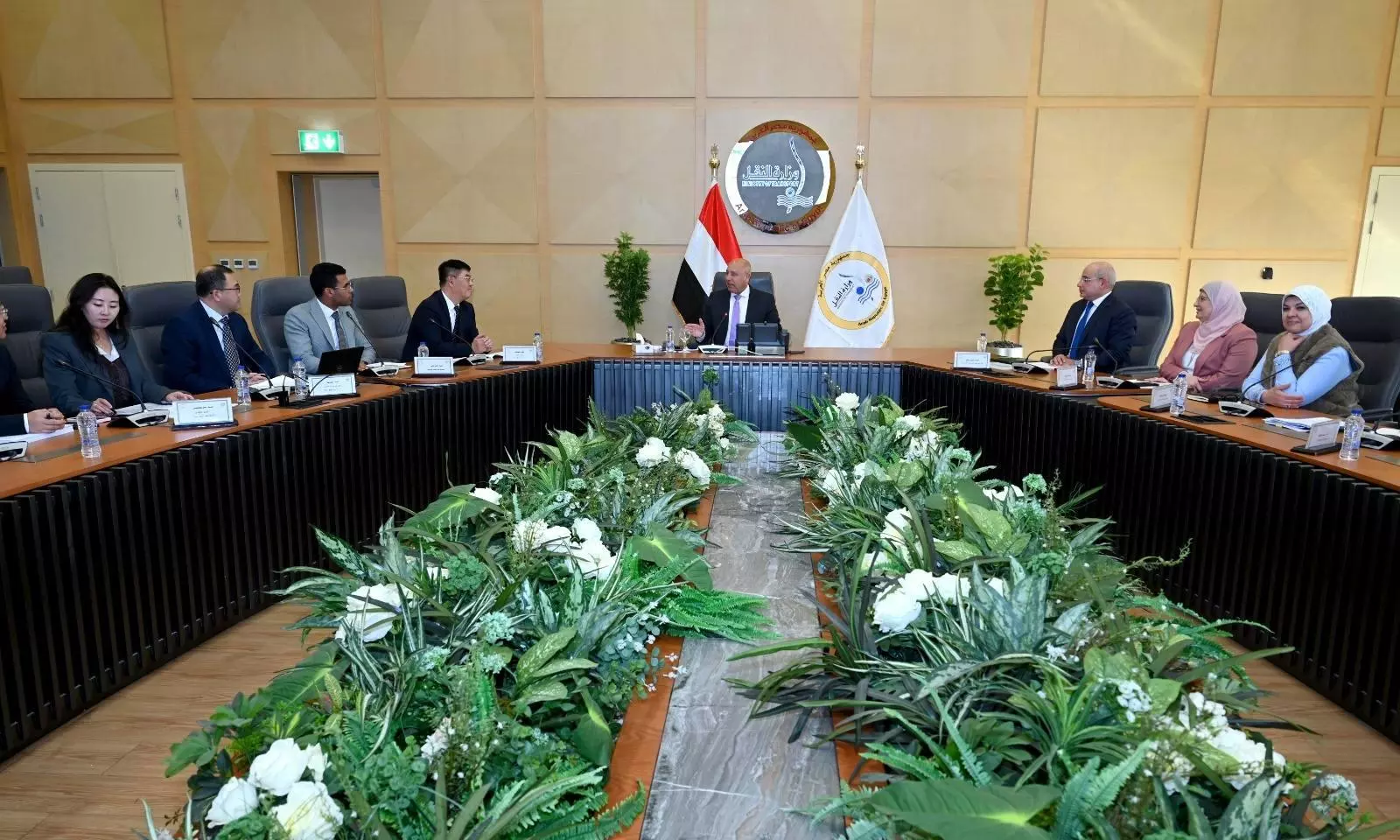
In a parallel development, Deputy Prime Minister and Minister of Industry Kamel El-Wazir met Shin Feng Steel CEO Malu Chang to discuss a $10 billion integrated industrial steel complex planned in Egypt. The facility will produce 10 million tonnes of automotive and industrial steel annually and will include hot and cold rolling, galvanising and advanced processing lines.
The project is expected to support the automotive, energy and infrastructure sectors while strengthening domestic supply chains. It will rely on local iron ore and renewable energy, create 15,000 direct jobs and 85,000 indirect jobs, and contribute to reducing imports and increasing export capacity, reinforcing Egypt’s position as a regional manufacturing and logistics hub.