
How multimodal logistics can connect landlocked African countries
UN Trade and Development estimates landlocked economies face 50% higher transport costs and twice the import wait times, making multimodal logistics vital to connect inland markets.
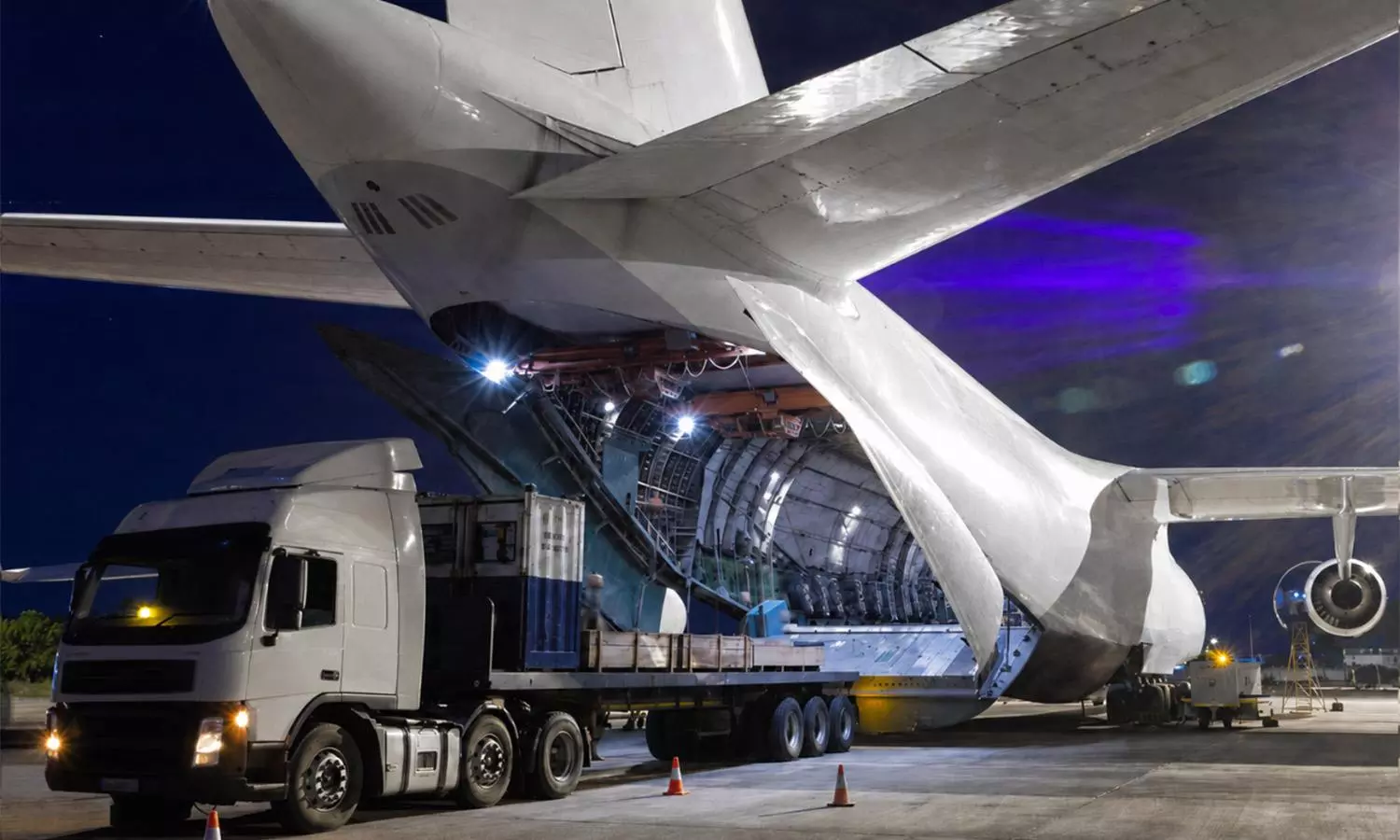
Cargo loading of Chapman Freeborn’s Antonov An-124 ahead of a charter mission from Gabon to Mozambique
For a landlocked African country, the hardest part of moving cargo may begin after it leaves the port. A container arriving at a coastal gateway can still face hundreds or thousands of kilometres of road or rail travel, border crossings, customs procedures and infrastructure bottlenecks before reaching its destination.
Africa’s landlocked countries are increasingly seeking to change that equation. The United Nations Development Programme (UNDP) describes Africa’s landlocked developing countries (LLDCs) as emerging strategic “land-linked” economies, with their geographical position becoming an asset as regional connectivity improves and the African Continental Free Trade Area (AfCFTA) gains momentum.
“Africa’s land-linked economies are transforming their geographic positioning into a strategic asset. To unlock their full potential, we must mobilise diverse financing, shift from low-value sectors, and harness technology to strengthen trade corridors, turning these nations into engines of intra-African and global trade,” said Ahunna Eziakonwa, UN Assistant Secretary-General and UNDP Regional Director for Africa, in a UNDP blog.
Turning that ambition into functioning trade corridors requires different modes to work together as one supply chain. “The most effective solution often assigns each transport mode to the part of the journey it can perform best,” said Gerhard Coetzee, Vice President Cargo – IMEA at Chapman Freeborn.
That can mean ocean freight moving cargo to a coastal gateway, rail carrying it inland, road completing the final journey and scheduled air or an air charter bridging a time-critical gap.
From geographical constraint to strategic position
Africa’s LLDCs export commodities including diamonds, copper, gold, coffee, sugar and textiles. Nearly 88% of Eswatini’s exports go to African countries, while Rwanda, Lesotho, Malawi, Niger, Uganda and Zimbabwe each recorded more than 30% of exports going to regional markets between 2013 and 2024.
Infrastructure is central to making these connections faster and more predictable. The Ethio-Djibouti Railway (EDR) reduced freight transit times from 72 hours to 12 hours, strengthening Ethiopia’s access to Djibouti. Uganda is developing road and rail connectivity through initiatives including the Standard Gauge Railway and Malaba–Kampala corridor.
Moreover, UNDP estimates landlocked economies face transport costs around 50% above the global average and wait twice as long for imports. Dependence on neighbouring countries and transit corridors also increases exposure to border delays, congestion, customs procedures, poor roads and security disruptions. For routine cargo, road, rail and ocean freight remain indispensable. But the calculation changes when the cost of delay becomes greater than the cost of faster transport.
“Air charter becomes viable when cargo is urgent, valuable or operationally critical,” Coetzee said. Chapman Freeborn sees demand across Uganda, Zambia, South Sudan and eastern DRC.
Multimodal logistics in practice
The principle is simple: each mode handles the part of the journey where it works best. And, sometimes this principle works beyond the landlocked countries.
In August, Maersk launched a high-frequency rail service linking Tangier and Casablanca, connecting Morocco’s maritime gateway with its commercial centre. Casablanca handled 17 million tonnes in the first half of 2026, including 3.53 million tonnes in June, up 32% year on year, and accounts for about 35% of Morocco’s port traffic. The service combines ocean freight arriving at Tangier with dedicated rail to Casablanca, customs clearance, inland storage and final-mile trucking.
“By bringing Tangier and Casablanca together, we're creating a simpler way to move cargo into Morocco's main commercial center,” said Ruben Moratinos, Head of Sales Maghreb, Maersk.
For landlocked markets, similar connections can provide alternatives when one section of a corridor becomes congested or unreliable. “The commercial case for air charter is determined less by distance than by the consequences of delay,” Coetzee said. Air charter can fill gaps where scheduled services do not reach. “Rather than replacing road transport, charter removes the slowest or least predictable section of the journey,” he said.
“Rather than replacing road transport, (air) charter removes the slowest or least predictable section of the journey.”
Gerhard Coetzee, Chapman Freeborn
Chapman Freeborn recently supported a mining movement using scheduled capacity for the first leg, followed by a charter to a West African airport. Road transport completed the final leg. In another operation, 10 tonnes of urgent oil and gas cargo moved by air from East Africa to Southern Africa before continuing by road.
“In one operation, Chapman Freeborn arranged an Antonov AN-124 charter from the Middle East to Rwanda for vital components, which were transferred by road from the airport to the plant for assembly,” Coetzee said. He further added that the key is to plan the movement as one integrated supply chain rather than treating the flight and onward delivery as separate transactions. It also arranged two AN-12 charters from Johannesburg to West Africa carrying almost 18 tonnes of oversized mining and oil and gas cargo, including one item weighing more than six tonnes.
Sharing another example, Coetzee mentioned its South Africa cargo team chartered the Pilatus PC-12 almost 30 times in one year to transport soil and marine biological samples, dry ice, mining and oil and gas shipments, automotive spares, pharmaceuticals and relief supplies. Its ability to operate from smaller airfields made it particularly suitable for remote destinations and difficult terrain.
Air cargo is often preferred when road or rail infrastructure is inadequate or delivery timelines are critical. But beyond physical infrastructure, Africa needs efficient borders and digital systems to reduce geographic barriers. UNDP highlights Burkina Faso’s use of digital payments to connect farmers with urban markets, while Ethiopia is using blockchain to meet EU export standards. Blockchain pilots in Rwanda and Uganda have reduced border clearance times by up to 80%. Energy infrastructure is also vital for LLDCs to develop processing and manufacturing. Meanwhile, AfCFTA is deepening intra-African trade. As Dr Samuel Doe UNDP Resident Representative in Ethiopia said, “With AfCFTA, LLDCs can turn geography into a competitive edge—moving goods, services, and data faster and more affordably across Africa and beyond.”
The final mile remains the test
Typically, the main challenges for logistics operators include permits, airport infrastructure, handling capacity, customs requirements, operating hours, runway restrictions, fuel availability, security and onward road connectivity. These challenges become even more complex when handling oversized cargo, which requires airports and equipment capable of accommodating both the aircraft and the shipment.
Sharing an example, Coetzee said that when Chapman Freeborn transported a 13-tonne Trent 1000 engine from Africa to Singapore for maintenance, the team also had to source cranes and a specialist lifting spreader. The operation had to meet a fixed maintenance slot, with the flight departing 11 days after the contract was confirmed. The movement highlights why local knowledge, suitable handling equipment and coordination between offices and suppliers can be as important as aircraft availability.
Road and rail will remain the backbone of inland trade, while scheduled air will handle regular international flows. Charter can bridge gaps where urgency, destination or cargo characteristics require greater flexibility. The gap can be further fulfilled by newer options like drones. However, Coetzee also mentioned that drones can only be seen as a potential extension of an end-to-end logistics network rather than a replacement for conventional aircraft or road transport.


