
How UNICEF moves first 100,000 HPV vaccine vials to Papua New Guinea
UNICEF and its partners are supporting the delivery of 280,000 HPV vaccine vials as Papua New Guinea prepares to expand protection for girls nationwide.
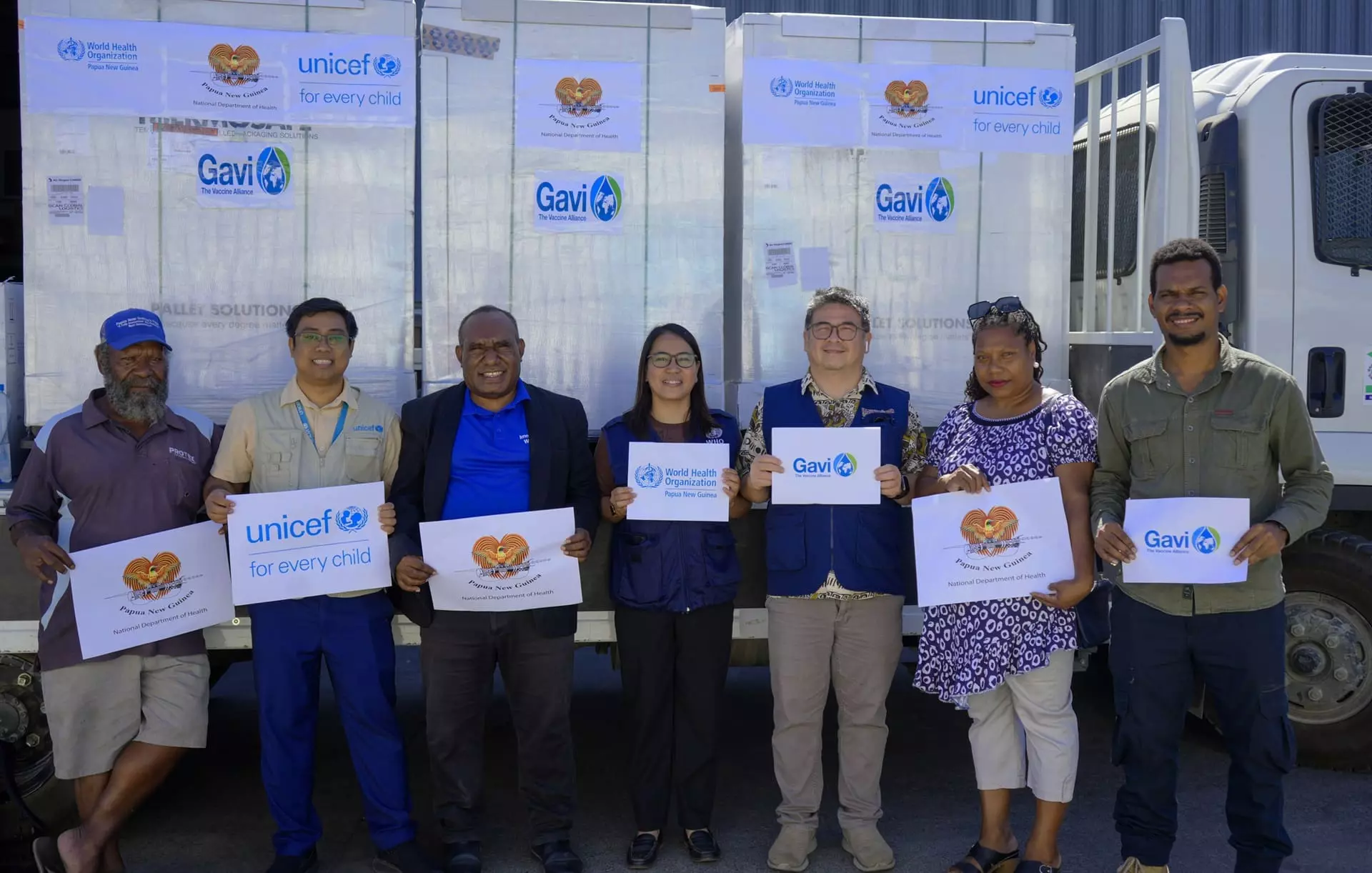
UNICEF moved 100,000 HPV vaccine vials from Denmark to Papua New Guinea, with support from Gavi, WHO and the PNG government, and logistics partners Scan Global Logistics and Air Niugini Cargo. Photo: @UNICEFPapuaNewGuinea
Around 1,053 women develop cervical cancer each year in Papua New Guinea (PNG), while approximately 650 die from the disease. The country has the second-highest cervical cancer incidence and mortality rates in the Pacific region and ranks 12th globally.
Against this backdrop, Papua New Guinea received its first shipment of 100,000 human papillomavirus (HPV) vaccine vials on August 6, according to UNICEF, marking the start of a national rollout to protect girls against HPV-related cervical cancer. The shipment was handled by Danish freight-forwarder Scan Global and Papua New Guinea-headquartered airline Air Niugini Cargo.
A further 180,000 vials are expected, bringing the planned supply to 280,000 vials. The first phase of the programme is expected to begin in September 2026, targeting approximately 60,000 girls aged 9 to 14 years across two provinces, before expanding to additional provinces as vaccine supplies and implementation capacity increase.
HPV vaccination is a key component of cervical cancer prevention. The World Health Organization's (WHO) global elimination strategy calls for 90% of girls to be fully vaccinated against HPV by age 15, alongside screening and treatment for women with cervical disease. The vaccine protects against the HPV types responsible for most cervical cancers and provides the greatest protection when administered before exposure to the virus.
Air transport and cold-chain logistics
The shipment also highlights the logistics required to move temperature-sensitive vaccines from international manufacturers to health systems and, ultimately, communities.
UNICEF is supporting the Government of Papua New Guinea with vaccine procurement and delivery, cold-chain and supply systems, programme planning and community engagement. Its Supply Division, based in Copenhagen, manages global vaccine procurement and logistics, coordinating the delivery of around three billion vaccine doses annually.
Photo: @UNICEFPapuaNewGuinea
"Every girl deserves the chance to grow up healthy and protected from a cancer that can largely be prevented."
Dr Veera Mendonca, UNICEF
Most UNICEF-procured vaccines are transported by air directly from manufacturers to destination countries. The shipments require temperature-controlled handling throughout the journey and must reach their destination before expiry.
Following arrival in Papua New Guinea, the HPV vaccines were handed over to the Government and placed in cold storage. They will subsequently move through the national immunisation supply chain to provincial, district and health-centre storage facilities before being administered by health workers.
Maintaining the required temperature throughout these stages is essential to preserving vaccine quality. The process involves coordination between manufacturers, procurement teams, transport providers, health authorities and logistics partners.
With the remaining 180,000 vials expected to support the wider rollout, cold-chain capacity, inventory management and reliable distribution will become increasingly important as the programme expands beyond its initial two provinces.
HPV vaccines. Photo: WHO / Glenda Gonzales
The operation illustrates how international procurement, air freight, temperature-controlled storage and last-mile distribution underpin vaccination programmes, alongside financing, health-worker training and community engagement.
Coordinating the rollout
The Government of Papua New Guinea has allocated PGK 6.2 million ($1.3 million) in its 2026 National Budget to support the introduction of the HPV vaccine, with additional co-financing from Gavi, the Vaccine Alliance. The National Department of Health is leading the programme in coordination with the National Department of Education and Provincial Health Authorities. WHO is providing technical support for policy development, programme planning, health-worker training, monitoring and evaluation.
UNICEF is supporting vaccine procurement and delivery, cold-chain and supply systems, programme planning, and engagement with families and communities. It is also supporting the use of immunisation data to identify gaps and help vaccines reach eligible girls facing barriers to access.
Dr Veera Mendonca, Country Representative, UNICEF Papua New Guinea, said, “Every girl deserves the chance to grow up healthy and protected from a cancer that can largely be prevented. The arrival of these HPV vaccines is an important step, but vaccines only protect girls when they reach them safely and on time. For decades, UNICEF has worked alongside the Government of Papua New Guinea to strengthen national immunisation systems. From procuring vaccines and strengthening cold-chain systems to planning delivery and helping families access trusted information, our focus is on supporting health workers to reach every girl, wherever she lives. Strong immunisation systems protect children today and help build a healthier Papua New Guinea for generations to come.”
Logistics beyond international delivery
The arrival of the first shipment represents only one stage of the supply chain. Following international transportation, vaccines must be stored and distributed through multiple levels of Papua New Guinea's health system.
The country’s geography and dispersed communities make reliable distribution an important part of the rollout. UNICEF said it is supporting the Government with cold-chain and supply systems, programme planning, operational processes and resource mobilisation. Data from the rollout will also be reviewed to identify gaps and improve immunisation services as the programme expands.


