
Kenya launches Naivasha–Kisumu–Malaba SGR construction
The new SGR phase aims to ease cargo movement, connect inland regions to ports, and strengthen Kenya’s role in regional trade.
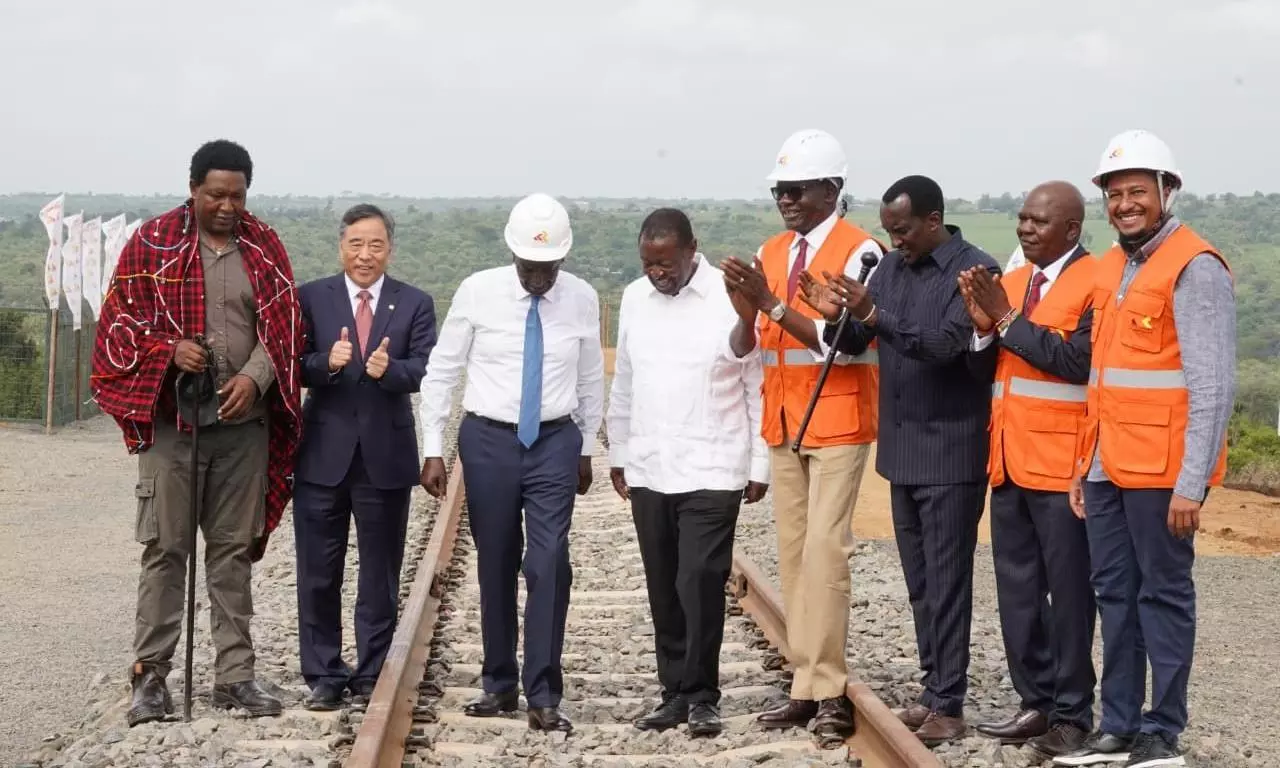
Kenya has officially launched the construction of the Naivasha–Kisumu–Malaba Standard Gauge Railway (SGR), marking a major milestone in the country’s infrastructure expansion and its ambition to strengthen regional trade corridors across East Africa.
The groundbreaking ceremony, held at Motonyi in Narok County on March 19, 2026, was presided over by William Samoei Ruto, President of Kenya. The development forms part of a broader plan to extend the SGR from Naivasha through Kisumu to Malaba at the Kenya–Uganda border.
Described by Kenya Railways as a “defining moment” in the country’s railway journey, the project is expected to connect Kenya’s industrial corridor in Nairobi with key agricultural regions including Narok, Bomet, Nyamira and Kericho, before linking to Kisumu, a critical commercial hub on Lake Victoria.
“This milestone represents far more than the start of a new railway segment, it is a bold step toward unlocking the economic potential of the Great Rift Valley and the Lake Region,” the organisation said in a statement following the launch.
Strengthening trade and logistics connectivity
Once completed, the Naivasha–Kisumu–Malaba extension will play a central role in enhancing cargo flows across the region. By linking production zones directly to the railway network, the project is expected to transform the SGR into a two-way logistics system capable of efficiently moving both imports and exports.
The line will also establish a seamless multimodal corridor connecting the Port of Mombasa to Kisumu Port, facilitating cargo movement across Lake Victoria and into neighbouring countries. This is expected to significantly ease freight transportation, reduce transit times, and strengthen Kenya’s position as a regional logistics hub.
Kenya Railways noted that the project will improve connectivity not only within the country but also across East Africa, supporting cross-border trade with Uganda and the wider Great Lakes region.
Economic impact and growth potential
Speaking at the launch, Ruto highlighted the broader economic significance of the SGR programme.
“Today we complete a national vision to connect Kenya more efficiently to lower the cost of doing business and to firmly position our country at the centre of trade in the great lakes region and across the continent. Since the commencement of the construction of Standard Gauge Railway in 2014, Freight operations generate more than 1.3 billion shillings every month while passenger revenue has grown by 40%. This is evidence of a modern railway that is working and delivering for our economy,” said William Samoei Ruto.
The SGR has already become a key component of Kenya’s transport infrastructure, supporting both passenger mobility and cargo movement. The extension is expected to further stimulate economic activity by improving access to markets, particularly for agricultural producers in inland regions.
Preparations and stakeholder engagement
Ahead of the launch, Kenya Railways conducted a series of stakeholder engagement initiatives to ensure smooth project implementation. Meetings held in Kisumu and Narok brought together local communities, landowners, traders, and government agencies to discuss the project’s scope and address concerns.
These engagements, conducted in collaboration with the National Land Commission, were aimed at promoting transparency, strengthening public participation, and fostering a sense of ownership among affected communities.
Kenya Railways Managing Director Philip Mainga chaired preparatory meetings involving multiple stakeholders, including security agencies and project contractors, to coordinate logistics for the launch and subsequent construction phases. Site inspections were also carried out at the Kibos project area in Kisumu, where preliminary works are already under way.
“The contractor is already mobilised on site, carrying out preliminary works to prepare for the laying of the standard gauge railway tracks,” Kenya Railways said in a social media post.
Phased development and regional integration
The Naivasha–Kisumu–Malaba project is being implemented in phases, with Phase 2B covering the Naivasha–Kisumu section and Phase 2C extending the line to Malaba. Together, these phases will complete a critical segment of Kenya’s long-term plan to establish a fully integrated standard gauge railway network.
The extension is also aligned with broader regional infrastructure initiatives aimed at enhancing connectivity across East Africa. By linking to Uganda’s rail network at Malaba, the SGR is expected to facilitate smoother cargo movement across borders, supporting trade integration within the East African Community (EAC).
Driving logistics efficiency
From a logistics perspective, the SGR extension is expected to deliver multiple benefits, including reduced reliance on road transport, lower logistics costs, and improved supply chain efficiency. Rail transport offers a more cost-effective and environmentally sustainable alternative for bulk cargo, particularly along high-volume corridors.
The project is also expected to alleviate congestion on key road networks, improving overall transport efficiency and safety.
Looking ahead
With construction now underway, Kenya Railways has reaffirmed its commitment to delivering the project within set timelines. The organisation emphasised that sustained collaboration among government agencies, private sector partners, and local communities will be critical to the project’s success.
In fact, speaking at the project launch in Narok, the Kenyan President said the revival of construction confirms the government’s long-term vision for the railway. However, the construction of the SGR extension restarted after a six-year pause caused by the withdrawal of Chinese funding. The new phase will be built by a Chinese contractor and financed through revenue securitisation using a railway development levy on cargo transported on the existing line.
The SGR’s first section linking Mombasa and Nairobi opened in 2017, but expansion stalled more than 350 km from the Ugandan border, delaying plans for regional rail connectivity. Kenya and China also renegotiated earlier loan terms last year to ease repayment pressures.


