
Transnet and Wabtec sign R6.6bn locomotive support agreement
A landmark R6.6 billion technical partnership will modernise Transnet fleet maintenance, reduce downtime, and drive local manufacturing across South Africa.
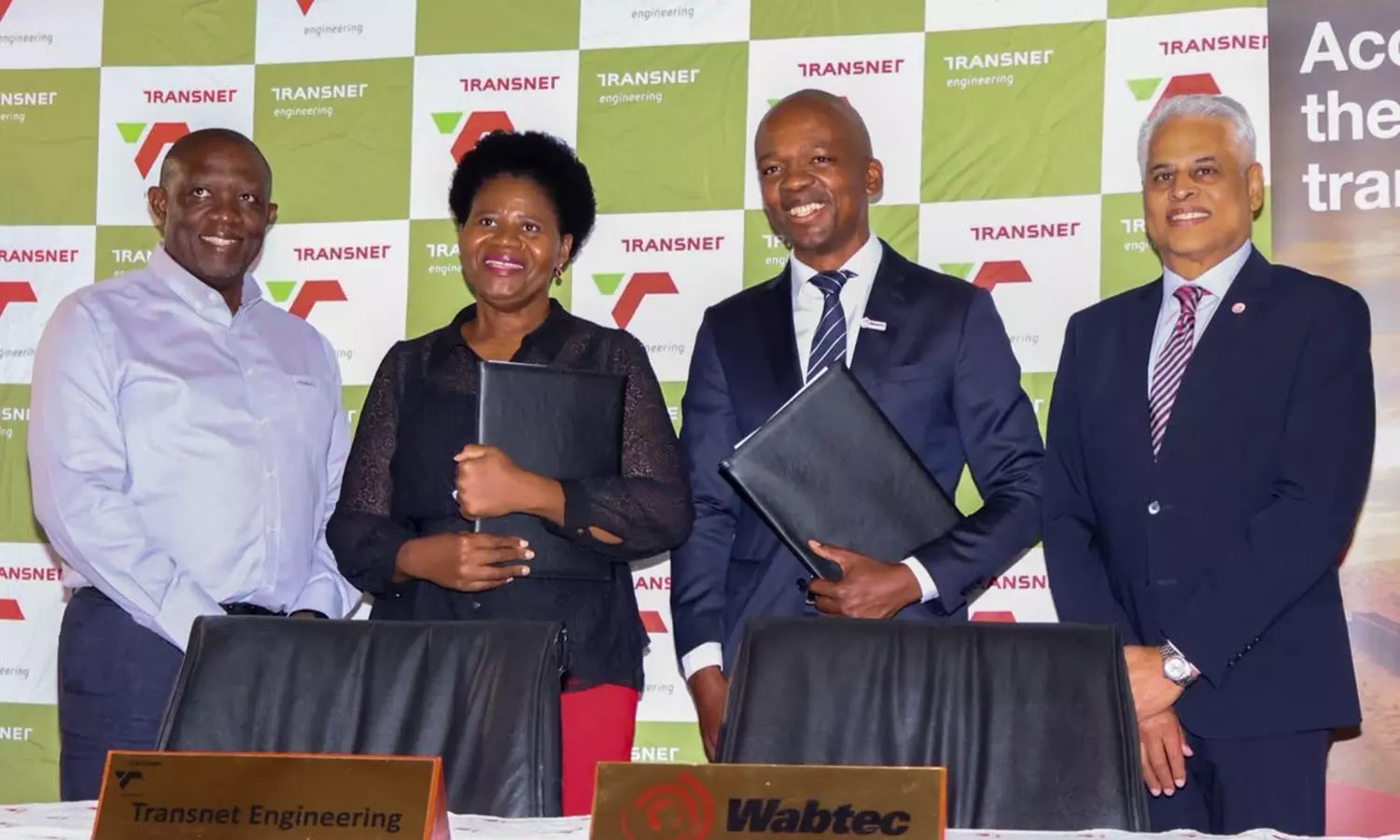
Photo: (Transnet/Linkedin)
Transnet Engineering and Wabtec Corporation celebrated a significant milestone by officially signing a long-term Material and Technical Support Agreement at the Koedoespoort Manufacturing Plant in Pretoria. The landmark deal, valued at approximately R6.6 billion, represents a critical step in South Africa's efforts to improve the performance, reliability, and availability of Transnet’s Class 43D and 44D locomotive fleets.
This long-term locomotive support agreement is a central pillar of the organisation's broader Reinvent for Growth strategy, which aims to restore operational performance and strengthen the country’s vital freight logistics network. Under the terms of the new partnership, Wabtec will provide essential components, advanced technical expertise, and sophisticated predictive maintenance capabilities. Notably, the introduction of digital condition monitoring is expected to significantly enhance overall locomotive performance while concurrently reducing maintenance turnaround times across the country's most crucial freight corridors.
However, the scope of this partnership extends far beyond routine maintenance support. The agreement has been structured to actively drive technical collaboration and vital knowledge transfer between the two entities. Furthermore, it places a strong emphasis on localisation initiatives designed to bolster local rail capabilities, nurture essential industry skills, and guarantee the long-term commercial sustainability of the South African rail sector. By focusing on local manufacturing capabilities, Transnet aims to ensure that the broader economy benefits from the substantial financial investment.
During the official signing ceremony, Transnet Group Chief Operating Officer, Solly Letsoalo (MBA), emphasised the critical importance of timely component delivery and the overarching goal of expanding local manufacturing capacity.
“I’ve been impressed that some of the parts actually started arriving earlier than expected. We need to continue that process where we find ways and means of bringing the parts earlier. And my wish is that we can move as many as possible of these components to be manufactured locally, and where possible, manufactured in a Transnet Engineering facility,” said Letsoalo.
Ultimately, this strategic partnership reinforces Transnet's dedicated efforts to build a resilient and self-sustaining freight network. By fostering local manufacturing and optimising the technical performance of its existing fleet, the enterprise is laying the groundwork for a more robust economic future, echoing the core sentiment that when Transnet works, South Africa thrives.