
Middle East trade resilience via connected corridors
As global supply chains face structural disruption, the Middle East is strengthening multimodal trade networks to link expanding African and Asian markets.
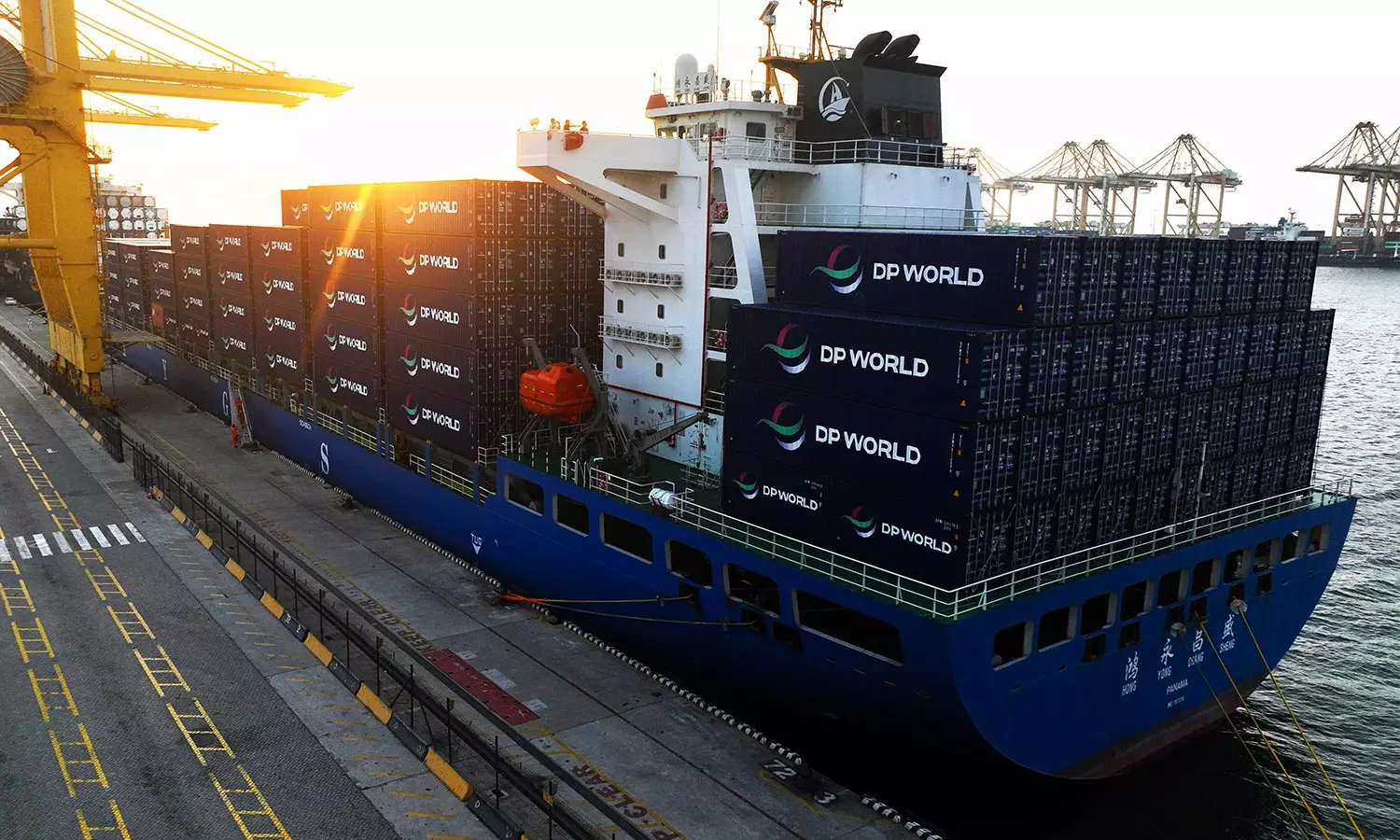
The global maritime trading system, which carries "more than 80% of world merchandise trade by volume" and transports an estimated "$14 trillion" in containerised goods, is undergoing a fundamental structural reset. Geopolitical volatility, climate-driven route disruptions, evolving trade policies, and the redistribution of global manufacturing are moving logistics beyond episodic crisis management. In response, the focus of global trade is pivoting from single-route, cost-optimised supply chains to resilient, highly integrated networks.
According to DP World’s whitepaper, Navigating the Future of Maritime Trade, the Middle East, particularly the Gulf region, is strategically positioning itself at the centre of this transformation. Rather than relying solely on traditional East-West shipping lanes, the Middle East is adapting to serve as a high-capacity interconnector and resilience hub linking Asia, Africa, and Europe.
A central theme of the report is the shift towards "Connected Trade Corridors," which are integrated ecosystems that combine deep-sea shipping, shortsea feeder networks, ports, inland transport, and digital intelligence. Recent events have demonstrated that geographic proximity alone does not guarantee continuity when key chokepoints face pressure. In the Middle East, where geopolitical tensions historically challenge critical waterways such as the Red Sea and the Strait of Hormuz, logistics leaders are building operational redundancy directly into their networks.
The whitepaper notes that in 2026, DP World exemplified this strategy by activating alternative UAE gateways at Khorfakkan and Fujairah, while maintaining Jebel Ali as the primary commercial and customs hub. Supported by inland bonded transport, the expansion of regional trucking fleets (including the addition of "700 trucks," creating capacity for up to "35,000 additional trips each month") and enhanced rail links, the region created alternative land bridges. These corridors link the Arabian Sea and Red Sea, allowing cargo owners to bypass active maritime chokepoints while keeping shipments within the same commercial, customs, and digital ecosystem. Similar cross-border corridors, such as those connecting Jeddah to the GCC, Asia to the GCC via Oman, and Europe to the Gulf through Türkiye, reflect a deliberate effort to anchor the Middle East’s logistics network around flexible routing.
The Middle East's regional preparation coincides with a major global shift in South-South trade. UNCTAD estimates cited in the whitepaper reveal that merchandise exports between developing economies grew from approximately "$0.5 trillion in 1995 to $6.8 trillion in 2025", with approximately "57% of exports from developing countries" now destined for other developing markets. Global trade expansion is no longer driven purely by Asian production bound for Western consumers. Instead, it is increasingly generated across inter-regional pathways connecting Asia, the Middle East, Latin America, and Africa.
Africa is becoming a primary engine of this changing geography. Rapid demographic growth, industrialisation, and the implementation of the African Continental Free Trade Area (AfCFTA) are driving demand for stronger regional infrastructure and new international commercial connections. Commercial ties between Asia and Africa are deepening, with Chinese exports to Africa valued at "$225 billion in 2025" alongside "$123 billion" in imports, supported by expanding tariff-free market access for "53 African nations". Furthermore, North African hubs like Morocco are emerging as vital manufacturing platforms for automotive, aerospace, and textile sectors, linking directly into Mediterranean shortsea networks and European supply chains.
As African production and consumer markets expand, the Middle East’s multi-gateway networks provide the essential bridge connecting Indian Ocean and Red Sea trade flows. Middle Eastern ports are evolving into regional distribution hubs capable of absorbing, processing, and re-routing cargo between Asian industrial centres and expanding African seaboards.
Building physical capacity alone is insufficient without end-to-end digital coordination. Research from DP World’s Global Trade Observatory cited in the whitepaper indicates that "95%" of supply chain and logistics executives use Artificial Intelligence in part of their operations. Executives cite "better transport connectivity (36%)", "improved customs procedures (35%)", and "avoiding geopolitical chokepoints (27%)" as the key drivers behind re-evaluating supply chain routes. In complex trade networks, AI optimises vessel deployment, predicts maintenance, simulates alternative routing during disruptions, and synchronises port services with inland transport. Digital platforms like the India-UAE MAITRI platform and Virtual Trade Corridor are laying the foundation for seamless cross-border data exchanges across major trade arteries like the India-Middle East-Europe Economic Corridor (IMEC).
Despite geopolitical volatility and trade policy shifts, business sentiment remains positive. DP World’s 2026 Global Trade Observatory Annual Outlook Report shows that "94% of more than 3,500 surveyed supply chain and logistics executives expect trade growth in 2026 to match or exceed 2025 levels". Rather than contracting, international commerce is reconfiguring into a more distributed, interconnected model. By embedding flexibility, multimodal infrastructure, and digital intelligence into its logistics network, the Middle East is establishing itself as an indispensable enabler for the future of global maritime trade.