
Red Sea risks keep global ocean freight market fragile in 2026
Dimerco warns Red Sea uncertainty, uneven capacity and weak demand will continue to shape global ocean freight in 2026
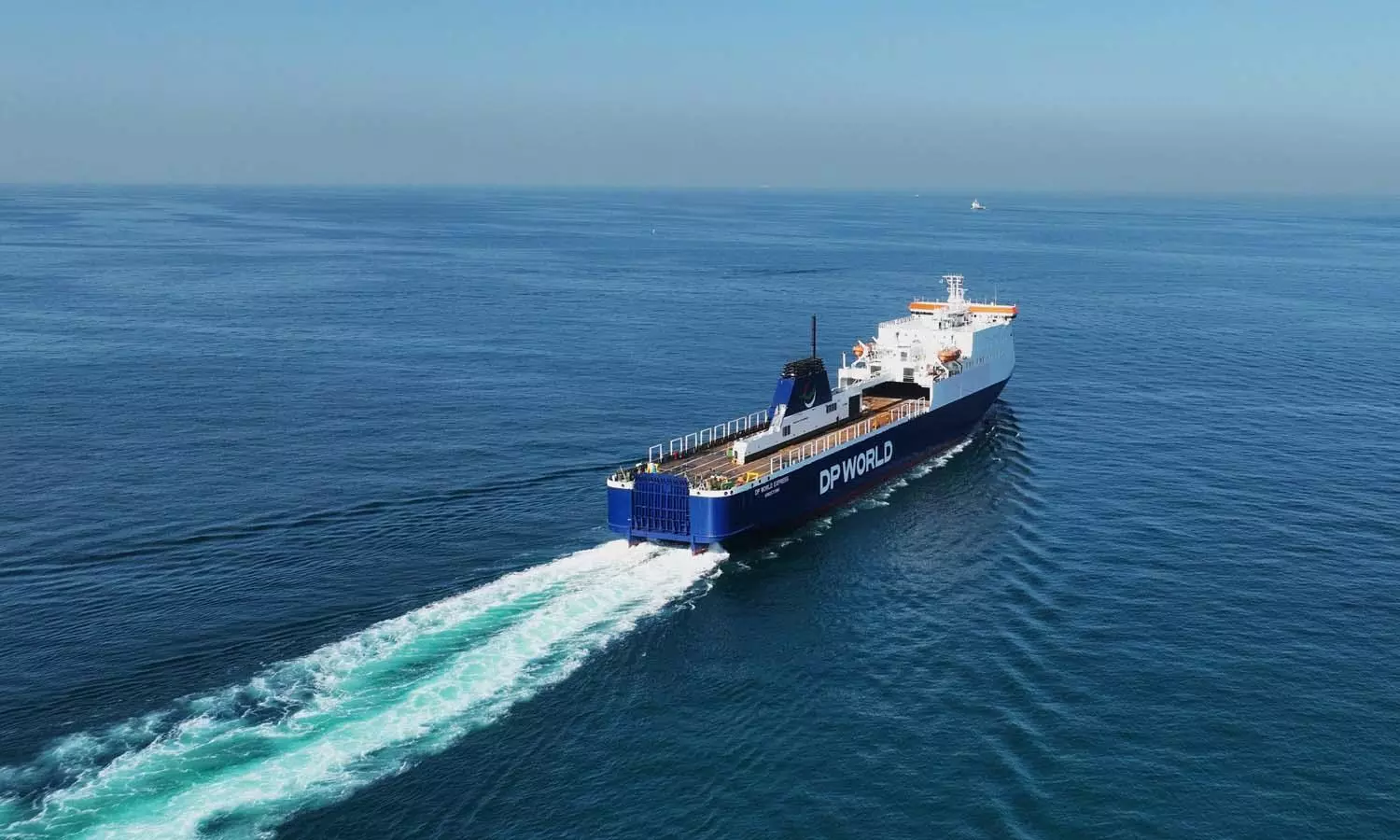
Uncertainty surrounding the Red Sea remains one of the biggest risks facing the global ocean freight market as 2026 begins, according to Dimerco’s Asia Pacific Monthly Freight Report for January 2026. The report warns that any early return of vessels to the Red Sea route could add excess capacity to an already fragile market and further disrupt shipping conditions in the year ahead. With trade activity yet to show clear signs of recovery, Dimerco says the ocean freight market remains highly sensitive to capacity changes and routing decisions.
Cautious trade outlook despite extended US–China tariff truce
Despite the extension of the US–China tariff truce through November 2026, shippers continue to act cautiously. Dimerco notes that clearer signals of long-term trade normalisation have not yet emerged, and market consensus suggests that a meaningful rebound in shipping volumes is unlikely in the first two quarters of 2026. Volumes may remain muted for much of the year, adding to the uncertainty facing carriers and cargo owners. At the same time, Premier Alliance continues to plan vessel routings via South Africa in 2026, reflecting the ongoing uncertainty around Red Sea transits.
Global container capacity grows unevenly across trade lanes
Against this backdrop, global container capacity continues to grow, but Dimerco highlights that this growth is uneven and is shaping ocean freight conditions across major trade lanes. As of November, global container capacity expanded by 7.3% year on year to 33.2 million TEUs. However, this additional capacity has not been evenly distributed. Capacity additions have largely been directed towards routes connecting Asia with the Middle East, the Indian Subcontinent, Sub-Saharan Africa and Europe.
In contrast, transpacific capacity declined by 2.9%, while transatlantic capacity increased significantly. Intra-Asia and Asia–Latin America capacity growth remained modest at around 4–4.8%. Dimerco says this uneven deployment of vessels has indirectly contributed to ongoing congestion on certain regional trade lanes, even as overall demand remains weak on some long-haul routes.
Weak demand keeps pressure on ocean freight rates
Ocean freight demand remains under pressure at the start of 2026, particularly on routes linking Asia with the United States and Europe. Dimerco points to a post-holiday slowdown and continued inventory digestion in the US and Europe as key factors weighing on demand. As a result, attempts by carriers to lift rates through peak-season blank sailings and general rate increases have largely been short-lived, with supply continuing to exceed demand in several markets.
Northeast Asia ocean freight remains soft at seasonal low
In Northeast Asia, ocean freight conditions remain soft. Taiwan’s market is experiencing subdued demand, with freight rates under pressure, especially on US West Coast routes. Dimerco expects January 2026 to be the seasonal low point for ocean freight, with only brief support coming from short-term capacity adjustments.
South Korea is seeing a similar pattern, where brief rate increases quickly retreated as excess supply returned to the market. However, strong volumes moving between China and Southeast Asia are tightening space in Korea and pushing local charges higher.
China ocean freight shaped by congestion and pre-holiday volumes
Across China, ocean freight conditions continue to be influenced by congestion and seasonal demand ahead of the Chinese New Year. In North China, Intra-Asia ocean freight rates are trending upward as port congestion and delays persist. Capacity for transshipments via Singapore, Port Klang and Kaohsiung remains tight, supporting firmer rates into January as pre-Chinese New Year cargo volumes begin to build.
In East China, some carriers are planning to introduce peak season surcharges in January after rates dropped below cost levels, while South China is expected to see rates rise later in the month due to pre-holiday restocking and late loading.
Southeast Asia tightens under congestion and Chinese New Year demand
Southeast Asia continues to face tight ocean freight conditions driven by pre-Chinese New Year demand and ongoing operational challenges. Malaysia’s ocean exports are under pressure, with congestion at Port Klang causing delays of around 96 hours.
Thailand is seeing tightening space on Intra-Asia and China-bound lanes, while Europe and US routes are expected to require advance booking, with minor rate increases. Vietnam’s ocean freight market is expected to see flat to slightly higher rates in January 2026, with early booking activity tightening space and equipment availability.
Indonesia saw export demand soften in early December, though inquiries are expected to rise as shippers prepare for Chinese New Year. The Philippines is expected to see tighter ocean freight capacity from late January into February, a seasonal trend that typically pushes rates higher, particularly on routes to China, North Asia, Europe and the US West Coast. Singapore’s ocean freight market remains relatively stable, with no major space or rate challenges expected in January, though early planning is still advised.
India ocean freight stable amid inland transport challenges
In India, ocean freight rates remain broadly stable despite the announcement of general rate increases and peak season surcharges for January 2026. Dimerco notes that the implementation of these increases will depend on market conditions. Fog-related disruptions in northern India may affect inland rail and road transport, adding pressure to supply chains even as ocean freight conditions remain steady.
North America sees weak demand and limited capacity discipline
In North America, ocean freight demand remains weak. Carrier attempts to raise Asia–US rates have had limited success, with December imports estimated at 1.86 million TEUs, the lowest level since June 2023. Capacity discipline remains limited, with blank sailings minimal and idle capacity low, reducing the likelihood of near-term market tightening. Shippers are advised to book well in advance to avoid last-minute disruptions around the Chinese New Year period.
Fragile conditions expected to persist through 2026
Overall, Dimerco’s January 2026 report presents a cautious outlook for the global ocean freight market. Uncertainty around Red Sea routing, uneven capacity deployment, muted demand and persistent congestion across key regions are expected to keep market conditions fragile in the months ahead. Until trade activity shows a clearer recovery, ocean freight is likely to remain highly sensitive to capacity shifts and operational disruptions throughout 2026.