
SCZONE draws $60bn, strengthens Egypt’s trade and logistics role
SCZONE is located along a corridor through which around 30% of global trade and 20% of international container traffic passes.
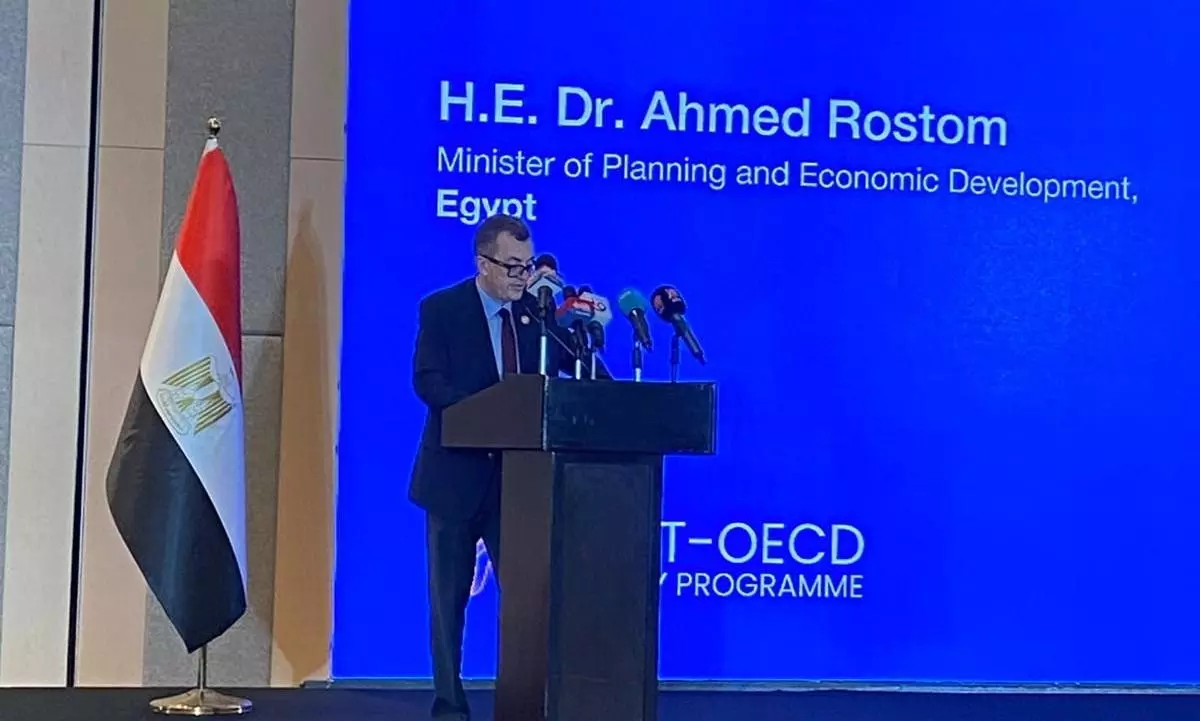
Egypt is positioning the Suez Canal Economic Zone (SCZONE) as an integrated platform for trade, logistics and production, according to Minister of Planning and Economic Development Ahmed Rostom.
Speaking at a high-level roundtable on boosting foreign investment and integrating Egyptian companies into global value chains, Rostom said the SCZONE connects production, logistics and exports within a unified system to support the overall economy.
The roundtable, attended by representatives from the Organisation for Economic Co-operation and Development, government officials and private sector stakeholders, focused on enhancing competitiveness, supporting the private sector and advancing diversified and sustainable economic growth.
Rostom said the discussions come at a strategic time amid shifting global trade patterns, rising geopolitical tensions and increasing supply chain pressures. He noted that competitiveness, resilience and integration into global markets have become more complex and require collaborative approaches.
He highlighted that the SCZONE is located along a corridor through which around 30% of global trade and 20% of international container traffic passes, underscoring its role in global supply chains.
The zone comprises six ports, four industrial zones, multimodal transport links and advanced digital systems aimed at enabling efficient goods movement, improving investment predictability, strengthening supply chain continuity and enhancing infrastructure integration.
Traffic through the Suez Canal has shown recovery following a period of disruptions. Growth reached 8.6% in the first quarter, accelerated to 24.2% in the second quarter and later to 25.6%. Container volumes increased 19% year-on-year in the first half, while vessel traffic rose 16%.
According to Rostom, this recovery has contributed to lowering transaction costs, easing supply chain bottlenecks and improving investor confidence.
In a separate statement, SCZONE Chairman Waleid Gamal El-Dein said the zone has attracted investments totalling $60bn from 20 countries, adding that it is expected to achieve its highest financial returns by mid-2026.
He said cooperation with the OECD has supported several ministries and the SCZONE across multiple areas, noting that 2025 marked the 10th anniversary of collaboration between Egypt and the organisation.
Gamal El-Dein added that the SCZONE has localised projects and industries in sectors including medical industries, energy and specialised industries, while highlighting Egypt’s efforts to support international partnerships and attract further investment.
He noted that the Port Said Economic Zone ranked third globally in container handling in 2024 and first within Egypt, based on published statistics.
He also pointed to infrastructure investment as a key factor in attracting capital and referenced projects such as West Kantara as part of efforts to support maritime transport and industrial development.
Officials said Egypt will continue to support private sector investment and expand development within the SCZONE, including in sectors such as sustainable green energy.