
Suez Canal concerns keep ocean freight market uncertain
Peak-season demand, weather delays, and cautious restocking continue to influence air and ocean freight conditions worldwide.
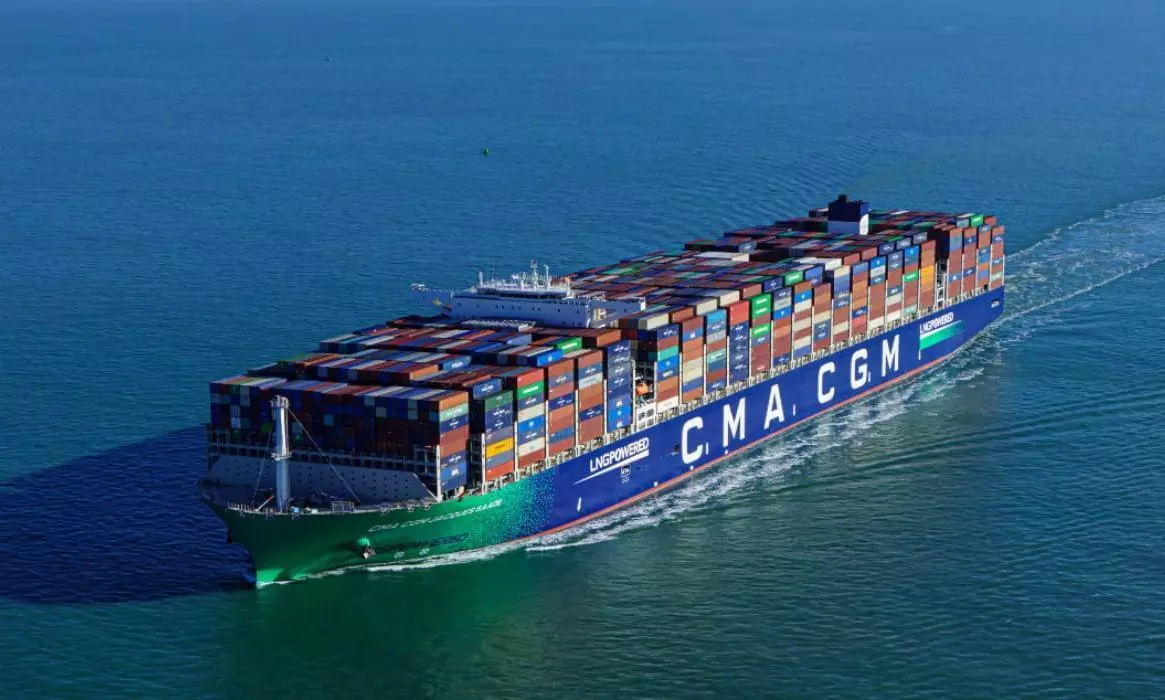
Photo Credit: CMA CGM
Uncertainty over whether carriers will return to the Red Sea and Suez Canal route continues to dominate the global ocean freight outlook. The Dimerco report notes that even a ceasefire may not guarantee safe passage through the Suez Canal, and carriers remain cautious about reinstating the route. Ted Chen, Director – Ocean Freight, Global Sales and Marketing at Dimerco Express Group, says: “If carriers return to the Suez route, we could see rates ease as additional capacity comes back into the market. Conversely, if routing via the Cape continues, the longer transit times may eventually lead to equipment shortages on the land side. In either situation, whether capacity becomes too abundant or too restricted, the industry faces a risk of instability.”
The report notes that ocean freight demand remains subdued after earlier front-loading, and only 7% of East–West capacity is expected to be removed through blank sailings between Week 47 and Week 51. US containerised imports slowed from 1.81M TEUs in July to 1.6M TEUs in October, reflecting cautious restocking. Retailers are ordering less even though US holiday spending is expected to be strong, suggesting a slow start to 2026 with gradual replenishment instead of aggressive buying.
Across the Asia-Pacific region, air demand to the US, Europe and major Asian hubs is rising, tightening space and lifting rates in China, Taiwan and Korea. In Southeast Asia, typhoons caused vessel delays and port omissions of 1–3 weeks, while Europe–North America air demand has cooled. Carriers on Asia–Europe ocean routes are attempting sharp FAK hikes that could nearly double Mediterranean rates. In North America, capacity from the US to Asia is tight for both air and ocean, driven by high-tech exports and blank sailings.
Transpacific air freight demand has strengthened with peak-season momentum, led by US e-commerce shipments after Black Friday and Thanksgiving. Southeast Asia remains a major driver of air volumes into the US, filling major transit hubs, while cargo from China to Mexico has increased as shippers advance shipments ahead of potential tariff changes. Intra-Asia air movements remain active due to raw-material transfers supporting regional production.
On the ocean side, the easing of the IEEPA–Fentanyl tariff on Chinese goods and suspension of USTR 301 Port Fees has not triggered a shipping surge. Importers had already front-loaded earlier in the year, and the market has entered its usual quiet period ahead of Chinese New Year. Overall, the report concludes the market will stay soft unless new disruptions,political or capacity-related issues emerge.
Tariff policy changes also shaped December. In the US, new exemptions were added to the reciprocal agricultural tariffs under an executive order effective November 13, and the US–Korea trade deal fact sheet detailed adjustments to tariffs on autos, wood products, pharmaceuticals and semiconductors. Ongoing Section 232 investigations continue into sectors including semiconductors, heavy trucks, critical minerals, and commercial aircraft.
The report also highlights operational risks for shippers. The FAA grounding of MD-11F aircraft has reduced global air cargo capacity, severe weather in Asia has caused blank sailings and vessel rescheduling, and Mexico is seeing disruptions from security unrest in Michoacán and a nationwide road blockade on November 24.
Regional freight conditions vary widely, with tight air capacity across many Asian markets, rising seasonal rates, port delays in China linked to typhoons, and pressure on India’s export flows due to fog and hub congestion. Australia faces tight air capacity and rising ocean rates heading into the holidays.
North American markets remain constrained, with tight air capacity into Asia, blank sailings affecting ocean space, and the holiday peak requiring early scheduling. Canada faces fewer direct flights to Asia but otherwise stable ocean conditions. Mexico reports tight air capacity and minor port delays at Manzanillo, with heavy cherry export volumes adding seasonal pressure.
In Europe, global air volumes rose 4% year-on-year in October, but Europe–North America demand dropped 6%. Xeneta data shows spot rates on that lane growing only 4% year-on-year in October, compared with much higher increases earlier in 2025. On the ocean side, MSC announced major Asia–Europe FAK increases effective December 1, with sharp jumps on North Europe and Mediterranean routes.