
What is powering the China-Africa ocean trade lane?
China–Africa trade is being reshaped by new sea routes, zero-tariff policies and logistics investments as carriers adapt to rising cargo demand and disruptions.
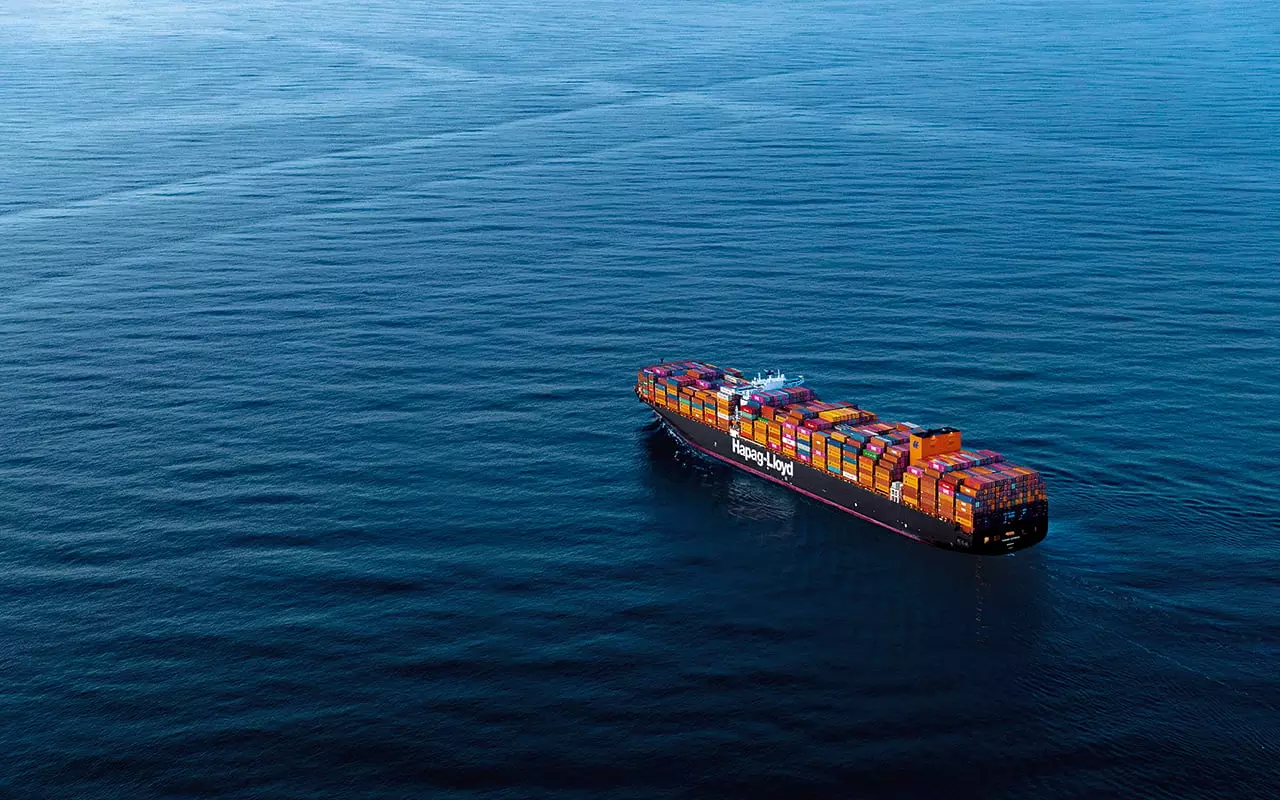
In the early hours at ports such as Shanghai, Ningbo or Shenzhen, container cranes load vessels bound for Africa with machinery, electronics, construction materials, vehicles, pharmaceuticals and industrial equipment. Days later, ships berth at gateways including Durban, Mombasa, Dar es Salaam, Lagos or Tangier, where cargo moves onward through inland rail and road networks across the continent.
The trade corridor linking China and Africa has become one of the world’s fastest-growing and most strategically important trade lanes. China–Africa trade reached a record $348 billion in 2025, according to Chinese customs data. Chinese exports to Africa stood at $225 billion, while imports from Africa reached $123 billion, underlining both the scale of the relationship and the continued imbalance in trade flows.
The next phase of this relationship is increasingly being shaped by policy reforms alongside logistics and maritime connectivity. In February 2026, Chinese President Xi Jinping announced that China would extend zero-tariff treatment to 53 African countries with diplomatic ties from May 1, 2026, marking one of the most significant shifts in China’s Africa trade policy in decades.
According to an analysis republished by ITUC-Africa and originally published by The Conversation, Lauren Johnston, Associate Professor at the China Studies Centre at the University of Sydney, said the reforms could reshape regional supply chains across Africa. “By extending zero tariffs to almost all African countries, China has neutralised an element of distortion in its earlier tariff policy,” Johnston wrote, while cautioning that stronger economies such as South Africa, Morocco and Kenya may benefit more rapidly than less-developed markets.
A spokesperson from the Rhenus Group said stronger cooperation under FOCAC (The Forum on China-Africa Cooperation), including China’s RMB360 billion funding commitment for 2025–2027, is further supporting trade growth. Rising industrial activity, infrastructure investment and growing consumer demand across Africa are increasing imports of Chinese machinery and electronics, while China’s demand for copper, cobalt and lithium continues to drive African exports.
The Indian Ocean corridor powers the trade lane
The backbone of China–Africa trade remains the maritime network crossing the Indian Ocean into East, Southern and West Africa. According to Hapag-Lloyd, these routes continue to underpin the movement of cargo between Chinese production centres and African consumer and industrial markets.
“The main corridor runs across the Indian Ocean, connecting China with East and Southern Africa. For West Africa, vessels typically continue around the Cape of Good Hope into the Atlantic Ocean and onward to the Gulf of Guinea,” said Thomas Orting Jorgensen, Senior Director Trade Management Africa at Hapag-Lloyd.
“These routes are essential in sustaining China–Africa cargo flows.” The maritime structure of the corridor has become even more strategically important following the disruption of traditional Suez Canal and Red Sea routings. With shipping lines increasingly diverting vessels around the Cape of Good Hope due to instability around the Bab el-Mandeb Strait and Red Sea, Africa’s southern maritime corridor has become a critical artery for Asia-bound and Africa-bound cargo.
“We are seeing significant investment in logistics infrastructure across the continent — not only from China through its Belt and Road-linked projects, but increasingly from Middle Eastern sovereign wealth funds and development institutions.”Lee I'Ons, Hellmann Worldwide Logistics
For ports such as Durban, the result has been increased vessel calls, transhipment activity and operational pressure. According to Hellmann Worldwide Logistics, the China–Africa trade system still revolves around three historic logistics corridors.
“The established answer to this question covers the three historic corridors: Southern Africa anchored by South Africa and the ports of Durban and Cape Town; the Eastern corridor running through Mombasa, Dar es Salaam and the East African gateway; and the North and West Africa corridor covering Egypt, Morocco, Nigeria, Ivory Coast and the growing economies of the West African seaboard,” said Lee I'Ons, Regional CEO IMEA at Hellmann Worldwide Logistics. “These remain the backbone of China–Africa cargo flows today.”
Meanwhile, Rhenus Group identified the primary maritime network linking Shanghai, Ningbo and Shenzhen with African gateways such as Durban, Mombasa, Dar es Salaam and Lagos as the foundation of the corridor’s cargo flows. The expansion of direct shipping services is also improving connectivity. Chinese ports, including Qingdao, Yantai and Tianjin, have introduced new Africa-focused services aimed at shortening transit times and reducing dependence on transhipment-heavy routings. Tianjin’s South Africa service reportedly reduced voyage times to around 40 days, approximately 10 days faster than previous routing structures.
Infrastructure investment is reshaping Africa’s logistics map
Beyond maritime services, large-scale infrastructure investment is gradually reshaping Africa’s logistics landscape. According to the spokesperson from Hellmann Worldwide Logistics, investments linked to China’s Belt and Road Initiative, alongside funding from Middle Eastern sovereign wealth funds and development institutions, are beginning to alter the continent’s long-term freight geography.
“We are seeing significant investment in logistics infrastructure across the continent — not only from China through its Belt and Road-linked projects, but increasingly from Middle Eastern sovereign wealth funds and development institutions,” said Lee I'Ons, Regional CEO IMEA at Hellmann. “New port capacity is being developed, rail connectivity is improving, and digital customs systems are being deployed at pace.”
The transformation extends far beyond ports. Cargo arriving at Mombasa, Durban or Lagos often moves inland through multimodal networks connecting landlocked economies. The Northern Corridor links Mombasa with Uganda, Rwanda and the Democratic Republic of Congo, while Southern African gateways feed freight into Zambia, Zimbabwe and Botswana.
“We could see Ethiopia, already a major aviation hub, developing stronger surface freight infrastructure that creates an alternative East African gateway,” I'Ons added.
Trade flows are evolving beyond traditional patterns
The composition of cargo moving between China and Africa is becoming increasingly sophisticated. While Africa has historically exported raw materials and imported low-cost manufactured goods, the range and complexity of commodities moving in both directions is expanding rapidly.
According to the Rhenus Group, southbound cargo flows from China into Africa, valued at around $225 billion in 2025, are dominated by machinery, electrical equipment, steel products, vehicles, vessels and construction materials. Chinese vehicle exports to Africa increased by 64.5% year-on-year in 2025, while vessel exports rose by 91.3%. Green technology is also emerging as a major segment, with Africa importing 15,032 MW of Chinese solar panels between July 2024 and June 2025, a 60% increase over the previous year.
Hapag-Lloyd described China’s export profile as reflecting its role as the “factory of the world.” Meanwhile, Hellmann Worldwide Logistics noted a gradual shift toward higher-value cargo. “The traditional categories — electronics, machinery, consumer goods, textiles and construction materials — remain dominant by volume,” said Lee I'Ons, Regional CEO IMEA at Hellmann. “But what is shifting, and this is important, is the quality and complexity of what is moving.”
Healthcare products, pharmaceuticals, industrial machinery and automotive components are becoming increasingly important cargo categories, while Chinese EV manufacturers are expanding across African markets. Northbound exports continue to include copper, cobalt, lithium, manganese, crude oil, gold and agricultural products, although Rhenus noted growing interest in local processing and industrialisation across Africa.
Congestion and compliance remain key challenges
Despite rising investment and stronger connectivity, operational bottlenecks continue to shape the efficiency of the corridor. Hapag-Lloyd said infrastructure limitations and congestion remain among the most important operational challenges affecting vessel schedules and cargo reliability. “A key operational challenge is infrastructure limitations in parts of Africa, which can lead to congestion and longer waiting times for vessels,” Jorgensen said.
Hellmann cautioned against viewing Africa’s logistics environment as uniform. “A sweeping statement that 'African ports are congested' or 'African roads are poor' is simply not accurate — it varies dramatically by country, by port, by season and by cargo type,” I'Ons said. Still, the company acknowledged that ports including Durban, Mombasa and Lagos have experienced significant congestion episodes affecting transit reliability.
Compliance complexity also remains a major challenge for logistics operators managing cargo across dozens of African markets. “Trade controls, sanctions screening, customs documentation requirements and export licensing vary enormously across markets,” Hellmann said. At the same time, some African countries are moving aggressively toward digital customs systems and electronic trade documentation. “Mobile-first customs platforms and digital documentation are more advanced in some African markets than in Western Europe,” I'Ons noted.
Geopolitics reshapes shipping economics
While tariffs and infrastructure are driving long-term transformation, geopolitics is reshaping the economics of the corridor in real time. The Red Sea crisis and tensions surrounding the Strait of Hormuz have significantly altered vessel routing patterns and freight pricing. According to Rhenus, freight rates that typically averaged $3,000–4,000 per container rose to $5,000–6,000 in base rates, while war-risk surcharges pushed overall costs as high as $11,000 per FEU. “The Red Sea crisis has now merged with the Hormuz situation,” the company said.
Hellmann explained that rerouting around the Cape of Good Hope has materially increased voyage times and operating costs. “On sea freight specifically, the closure of Bab-el-Mandeb and the disruption to Suez Canal routing has rerouted a substantial volume of container traffic around the Cape of Good Hope,” I'Ons said. “This adds 10 to 14 days to the Asia–East Africa lane and significantly increases fuel consumption and vessel operating costs.”
“A key operational challenge is infrastructure limitations in parts of Africa, which can lead to congestion and longer waiting times for vessels.”
Thomas Orting Jorgensen, Hapag-Lloyd
The disruption has also tightened vessel capacity globally, raising freight costs across multiple trade lanes. “When vessel supply is tight globally due to longer voyage distances, spot rates on all trades, including Africa, are elevated,” Hellmann said.
Hapag-Lloyd added that while the direct operational impact on China–Africa services remains manageable, the cost implications are substantial. “Fuel prices have increased significantly, raising the cost of operating vessels on all trade lanes,” Jorgensen said.
Flexibility and resilience define the next phase
If the Covid-19 crisis forced global supply chains to rethink resilience, the Red Sea and Middle East disruptions have accelerated that transition. Logistics providers say the China–Africa corridor is increasingly moving away from single-corridor dependency toward more flexible and diversified supply chain structures. “The industry's response to disruption has been notably more sophisticated than in previous crises,” Hellmann said. “Single-corridor, single-carrier dependency is a risk that the current environment has made untenable.”
Companies are increasingly relying on port diversification, sea–air solutions, alternative inland routes and higher inventory buffers to manage uncertainty. Rhenus said the ability to switch modes and routes quickly has become essential to maintaining reliability.
For the China–Africa trade corridor, the transformation underway is no longer simply about trade growth. It is about how logistics networks, maritime routes, regional value chains and industrial strategies are converging to reshape one of the world’s fastest-growing economic relationships.
The ships crossing the Indian Ocean today are carrying far more than containers. They are carrying the infrastructure, industrial ambitions and geopolitical realities that will define the future of China–Africa trade for decades to come.


