
War-driven disruptions threaten global aid supply chains, warns UNICEF
UNICEF warns supply chain disruptions could delay critical humanitarian supplies by up to six months, with maritime diversions alone adding four weeks to transit times.
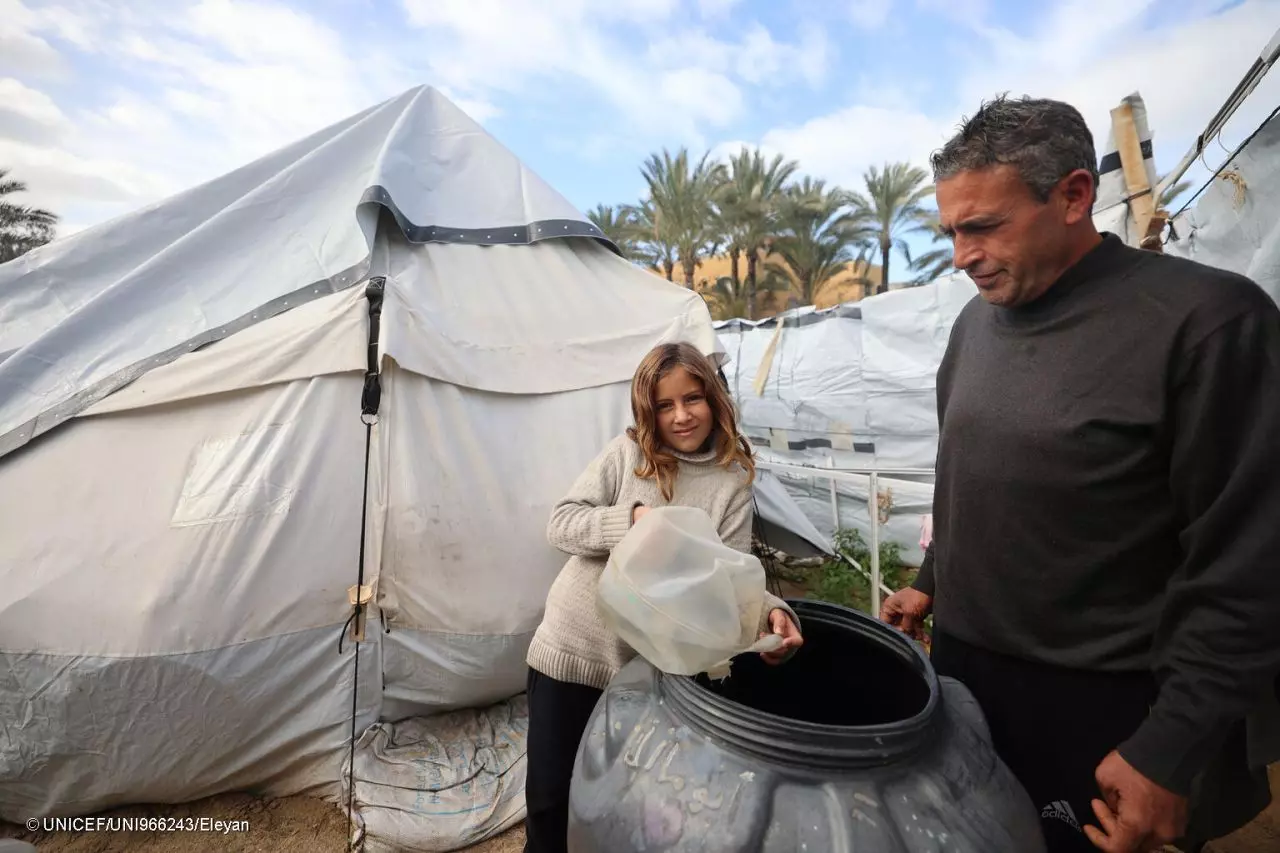
12-year old Fatima stands at a displacement site after her family’s home in Jabalia Camp, northern Gaza, was destroyed during the war.
More than 340 children have reportedly been killed and thousands injured, since the military escalation in the Middle East began more than a month ago, according to an official statement by UNICEF. Across the region, more than 1.2 million children have been displaced as bombardments and evacuation orders have emptied entire communities, creating an escalating humanitarian crisis and placing increasing pressure on aid delivery systems.
While the human toll continues to mount across the region, the conflict is also creating ripple effects across global logistics networks that support the delivery of essential humanitarian supplies such as vaccines, nutrition products and medical equipment. The conflict is also creating operational challenges for humanitarian logistics networks that support aid deliveries worldwide. UNICEF estimates that disruptions across procurement, manufacturing and transport could delay the movement of critical humanitarian supplies globally by up to six months.
At the same time, rising oil prices, projected to increase by up to 20%, could push up manufacturing costs for essential goods such as vaccines and nutrition products while increasing transportation expenses.
“For the world’s most vulnerable children, every minute can mean the difference between life and death."
Jean-Cedric Meeus, UNICEF
Shipping operations are also facing delays as maritime routes are diverted away from high-risk areas, leading to congestion at ports and extended shipping routes. According to UNICEF, maritime diversions alone could add up to four weeks to transit times.
These disruptions highlight how geopolitical conflict can quickly cascade into global logistics challenges affecting humanitarian supply chains far beyond the immediate region.
“For the world’s most vulnerable children, every minute can mean the difference between life and death. That’s why humanitarian cargo must be prioritised at every stage, so lifesaving supplies reach children and their families on time,” says Jean-Cedric Meeus, Chief of Global Transport and Logistics at UNICEF.
Supply chain adjustments to maintain deliveries
To mitigate the impact of disruptions, UNICEF is adjusting its global supply chain operations to maintain the flow of humanitarian aid.
The organisation has activated alternative air, land and sea transport routes while diversifying sources of strategic life-saving supplies. It has also frontloaded procurement to account for longer lead times caused by supply chain disruptions.
UNICEF is also negotiating with transport providers to cap excessive surcharges and ensure humanitarian cargo is prioritised in order to maintain timely delivery of essential supplies.
Emergency response continues on the ground
Alongside supply chain adjustments, UNICEF is continuing to expand emergency responses in some of the worst-affected countries.
In Iran, following requests from the Ministry of Health, the organisation is deploying pre-positioned health supplies including mobile health units, primary healthcare tents and emergency health kits, to restore access to essential services for approximately 226,000 people in affected areas.
The response includes the provision of vaccines, additional primary healthcare supplies and mental health and psychosocial support for children and communities.
In Lebanon, UNICEF has expanded its emergency response to support displaced families in shelters, host communities and hard-to-reach areas. Working with partners, the organisation has expanded health services including vaccination programmes, neonatal care and paediatric intensive care services in more than 290 shelters and host communities.
In addition, repair work on 20 water and sanitation systems has restored reliable water and sewage services for more than 1.2 million people across the country.
In partnership with UNICEF, Danish freight forwarding DSV also recently supported humanitarian operations in Lebanon by donating an in-kind cargo flight. The shipment, weighing 36 tonnes, carried emergency medical supplies from UNICEF’s global supply and logistics hub in Copenhagen. The consignment included 32.5 tonnes of UNICEF medical supplies and 3.5 tonnes from the European Union stockpile delivered to the World Health Organization (WHO) in Lebanon. According to UNICEF estimates, the shipment will help sustain essential healthcare services for around 500,000 people for three months, supporting trauma care, maternal and newborn services, and treatment of infectious diseases across 11 public hospitals and 150 primary healthcare centres, including mobile health units.
Around a week ago, UNICEF stated in a social media post that children and families returning to Afghanistan from Iran are arriving in difficult conditions, adding pressure to an already severe humanitarian crisis. UNICEF and partners are providing essential support including nutrition, healthcare, safe water, vaccinations and child protection as needs rise. Afghanistan already has around 11 million children requiring humanitarian assistance, with nearly three million people returning from neighbouring countries in 2025 alone, many of them families with children.
Call for de-escalation
UNICEF has reiterated calls from the United Nations Secretary-General for an immediate cessation of hostilities and genuine de-escalation.
Under international humanitarian law, civilians, particularly children, and civilian infrastructure must always be protected during armed conflict.
For humanitarian logistics networks, the crisis highlights the growing need to ensure supply chain resilience as geopolitical instability continues to disrupt global transport routes and aid delivery systems.


