
Space data to optimise Ghana's supply chains
The government is upgrading its space institute to harness satellite data, helping the freight sector predict floods and secure transport routes.
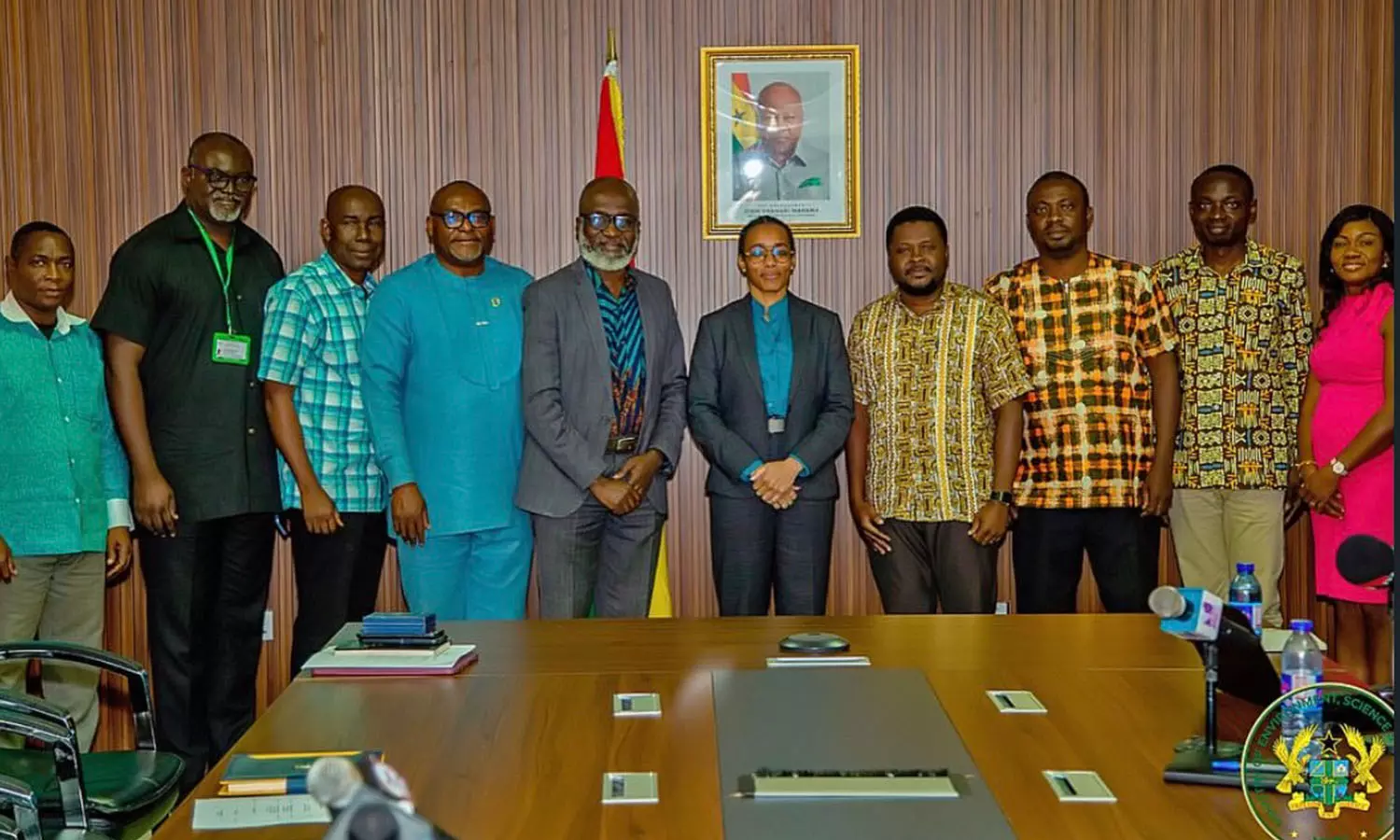
“Positioning Ghana for the Space Economy of the Future” (Photo: Dr Zanetor Agyeman-Rawlings/Instagram)
The Government of Ghana has announced a major strategic shift to elevate its space science capabilities, a move expected to deliver substantial benefits to the national transport and logistics sector. Speaking during a public briefing in Accra to mark her first 100 days in office, the Minister for Environment, Science and Technology, Dr Zanetor Agyeman-Rawlings, confirmed that the Cabinet has approved the National Space Policy. This approval paves the way for the transformation of the Ghana Space Science and Technology Institute (GSSTI) into a fully operational Ghana Space Agency.
Dr Agyeman-Rawlings stressed that the country must transition from merely consuming foreign space technologies to becoming an active participant in the global space economy. By building domestic capacity, the government aims to apply satellite data directly to developmental challenges. For the freight and haulage industries, this policy shift is particularly crucial. Transport networks across the region are frequently vulnerable to severe weather patterns and infrastructure degradation. The new agency will focus on harnessing Earth observation, artificial intelligence, drones and geospatial technologies to create a more resilient commercial environment.
A primary objective of the upgraded space agency is to enhance climate resilience and environmental management, factors which directly dictate the reliability of supply chains. The Minister highlighted that satellite imagery will provide timely, accurate information regarding drought, coastal erosion and land degradation. Most importantly for logistics operators, this space-based data will enable accurate flood predictions. Rather than relying on reactive measures when major road corridors are washed out, transport managers will have access to predictive, evidence-based intelligence. This capability allows freight companies to reroute vehicles ahead of severe weather, safeguarding valuable cargo, reducing transit delays and lowering the high costs associated with stranded goods.
Supporting this vision, Dr Joseph Tandoh, Director of the GSSTI under the Ghana Atomic Energy Commission, underscored the necessity of establishing a robust legislative and regulatory framework to govern these growing space ambitions. He pointed to the nation's existing track record in the sector as a strong foundation for the new agency. Ghana successfully launched the GhanaSat-1 satellite in 2017 and converted the Kuntunse telecommunications dish into a functioning radio telescope. This facility plays a strategic role in filling observational gaps within the international radio telescope network, fostering vital scientific collaboration across borders.
Furthermore, the Kuntunse site has served as a regional training hub, educating 192 students since 2015 in critical disciplines such as data processing, astronomy, engineering and communication. This educational foundation is vital for providing the skilled workforce required to manage complex logistics data.
To fully integrate these technological advancements into the broader economy, Dr Agyeman-Rawlings called for heightened investment in targeted skills development, specifically mentioning remote sensing, space entrepreneurship, robotics and satellite engineering. She also made a strong appeal for greater private sector involvement. Businesses operating in logistics, maritime services, agriculture and banking stand to gain immensely from reliable satellite monitoring. By bridging the gap between scientific research and commercial application, the forthcoming Ghana Space Agency aims to provide the transport sector with the precise data required to navigate an increasingly unpredictable environment, ultimately securing the flow of trade across the nation and beyond.