
China opens zero-tariff access for South African exports
Twenty African nations, including South Africa, Kenya, Egypt and Nigeria, gain zero-duty access to China under a new two-year trade scheme.
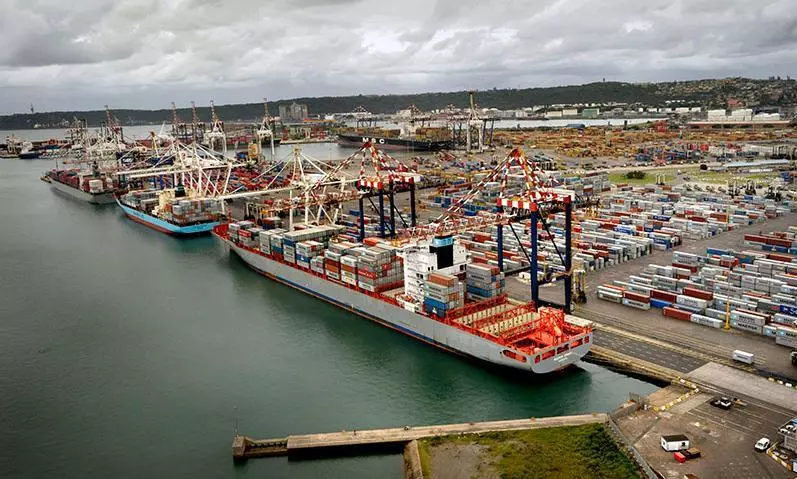
Port of Durban, South Africa
The South African government has welcomed China’s decision to introduce a temporary zero-tariff preference scheme for 20 African countries, including South Africa, in a move expected to reshape trade flows and deepen economic ties between China and Africa.
In a statement released by the Department of Trade, Industry and Competition (the dtic), Minister of Trade, Industry and Competition Parks Tau said the measure represents a significant opportunity for South African exporters to expand access into one of the world’s largest consumer markets while strengthening industrial development and export-led growth.
The scheme follows an earlier announcement by Chinese President Xi Jinping on February 14, 2026, under which China committed to extending zero-tariff treatment to African countries with which it maintains diplomatic relations. Least-developed African countries had already been granted duty-free access under earlier commitments announced during the Forum on China-Africa Cooperation 2024.
According to the dtic, qualifying South African exports entering China between May 1, 2026 and April 30, 2028 will benefit from zero customs duties, provided exporters comply with tariff schedules and rules of origin requirements prescribed by Chinese customs authorities.
The Chinese framework was formally issued through Announcement No. 54 of 2026 by the General Administration of Customs of the People’s Republic of China. The document, originally released in Chinese and subsequently translated, outlines the “Measures for the Administration of Origin of Imported Goods under Zero Tariffs from 20 African Countries that Have Established Diplomatic Relations with China and Are Not Least Developed Countries.”
The regulation establishes the legal framework governing how imported African goods will qualify for preferential tariff treatment in China. It applies to imports from Algeria, Egypt, Botswana, Equatorial Guinea, Cape Verde, Congo, Ghana, Gabon, Zimbabwe, Cameroon, Côte d’Ivoire, Kenya, Libya, Mauritius, Morocco, Namibia, South Africa, Nigeria, Seychelles and Tunisia.
Chinese customs authorities stated that the measure is intended to “promote economic and trade exchanges between China and African countries that have established diplomatic relations.”
Under the rules, products must satisfy origin requirements to qualify for zero-duty treatment. Goods can either be wholly obtained or produced in eligible African countries, manufactured entirely using qualifying originating materials, or sufficiently transformed using non-originating materials according to tariff-classification change criteria or regional value-content requirements.
China’s customs administration said products manufactured using non-originating materials must generally achieve a regional value content of at least 40% to qualify under the scheme unless they fall under product-specific origin rules.
The regulations also provide detailed guidance on acceptable processing activities, transportation conditions, documentation requirements and customs verification procedures.
Exporters seeking preferential treatment must provide valid certificates of origin issued by authorised agencies. Chinese customs authorities confirmed that a dedicated “Issuance System for Certificates of Origin for 20 African Countries” was launched on May 1, 2026 to support implementation.
The dtic said it is currently working alongside the South African Revenue Service to establish the required customs procedures and legislative adjustments needed for implementation, including mechanisms related to certificate-of-origin issuance.
The department noted that products already in transit may still qualify under the scheme even if certificates of origin were not issued before shipment. In such cases, importers would initially pay a customs deposit in China, which could later be refunded once the required documentation is submitted. Chinese customs regulations specify that such certificates must be marked “ISSUED RETROSPECTIVELY” and remain valid for one year from the shipment date.
While the scheme applies across a broad range of products, the dtic cautioned that some goods may still be subject to tariff-rate quotas or additional product-specific requirements. Exporters were advised to study both the Chinese tariff schedules and rules-of-origin framework carefully to ensure compliance.
The South African government believes the arrangement could significantly improve the competitiveness of South African exports in China, particularly across agriculture, beneficiation, manufacturing and industrial goods.
According to the dtic, the preferential framework aligns with South Africa’s broader diversification strategy aimed at strengthening economic resilience, creating employment opportunities and expanding export-oriented industrial activity.
Minister Tau said the agreement reflects the strengthening relationship between China and Africa while also representing “a significant outcome” of FOCAC 2024.
He added that the scheme creates “a meaningful opportunity to expand into one of the world’s largest and most dynamic consumer markets.”
The General Administration of Customs of China also outlined detailed operational requirements governing direct transport, temporary storage, customs supervision and verification procedures. Goods transiting through third countries can still qualify for zero-tariff treatment provided they remain under customs supervision and are not altered beyond necessary handling or preservation activities.
The Chinese rules additionally allow for “cumulation” provisions under which Chinese-origin materials used in African production processes may still count toward origin qualification. Similarly, originating materials sourced from one eligible African country and processed in another eligible African country may also qualify under the framework, provided applicable trade agreements are in place.
Chinese customs authorities further clarified that certain minimal processing operations — including simple packaging, sorting, cleaning, labelling, repacking or basic assembly — will not be sufficient to confer origin status under the scheme.
The new regulations also include provisions for customs verification, allowing Chinese authorities to request supplementary information from exporters, importers or manufacturers to confirm origin eligibility.
The dtic said an Export Help Desk will serve as a central contact point for exporters seeking guidance on compliance procedures, documentation and market-access requirements. The department also plans to publish a detailed Frequently Asked Questions document on its official platform.
South African officials believe the initiative could help local exporters diversify away from traditional markets while strengthening participation in fast-growing Asian supply chains.
The development also comes at a time when China continues to deepen trade and infrastructure engagement across Africa through bilateral partnerships and broader initiatives linked to the Forum on China-Africa Cooperation.
Note: Details related to China’s zero-tariff rules of origin framework, customs procedures and implementation measures were released by the General Administration of Customs of the People's Republic of China through Announcement No. 54 of 2026 and translated from Chinese for reference.