
Egypt and Belarus expand industrial partnership
Egypt and Belarus signed a strategic cooperation agreement to boost bilateral trade, localise industrial production, and expand pharmaceutical and agricultural collaboration.
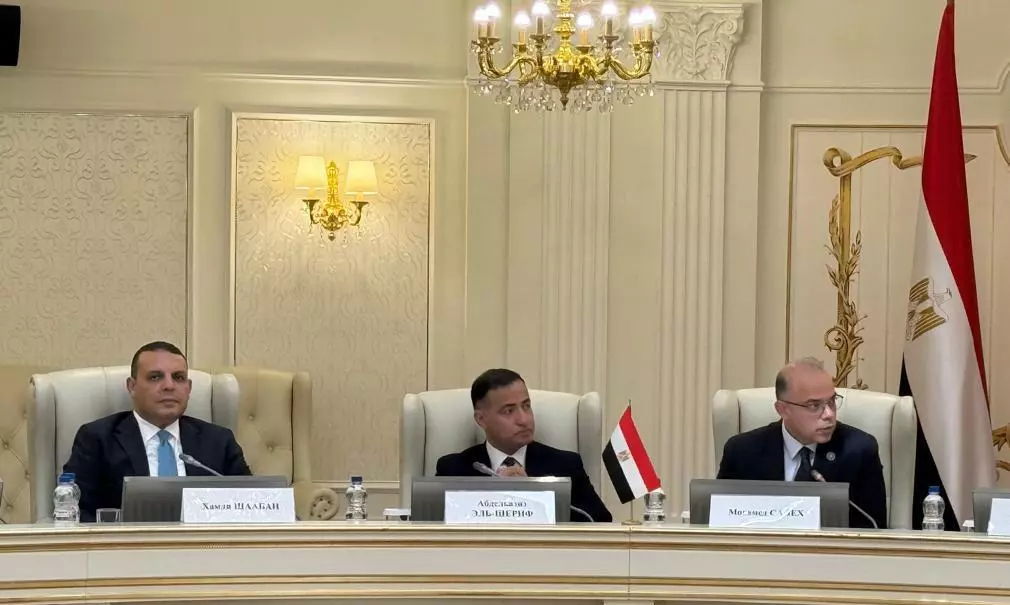
Mohamed Farid Saleh announced that Egypt is seeking to strengthen its economic cooperation with Belarus by promoting technology transfer and joint manufacturing initiatives aimed at positioning Egypt as a regional production hub for Belarusian industries.
The announcement came during the eighth session of the Joint Egyptian-Belarusian Trade Committee, where Saleh and Artur Karpovich signed a strategic protocol designed to expand bilateral trade and encourage joint investments between the two countries.
Under the agreement, both sides will work on localising the production of tractors and heavy machinery in Egypt, while also collaborating on food security projects focused on grain production and supply chain development.
The partnership will additionally explore cooperation in pharmaceutical manufacturing, customs digitalisation, and scientific research related to energy and agriculture.
Saleh made the remarks during the opening session of the eighth Egyptian-Belarusian Joint Trade Commission held in Minsk, where he led the Egyptian delegation during his official visit to Belarus.
He described the joint commission as a key mechanism for advancing economic, trade and investment ties between the two countries, noting that relations have strengthened considerably in recent years through reciprocal high-level visits that reflect both sides’ commitment to expanding cooperation.
The discussions covered a broad range of sectors, including industry, agriculture, grain storage, customs, scientific research, technology, higher education, tourism, financial cooperation and information technology.
Saleh noted that bilateral trade reached nearly $60 million in 2025, but said the figure remains below the actual potential of both markets. He highlighted opportunities to increase Egyptian exports to Belarus, particularly agricultural goods, fish products, essential oils, textiles, furnishings, pharmaceuticals and medical supplies.
He also underscored the potential for Belarusian exports in Egypt, especially tractors, trucks, dairy products, timber and flax, adding that Egypt can serve as a strategic entry point for Belarusian products into African and Arab markets.
The minister encouraged Belarusian firms to expand their presence in Egypt through investment and manufacturing partnerships, taking advantage of Egypt’s investment incentives and its network of regional and international trade agreements.
Saleh added that Egypt has introduced major legislative and institutional reforms in recent years aimed at simplifying investment procedures, lowering business establishment costs and strengthening the role of the private sector in economic growth.
He identified several priority sectors for future cooperation, including heavy industries, machinery, transport equipment, pharmaceuticals, information technology, dairy production and timber industries.
The minister also outlined three major areas for future collaboration: strengthening food security and agricultural mechanisation through Belarusian technology and local manufacturing in Egypt; expanding pharmaceutical cooperation through the production of human and veterinary medicines for African markets, and boosting tourism cooperation and tourist exchanges between the two countries.