
Egypt, Chinese tyre maker discuss $550mn Alexandria expansion
Egypt and China National Tire & Rubber discussed a proposed $550 million expansion in Alexandria aimed at boosting manufacturing, exports and jobs.
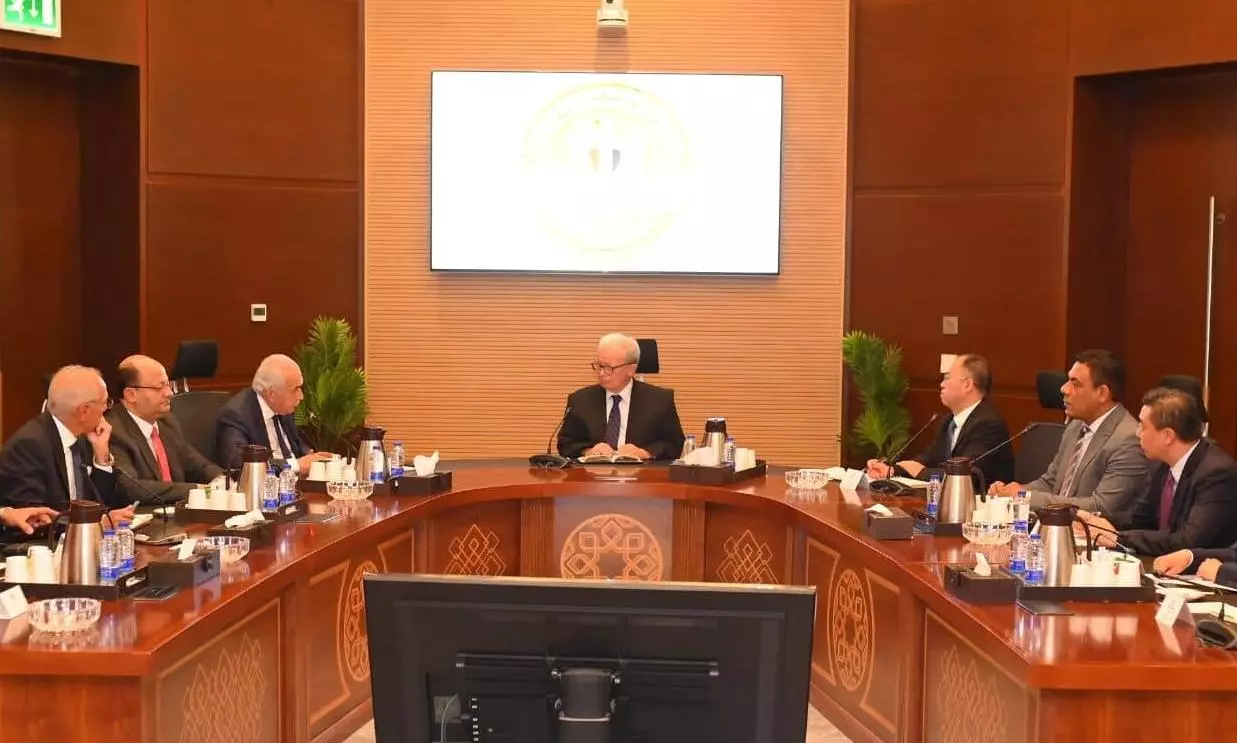
Egypt's Deputy Prime Minister for Economic Affairs, Hussein Eissa, has held talks with senior executives from China National Tire & Rubber Co. Ltd. regarding the company's plans to expand its operations in Egypt through a proposed $550 million investment project in Alexandria.
The discussions took place at the government headquarters in the New Administrative Capital and focused on the Chinese company's plans to increase its presence in Egypt as part of its broader growth strategy. According to a government statement, Eissa reaffirmed Egypt's commitment to implementing measures aimed at improving the investment climate, attracting high-quality investments and supporting the localisation of strategic industries. He said the government continues to prioritise industrial development as a key driver of economic growth, exports and job creation, while seeking investments that contribute to technology transfer and advanced manufacturing capabilities.
Eissa welcomed the company's interest in expanding its activities in Egypt and highlighted the growing economic relationship between Egypt and China under their comprehensive strategic partnership. The deputy prime minister noted that tyre manufacturing represents a strategic industry due to its links with multiple productive and service sectors. He added that expanding domestic tyre production could help reduce import dependence while strengthening Egypt's industrial base. He also emphasised Egypt's advantages as a manufacturing destination, citing its strategic location, transport infrastructure, logistics capabilities and network of free trade agreements that provide access to regional and international markets.
China National Tire & Rubber is one of China's largest tyre manufacturers and operates across multiple global markets. The proposed Alexandria expansion forms part of wider efforts by Egypt to attract foreign direct investment into manufacturing sectors with export potential. The government said it remains focused on supporting investments that enhance industrial competitiveness, create employment opportunities and increase export-oriented production.