
From African farms to gulf shelves
Africa has the food and the Gulf has the demand, but weak cold chains, high freight costs and fragmented supply networks are holding back a bigger Africa-Gulf food corridor.
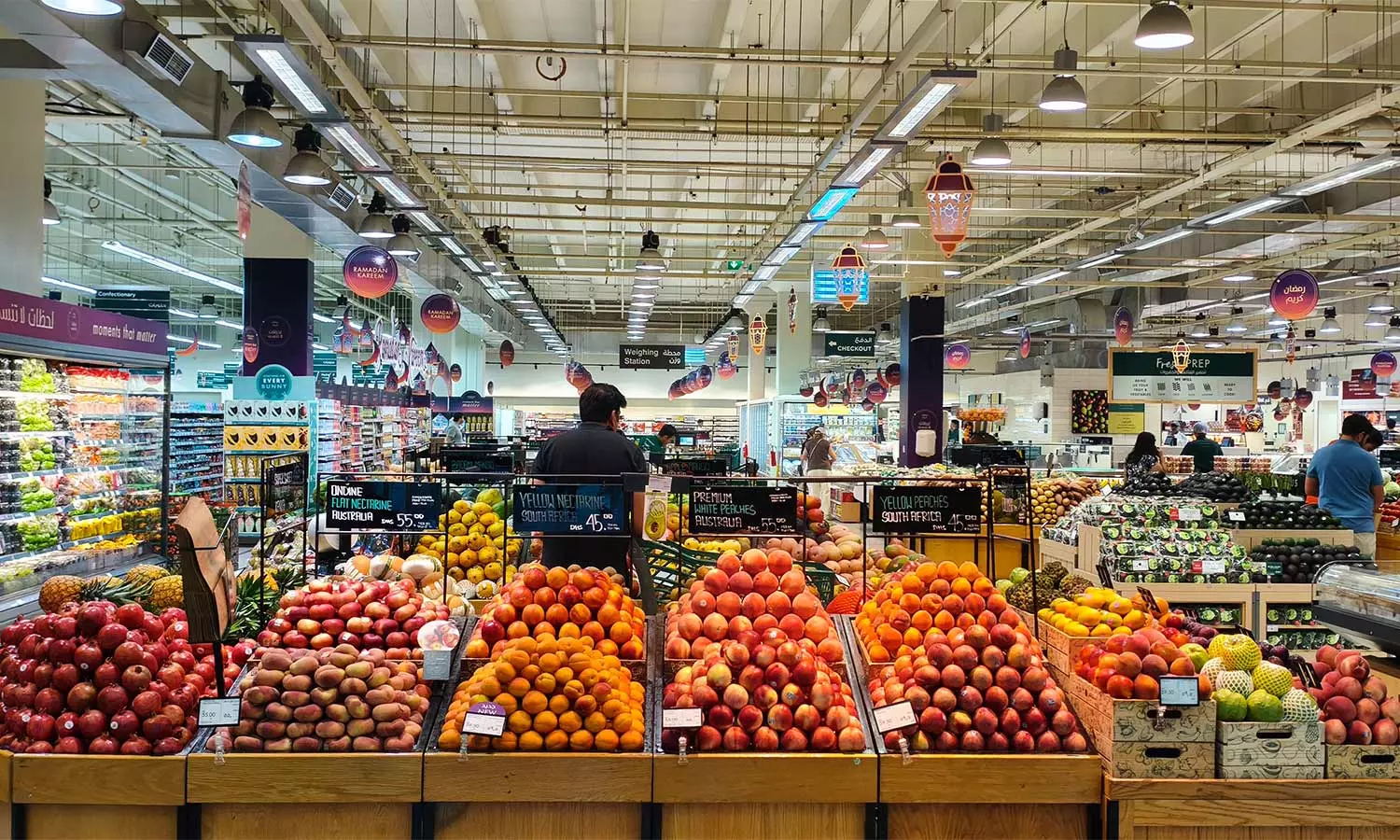
Africa has the land, the climate and, increasingly, the agricultural output to feed some of the world's fastest-growing food-import markets. The Gulf has the demand. The UAE, Saudi Arabia, Qatar and Oman import most of what they eat, and their populations keep growing. On paper, the match looks obvious. In practice, the volume of African produce reaching Gulf shelves remains far below what the two regions' economics suggest.
Kenya offers the clearest evidence of both the opportunity and the obstacle. According to the Agriculture and Food Authority's 2025 Yearbook of Statistics, the UAE was Kenya's third-largest horticultural export destination by value in 2024, accounting for 7.4% of exports. Saudi Arabia took 3.7%, Qatar 1.1% and Oman 0.8%. World Bank WITS data, drawing on UN Comtrade figures, show Kenya exported about 23,100 tonnes of avocados to the UAE in 2024, worth roughly $27.7 million. Pineapple exports to the UAE reached close to 19,000 tonnes worth $13.1 million, with a further 10 million kilograms going to Saudi Arabia and smaller volumes to Qatar, Oman and Kuwait. The scale of what is at stake goes beyond any one corridor. The United Nations puts post-harvest food loss across farms, transport, storage, wholesale and processing in sub-Saharan Africa at 19.95%, the highest of any region in the world. Egypt's citrus trade with Saudi Arabia, Kenya's flower and vegetable exports to the wider Gulf, and South Africa's fruit shipments follow a similar pattern: established but limited corridors, where growth depends less on whether Gulf buyers want African food and more on whether African supply chains can deliver it consistently, in good condition and at a fair cost.
The bottleneck is not the aircraft
It would be easy to assume Africa's food trade with the Gulf is held back by a lack of freight capacity. That's not what the people closest to it say.
Fitsum Abadi Gebrehawaria, Managing Director at Kenya Cargo, put a figure on the cost pressure air freight adds to the corridor. Freight rates can account for 30 to 50% of the landed cost of certain fresh produce categories, and capacity tightens further during peak periods such as Ramadan, Eid and the main horticultural export seasons. Kenya has reasonably strong passenger and cargo connectivity to Dubai, Abu Dhabi, Riyadh and Jeddah, but capacity does not always keep pace with growing export demand. Even so, Abadi concluded that air cargo capacity is a growth constraint rather than the single biggest bottleneck to trade expansion.
Sanjeev Gadhia, Founder and CEO of Astral Aviation, made a related point from the freighter operator's side. Aircraft capacity can be added once there is enough demand to justify it, he said, but that demand has to arrive at the airport as export-ready cargo, packed consistently and priced at a rate the product can absorb.
Resilience will increasingly come from having several gateways and several routing options rather than depending on a single corridor
Sanjeev Gadhia, Astral Aviation
Patrice Ngenga, Technical, Training, Standards and Compliance Officer at FPEAK, framed the same idea from the farm's side. Kenya already has strong production capability and established air-cargo expertise, he said. What is missing is a consistently connected system that can move produce predictably from the farm to the Gulf buyer.
The shared view is simple. Africa does not mainly need more planes or ships. It needs the product to survive the journey in good enough condition to be worth flying or shipping at all.
Where the cold chain actually breaks
Abadi went furthest in pinning down where losses happened. Asked to rank the weakest points in the Kenya-Gulf perishables chain, he placed farm-level cooling and pre-cooling at the top, ahead of road transport and consolidation, airport handling and storage, and finally air freight and last-mile distribution in the Gulf. Once produce is picked, the clock starts ticking. The most common causes of quality loss are slow cooling after harvest, long transport times, weak refrigerated collection, and the fact that many farms are small and scattered, making shared cold storage harder to justify. Kenya's airport handling, Abadi noted, is already fairly well developed, so most quality loss happens before cargo reaches the airport.
Gadhia reached a similar conclusion from a different vantage point. "Africa does not only need bigger airport cold rooms; it needs an uninterrupted cold chain from the farm gate to the aircraft and ultimately to the supermarket shelf in the Gulf," he said. He argued the most urgent investment should go into smaller, regional cold-storage and collection centres close to farming areas, backed by refrigerated road transport, rather than further work on airport facilities that are already comparatively strong.
Ngenga located the weak point at the handover points between stages rather than inside any single facility. Produce can leave the farm still warm, wait too long before it is cooled, or sit in vehicles without refrigeration. Temperature problems are common during loading, inspection and handover between logistics providers. "The objective should be an unbroken cold chain that is measurable, auditable and commercially accountable," he said, calling for shared digital temperature records and common working procedures, so any lapse can be traced back to where it happened.
Sara Stickler, President and CEO of the Global Cold Chain Alliance (GCCA), framed the problem differently again, pointing to a gap in awareness as much as infrastructure. Producers do not always see the economic case for cold storage, even though better-preserved goods fetch higher prices, Stickler said. Reliable energy access is just as fundamental as roads and ports, since cold storage cannot run without it, and the industry is largely left to fund facilities, equipment and skills on its own, while governments need to do more on transport and power infrastructure. Africa, she added, is not one cold chain but a patchwork of countries at different stages of development, each needing investment suited to where it stands.
Abadi set out what a five-year investment plan for the corridor should look like: regional cold-chain collection hubs near farming, meat and fishing areas as the top priority, ahead of refrigerated road links into Nairobi, more airport cold storage, better digital cargo tracking, and only then, more freighter capacity. His reasoning was simple. More aircraft cannot improve produce that has already spoiled before reaching the airport, and until cold-chain losses come down, exporters will keep losing money to rejected shipments and shorter shelf life, even when transport space is available.
Deciding what flies and what sails
A second theme runs through all three: the corridor's future depends on choosing the right mode of transport for each product, rather than treating air freight as the default for anything perishable.
Ngenga laid out the logic from the exporter's side. Avocados and pineapples are the strongest candidates for a shift to sea freight, given Kenya's already large trade volumes with the UAE and the fruits' relative toughness. Mangoes and some citrus varieties could follow, where ripeness at harvest and careful temperature control support the longer journey. Vegetables would need to be judged case by case, given their higher sensitivity. "The commercial test should be landed cost plus saleable shelf life, not freight price alone," he said.
Gadhia agreed the future lies in combining both modes rather than one replacing the other. Hardier fruits and vegetables, frozen meat and some frozen seafood can travel by sea where transit time and the cold chain are kept reliable, and better controlled-atmosphere containers are widening that range. Flowers, premium berries, fresh seafood and high-value chilled meat will stay dependent on air freight, where speed and shelf life justify the extra cost.
Stickler pointed to a different lever for making that shift work at scale: port efficiency, not only new infrastructure. Cutting bottlenecks on key roads and at ports, and streamlining border processes, would open up sea freight to a wider range of markets, including the Gulf, she said, noting that investment is already under way at African ports and needs to be matched by government regulation that keeps goods moving efficiently.
The needs of each country are vastly different around Africa, but investment in critical infrastructure and building an interconnected network are the keys to growth across the continent
Sara Stickler, Global Cold Chain Alliance (GCCA)
Resilience after the disruptions
Recent disruption to Middle East airspace and Red Sea shipping routes has tested this balance and, according to both Abadi and Gadhia, changed how exporters think about routing.
Abadi said the disruptions brought flight rerouting, schedule changes and cancellations, higher fuel and operating costs, and higher risk costs across logistics networks generally. For carriers moving perishables into Gulf markets, keeping to schedule became more important, since flowers, vegetables and berries cannot handle long delays. Red Sea shipping disruptions exposed similar weaknesses in sea transport, reinforcing the case for air freight on the most time-sensitive goods, even as exporters moved other products towards sea freight where they could.
Gadhia drew a related but different lesson. "Africa has the agricultural capability to become a much more important food supplier to the Gulf. The opportunity is not simply to operate more flights; it is to build a reliable Africa-Gulf food supply corridor in which aviation becomes an integral part of regional food security," he said. Customers, he added, now care less about the cheapest route and more about reliability and the ability to reroute cargo quickly when a corridor is disrupted. That shift favours dedicated freighters over passenger belly space, and is drawing more interest in African hubs such as Nairobi as points where cargo from across East, Central and Southern Africa can be gathered before it moves on to the Middle East.
Building the corridor, not just the flights
What comes through from all four sources is a shared view that the Egypt-Saudi Arabia, Kenya-UAE/Saudi Arabia and South Africa-Gulf corridors will not grow through small additions of capacity at any single point. The corridor needs to be treated as one connected system.
Ngenga's suggested priority was a dedicated, end-to-end cold logistics corridor linking farming areas to the port of Mombasa and on to Gulf markets, supported by reliable refrigerated shipping. This would combine well-placed pre-cooling and collection points, dependable refrigerated road transport, proper reefer handling at the port, faster customs clearance and regular sailings to key Gulf hubs. He pointed to Kenya's 2024 agreement with the Netherlands on a cool logistics corridor, and to the Kenya Ports Authority's expanded reefer capacity at Mombasa, as early signs of this taking shape.
Kenya does not need to choose between food safety, market access and logistics. The opportunity is to connect the three through a more integrated export corridor
Patrice Ngenga, FPEAK
Gadhia's version of the same argument centred on coordination rather than infrastructure alone. What is missing between Nairobi, Dubai, Riyadh and Muscat, he said, is better coordination between farmers, airlines, airports, freight forwarders, governments and food importers, to create the steady volumes and cargo commitments that would let airlines commit scheduled freighter capacity instead of relying on one-off shipments.
Abadi's conclusion tied the three carriers' views together. Kenya's ability to grow food exports to the UAE and Saudi Arabia is limited by both air cargo capacity and weaknesses in the cold chain, he said, but the bigger losses happen before produce reaches the aircraft than because aircraft are unavailable. Stickler's broader point sits alongside that conclusion: an effective cold chain does not just cut food loss, it lets producers meet the safety and temperature evidence Gulf buyers require, opening doors to markets they cannot currently reach.
Africa's food trade with the Gulf does not need one large investment or a single new flight route to unlock it. It needs the less glamorous middle of the supply chain, the pre-cooling shed, the refrigerated truck, the collection centre, the reliable power supply behind them, built out and connected as reliably as the flights and ships already carrying cargo once it gets there. Until that first stretch is fixed, the corridor will keep running below what the farms and shelves it connects can actually support.