
How Middle East hubs are powering India–Africa trade flows
Limited direct links push cargo via Dubai, Doha and Jeddah as carriers, ports and policies reshape the India–Africa corridor.
India–Africa trade is expanding, but the real transformation is taking place in how cargo moves between the two regions. While political engagement and trade ambition are strong, logistics realities continue to shape the corridor. Limited direct connectivity, uneven infrastructure and capacity gaps have pushed trade flows towards a hub-based model, with the Middle East emerging as the most critical bridge.
Today, ports and airports in Dubai, Doha, Jeddah and Salalah are no longer just transit points. They have become essential logistics hubs that allow Indian cargo to reach African markets more efficiently. This shift is redefining how India and Africa trade with each other.
Industry studies by the Confederation of Indian Industry and multilateral institutions such as the World Bank point to strong medium-term potential for India–Africa trade. Both sides see growing opportunities in sectors such as pharmaceuticals, machinery, food products and manufactured goods. Governments and private players are actively seeking to deepen these ties.
However, logistics infrastructure has not kept pace with trade ambition. Direct shipping and air cargo links between India and Africa remain limited, particularly to West and Central Africa. This gap has forced exporters, airlines and freight forwarders to rely on third-country hubs to move goods reliably.
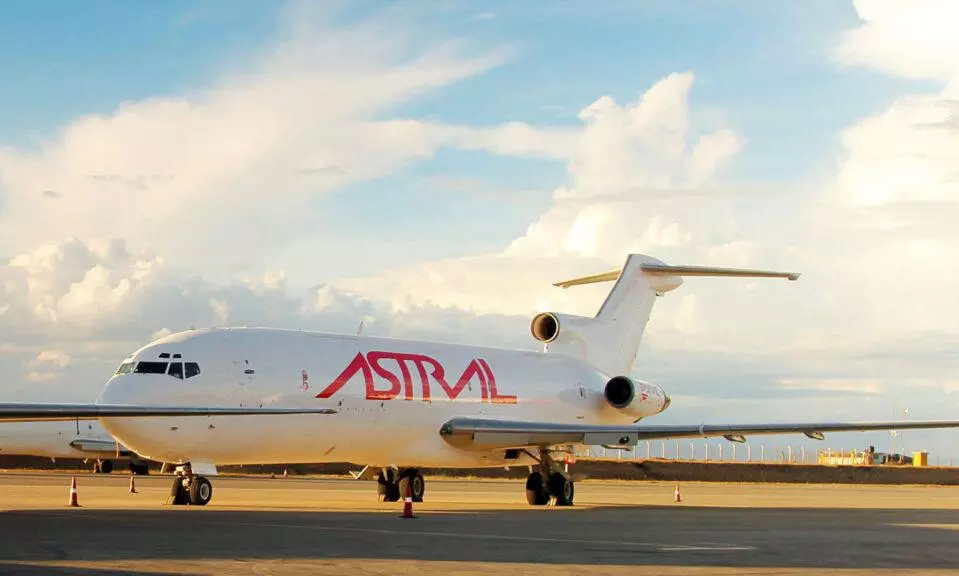
Sanjeev Gadhia, Chief Executive Officer of Astral Aviation, says the lack of direct capacity is the core challenge. He points out that India has very limited freighter operations serving Africa, largely because Indian cargo airlines operate mainly narrow-body aircraft focused on domestic and short-haul routes. As a result, exporters have few direct options for moving freight to African markets.
The Middle East as the trade bridge
The Middle East has stepped into this gap not just because of geography, but due to long-term investment in logistics infrastructure. Over the years, countries in the region have built ports, airports and free zones designed to handle global trade flows efficiently.
According to Gadhia, nearly 70 percent of India–Africa cargo currently moves via Middle Eastern hubs, while only around 30 percent moves directly. This has made the region the primary transit corridor between the two markets.
Dubai, Doha and Jeddah have emerged as the three most important hubs for Africa-bound cargo. Each plays a different role, but together they form a network that supports air-to-air, sea-to-sea and sea-to-air movements.
Dubai’s network strength
According to Gadhia, Dubai currently offers stronger network connectivity than other Middle Eastern hubs serving Africa. Its advantage lies in the depth of its airline network. Dubai is connected not only to India and Africa but also to China, Southeast Asia and other parts of Asia. This allows airlines to consolidate cargo from multiple origins and maintain high aircraft utilisation.
He adds that Dubai should be viewed as a cluster rather than a single airport. Facilities such as Dubai World Central, Dubai International, Sharjah and Abu Dhabi together provide flexibility in handling capacity and routing. This becomes especially important during Indian holiday periods, when cargo volumes may temporarily dip.
The presence of Emirates SkyCargo, along with a large number of international carriers, gives Dubai wide reach into African destinations. This level of connectivity supports efficient consolidation and redistribution.
Growing alternatives: Doha and Jeddah
Doha has steadily strengthened its position as a cargo hub, supported by Qatar Airways Cargo’s expanding African network. The hub plays an important role in handling time-sensitive and high-value shipments, including pharmaceuticals.
Jeddah is also gaining strategic importance. With Saudi Arabia investing heavily in logistics under its Vision 2030 programme, Jeddah is emerging as a key gateway for Africa-bound cargo. Gadhia identifies Saudi Cargo’s network as an increasingly important contributor to southbound trade flows.
While Dubai remains the most connected hub, Doha and Jeddah provide additional capacity and resilience, particularly during peak periods.
Sea routes and port-led connectivity
Air cargo is critical for high-value and time-sensitive goods, but ocean freight continues to carry most India–Africa trade volumes. Indian ports such as JNPA (Nhava Sheva), Mundra and Cochin act as key gateways for Africa-bound cargo.
On the African side, major ports serve as entry points before cargo moves inland. Transhipment hubs such as Jebel Ali and Salalah play a central role in connecting these sea routes. Cargo from India is often shipped to these hubs, consolidated and then sent onward to African ports on dedicated services.
DP World has highlighted how transhipment-led routing helps overcome the lack of direct services, particularly to West Africa. This model allows shipping lines to maintain frequency and reliability despite fragmented demand across multiple markets.
Structured trade corridors emerge
Recognising the importance of logistics integration, the Government of India and DP World launched the Bharat Africa Setu initiative. According to DP World, the initiative aims to double India–Africa trade by creating reliable, cost-effective and structured trade corridors.
Bharat Africa Setu links Indian ports with African markets using DP World’s global network of ports and logistics assets, including hubs in the Middle East. The initiative focuses on multimodal connectivity, combining sea, air and land transport to reduce transit times and logistics costs.
This reflects a broader shift from fragmented routing to planned logistics corridors supported by infrastructure investment and policy coordination.
West Africa’s dependence on transhipment
Africa is a diverse continent, and logistics needs vary widely by region. Gadhia notes that West Africa is currently the most dependent on transhipment hubs. The distance from India is greater, and direct freighter capacity is almost non-existent.
As a result, most India-origin cargo bound for West Africa moves through the Middle East. Pharmaceuticals and medical supplies dominate this flow, driven by strong demand and limited local manufacturing capacity.
Pharma and vaccines drive air cargo demand
Pharmaceuticals are one of the strongest pillars of India–Africa trade. India supplies a significant share of Africa’s generic medicines and vaccines.
Gadhia highlights that vaccines, including malaria vaccines produced in India, are increasingly being moved by air due to strict temperature and shelf-life requirements. These shipments depend heavily on hubs with advanced cold-chain facilities.
He explains that delays at transit hubs or during inland clearance can compromise shipment integrity, making efficiency across the supply chain critical.
Transit time pressures
Despite the importance of Middle Eastern hubs, transit times remain a concern. According to Gadhia, current transit times from India to Africa via hubs typically range between five and seven days.
He believes reducing this to around three days would significantly improve service levels and exporter confidence. Achieving this would require better coordination between airlines, faster handling at hubs and smoother documentation processes.
Inland Africa remains a challenge
Moving cargo beyond African ports and airports remains a major challenge. Gadhia points to customs procedures, transit documentation and multiple border crossings as key sources of delay, particularly for landlocked countries.
Clearing transit cargo can take up to a week, adding time and cost to supply chains. He stresses that improving inland connectivity and simplifying transit procedures will be essential if Africa is to fully benefit from growing trade with India.
Limited cargo airlines, growing partnerships
Africa has only a small number of dedicated cargo airlines. Most are linked to national carriers, with very few privately owned operators.
According to Gadhia, this creates opportunities for collaboration rather than competition. Astral Aviation works with Indian airlines such as IndiGo, Air India and SpiceJet to bring cargo into Nairobi, which then serves as a redistribution hub for the region.
He notes that Nairobi has become a key gateway, with Indian carriers focusing their African operations there rather than spreading capacity across multiple destinations.
The corridor going forward
Industry executives interviewed for this report consistently identified logistics capacity, connectivity and reliability as the primary constraints shaping India–Africa trade flows. Cargo airlines and logistics operators also emphasised the need for closer collaboration between Indian, Middle Eastern and African players.
According to operators active across the corridor, multimodal hubs in the Middle East are currently enabling cargo flows between India and Africa by providing consolidation, storage and redistribution capabilities.
As governments, ports, airlines and logistics providers continue to align strategy with infrastructure, the India–Africa corridor is gradually taking on a more structured form. At present, multimodal hubs remain the quiet backbone supporting trade between two of the world’s fastest-growing regions.