
War in the Middle East affecting Kenya's trade and logistics network?
Tensions in the Gulf are disrupting Kenya’s exports by constraining air cargo routes, increasing fuel and logistics costs, and pushing airlines to adjust operations.
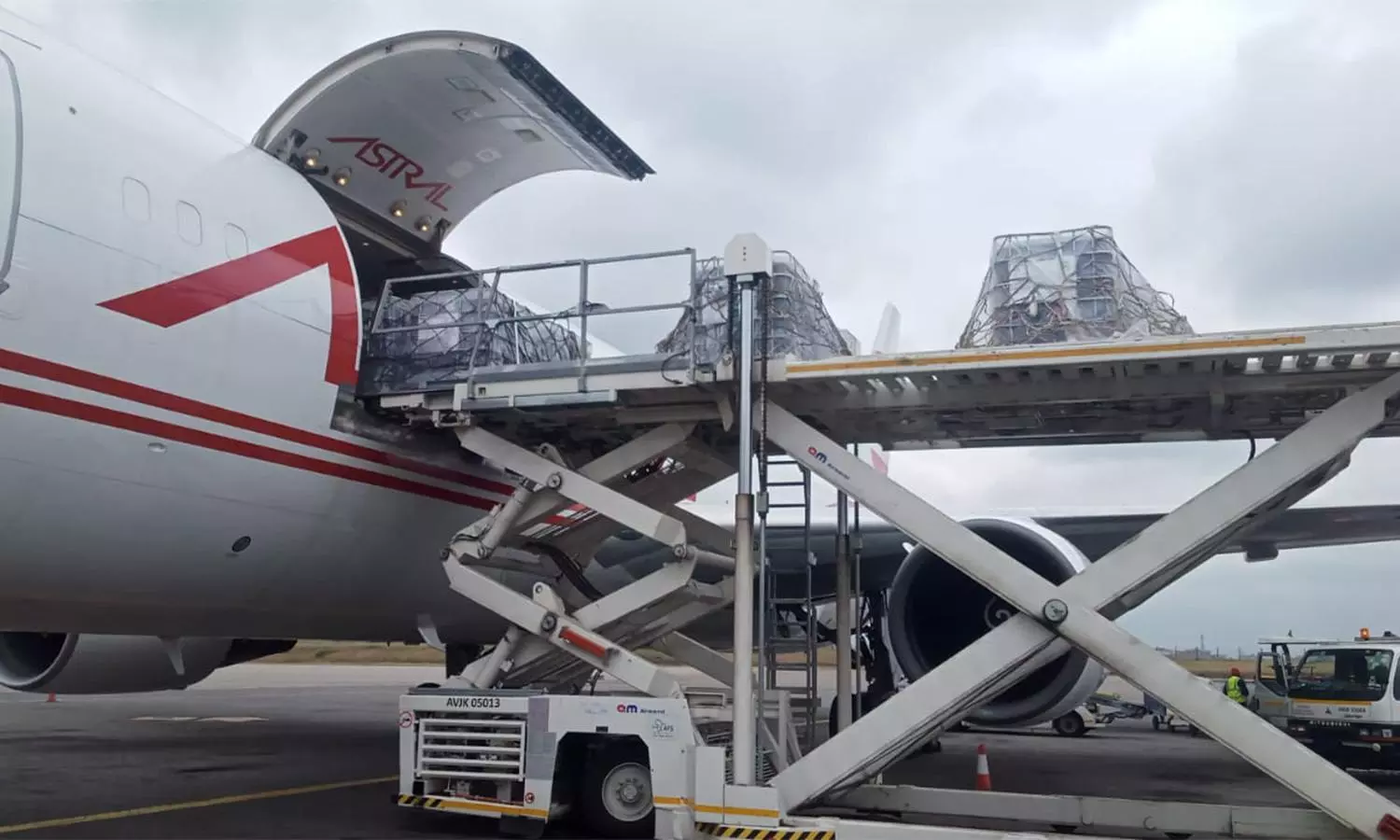
On February 28, the global geopolitical landscape changed significantly after the tensions in the Middle East intensified. Its impact quickly spread beyond the immediate region, affecting trade flows across both Eastern and Western markets. Africa, an increasingly important supplier of fresh produce globally, has also felt these effects.
Now in its third month, the fallout has globally affected multiple sectors, and trade has emerged as one of the hardest hit sectors alongside logistics, energy, agriculture, manufacturing, and industrial production.
Since the country’s economy is significantly driven by exports, which help ensure stability and generate foreign exchange earnings, the government noted that the ongoing conflict has affected the market by putting nearly KSh 164.6 billion in annual exports at risk. Earlier, Kenya's exports performed impressively in sectors such as horticulture, tea, coffee, apparel, and manufacturing, as stated in an official release from Kenya’s Ministry of Investments, Trade, and Industry.
Due to certain airspace restrictions, flight suspensions, rerouting, reduced cargo capacity, and high freight costs, the air cargo movement is largely interrupted across the world. Countries such as Iran, Iraq and Lebanon are facing severe disruptions and halts in air cargo operations due to ongoing airspace restrictions.
However, the Kenyan government assured that they are working with Kenya Airways to secure alternative cargo routes to keep the export flows intact. Kenya Airways shared insights on the rerouting of cargo airplanes when a war-like situation arises
Fitsum Abadi Gebrehawaria, Managing Director of Kenya Airways, said, “On high‑demand routes, we apply a data‑driven approach that integrates demand forecasting, capacity optimisation, and close coordination between cargo commercial, operations, and network planning teams.”
He said flight paths are chosen based on safety, regulatory compliance, and real-time security assessments.
The security protocols intensify in high-risk environments, including cargo screening and stricter chains of custody controls. Flight Planning, cargo capacity and scheduling on high-demand global freight routes are not a sole decision but are coordinated with other respecting factors. Demand forecasting, customer commitments and seasonal trade patterns are ensured to be aligned with market needs. Adding to that, Sanjeev Gadhia, CEO at Astral Aviation, said, “The focus is not simply on flying more aircraft, but on deploying the right aircraft, on the right route, at the right time. Scheduling must also be synchronised with hub connectivity, customs timelines, and customer delivery windows to maintain efficiency and reliability.”
In March 2026, FIATA issued a strong advisory for freight forwarders and suggested briefly to verify cargo and liability insurance coverage, identify and track cargo shipments, and verify and monitor carrier security notices. Similarly, the RHISAC cybersecurity community pointed out possibilities of spear phishing and custom malware targeting aerospace, defence and energy sectors beyond physical threats, in the midst of the Middle East war.
“Our objective is to remain competitive while ensuring cost recovery, using a transparent and market‑responsive pricing approach that aligns with prevailing fuel and operating conditions.”Fitsum Abadi Gebrehawaria, Kenya Airways
Apart from diversion in routes, fuel prices are another challenge cargo airlines are dealing with. Kenya has experienced a rise in fuel prices by 24% after the Energy and Petroleum Regulatory Authority (EPRA) introduced new prices from 15 April 2026 and effective until 14 May 2026. While the Petrol price has reached KSh 206.97 per litre, the price of diesel is KSh 206.84 per litre. Simultaneously, the jet fuel price in Africa hit $171.63 per barrel, KSh 22,171 as of 8 May 2026, according to IATA data.
Gadhia said, “Fuel remains one of the most significant cost drivers in air cargo. Fluctuations in fuel prices directly affect operating costs and, consequently, pricing structures. Airlines have had to adopt more dynamic pricing models, including fuel surcharges, while also prioritising fuel-efficient fleet deployment and route optimisation. In today’s market, fuel management has become central to protecting margins and maintaining competitive pricing.”
However, Abadi shared how short-term fluctuations in fuel prices are commonly tackled with efficiency measures and network optimisation, whereas sustained increases are reflected through fuel‑related surcharges or pricing adjustments. He added, “Our objective is to remain competitive while ensuring cost recovery, using a transparent and market‑responsive pricing approach that aligns with prevailing fuel and operating conditions.”
The impact of this fuel crisis is not just limited to the air cargo industry, instead, it is affecting the entire supply chain of various industries that rely on logistics. For instance, Floriculture is going through weekly financial losses because of higher freight costs, operational delays and product spoilage. According to the Kenya Flower Council, the flower exporters of this East African country have lost an estimated $4.8 million over the past three weeks (from 4 March to 25 March), including around $2.1 million linked to flowers that perished before reaching markets. The crisis is reducing air cargo capacity on some Kenya routes by up to 30%, while shipment delays of up to 48 hours are affecting product quality and export competitiveness.
“Whether facing fuel volatility, capacity pressures, or geopolitical disruptions, the goal remains the same: to keep supply chains moving reliably and securely across global markets.”Sanjeev Gadhia, Astral Aviation
Freight rates have climbed to as high as $5.30 per kilogram due to longer flight paths, fuel costs and war-risk surcharges. Gulf carriers and Middle Eastern hubs remain critical to Kenya’s flower exports, which rely heavily on fast and reliable logistics connections to Europe and other international markets.
Similarly, a WorldACD Market data recent weekly figures (20-26 April) found that chargeable weight is witnessing a significant hike across different regions, concerning flower exports. However, week-on-week (WoW) tonnage from the Middle East & South Asia (MESA) saw a small jump of +1% in the same week 17, while volumes remained flat from Africa.
As the countries continue to face challenges because of the geopolitical instability in the Gulf region, Kenya is determined to remain consistent with its trade flows, despite disruptions. Gadhia concluded by asserting that, “Whether facing fuel volatility, capacity pressures, or geopolitical disruptions, the goal remains the same: to keep supply chains moving reliably and securely across global markets.” As a result, Astral Aviation restored its Boeing 767-300F freighter to sustain cargo flows between Africa, the Gulf and South Asia, supporting perishables, pharmaceuticals and essential trade shipments, despite disruptions in West Asia.