
Suez Canal corridor anchors Egypt logistics investment strategy
The investment momentum along the Suez Canal corridor has been reinforced by recent reviews of the Suez Canal Economic Zone’s performance.
Egypt is positioning the Suez Canal corridor as a central platform for logistics, industrial development and trade-linked investment, supported by foreign capital flows across multiple zones, including Sokhna and Qantara, as the government accelerates efforts to deepen its role in global supply chains.
The strategy was underscored during high-level diplomatic exchanges on December 16, 2025, when Foreign Minister Badr Abdelatty discussed expanding cooperation with Chinese Foreign Minister Wang Yi. Abdelatty welcomed the rapid development of Egypt–China relations, noting that sustained political coordination has created conditions for broader economic, infrastructure and investment engagement.
According to Foreign Ministry spokesman Tamim Khallaf, Egypt is seeking to convene the fifth round of the ministerial-level Strategic Dialogue and the joint committee meeting, as both sides prepare to mark 70 years of diplomatic relations next year. The discussions are aimed at advancing cooperation across sectors linked to transport, manufacturing and trade.
Chinese companies continue to play a role in large-scale infrastructure projects that support logistics capacity, including the Light Rail Transit project and the Central Business District in the New Administrative Capital. These projects form part of wider efforts to strengthen connectivity between industrial zones, ports and urban centres, alongside cooperation in renewable energy and desalination.
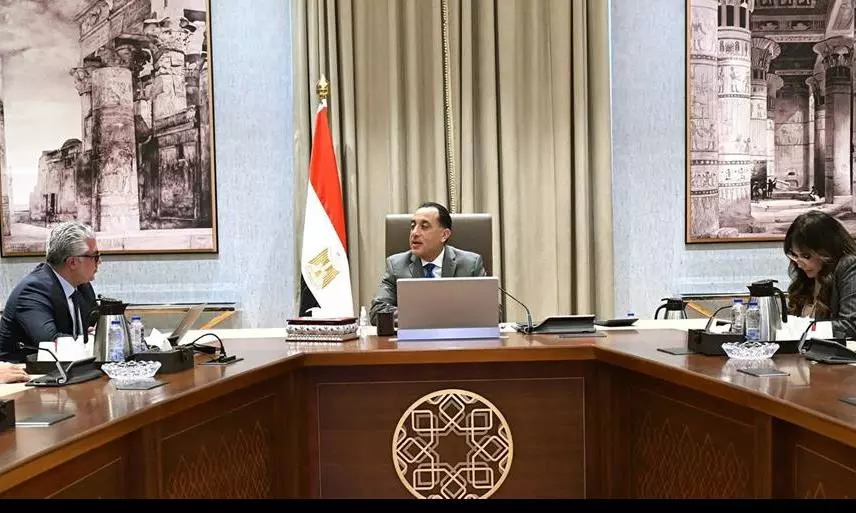
The investment momentum along the Suez Canal corridor has been reinforced by recent reviews of the Suez Canal Economic Zone’s performance. During a December 14 meeting with SCZONE Chairman Walid Gamal El-Din, Prime Minister Mostafa Madbouly was briefed on confirmed investment contracts across the zone totalling $12.96 billion, covering about 380 industrial, service and logistics projects as well as seaport developments. The projects are expected to generate around 121,500 jobs, with Qantara West emerging as a key node, hosting 48 projects since July 2023 with investments of about $1.2 billion, reflecting the zone’s growing role in canal-linked manufacturing and logistics networks.
Beyond bilateral engagement, Egypt is promoting the Suez Canal Economic Zone as a multi-node logistics and manufacturing corridor encompassing Sokhna, Qantara and other canal-side industrial areas, with port access and inland connectivity designed to support export-orientated supply chains.
Sokhna has emerged as a focal point within this strategy, combining port infrastructure with industrial land to support integrated supply chains. Recent investments include a $200 million sustainable aviation fuel production project by the Qatari Al-Mana Holding Company, marking the first Qatari industrial investment within the Suez Canal economy.
The project involves the establishment of SAf Fly Limited in the Sokhna Integrated Zone of the Suez Canal Economic Zone, with facilities spread across both the industrial zone and the port. The plant is designed to produce 200,000 tonnes annually of sustainable aviation fuel, bio-propane and bio-naphtha from used edible oils, linking feedstock sourcing, processing and export logistics within a single location.
Al-Mana Holding has signed a long-term supply agreement with Shell to purchase the full output of the project, with deliveries scheduled to begin by the end of 2027, anchoring future cargo flows through Sokhna and reinforcing the port’s role in energy and aviation fuel supply chains serving international markets.
Abdelatty has also highlighted opportunities tied to Egypt’s drive to localise industry and transfer technology, with a focus on attracting investment in artificial intelligence and digitalisation, capabilities that support logistics automation, supply chain visibility and industrial efficiency across economic zones.
Taken together, diplomatic engagement, infrastructure development and foreign industrial investment are being aligned to position the Suez Canal corridor as a competitive logistics and trade platform linking production, ports and global markets.