
Rwanda receives first oil shipment via Mombasa
A new framework has enabled the first petroleum shipment to Rwanda through Mombasa, strengthening regional energy supply links.
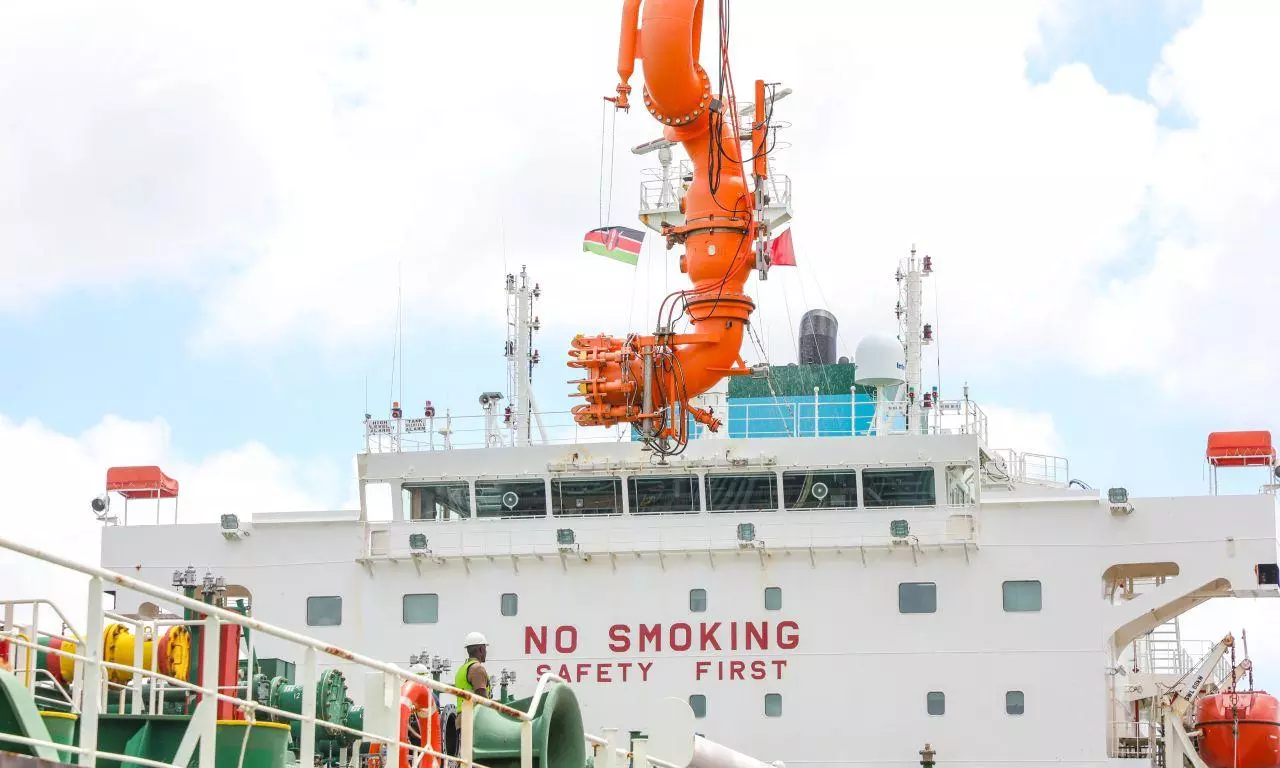
Rwanda has received its first petroleum shipment under the country’s new government-to-government energy supply framework, with the consignment arriving at the Port of Mombasa on Tuesday.
The shipment was carried by MT Sea Wolf, which docked at the newly developed Kipevu Oil Terminal with 40,000 metric tonnes of gasoline and gasoil.
Kenya’s Cabinet Secretary for Energy and Petroleum, Opiyo Wandayi, and Rwanda’s Minister of State in the Ministry of Infrastructure, Armand Zingiro, jointly flagged off the consignment during a ceremony at the port.
Wandayi said the arrival of the shipment highlights Kenya’s growing role as a logistics and energy gateway for the East African Community (EAC). He added that the development reflects deeper economic integration between Kenya and its regional neighbours, in line with the objectives of the EAC and the African Continental Free Trade Area (AfCFTA).
Wandayi said, “This new framework is projected to grow tenfold the volume of petroleum products moving through the Northern Corridor to Rwanda over the coming years. This, he added, denotes a vote of confidence, not just in a pipeline or the port, but in Kenya as a nation.”
Rwanda is diversifying its import routes and strengthening collaboration with regional partners, according to Hon. Armand Zingiro, Rwanda’s Minister of State in the Ministry of Infrastructure. He said the government-to-government (G-to-G) framework with Kenya is a practical expression of this strategy, aimed at strengthening the country’s energy security.
Zingiro said, “This framework also supports our national effort to build strategic fuel reserves. Rwanda's own storage capacity is being expanded, and the extended storage terms Kenya has offered us here at Kipevu give us further flexibility while that capacity comes on stream”.
Under the new framework, the Port of Mombasa is expected to handle three oil tankers carrying petroleum products for Rwanda each month. Earlier, the port received the shipment comprising 2,152 metric tonnes of specialised onshore drilling equipment for oil production activities in Lokichar, Turkana County.
KPA Managing Director Captain William Ruto said the port is fully prepared to efficiently handle Rwanda-bound petroleum cargo. He noted that the Kenya Ports Authority has made significant investments in port infrastructure to support operations and enable faster vessel turnaround times.
The newly developed Kipevu Oil Terminal (KOT) can accommodate up to three tankers with a combined deadweight tonnage of 170,000 tonnes simultaneously. The facility is designed to enable efficient discharge of petroleum products while reducing vessel delays and associated demurrage costs.
The terminal recently demonstrated its regional role when three oil tankers were handled simultaneously, with one discharging petroleum products for the Kenyan market, another for Uganda and MT Sea World carrying cargo for Rwanda. The development highlights the role of the Port of Mombasa in supporting regional trade and strengthening integration within the East African Community.