
US-Israel strikes on Iran cloud Red Sea shipping outlook in 2026
The Middle East region may also face disruption if the conflict escalates further.
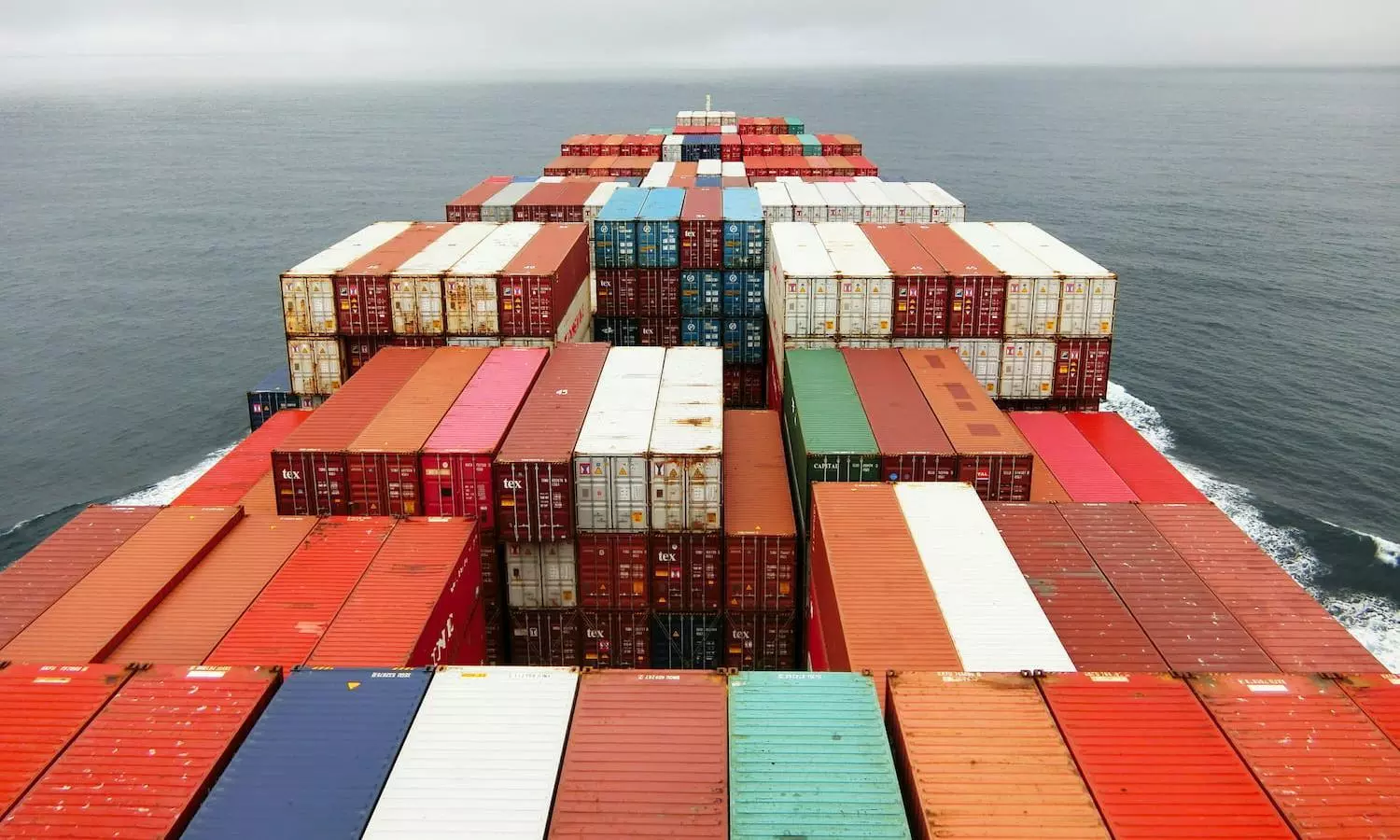
Photo by Rinson Chory on Unsplash
The United States and Israel carried out a joint military operation on February 28 targeting sites in Iran. Iran responded with retaliatory military action, raising concerns over the security environment across the Middle East and its implications for global shipping routes.
The escalation is expected to affect container shipping supply chains, particularly services transiting the Red Sea. According to Peter Sand, Chief Analyst at Xeneta, the developments could delay hopes of a return to Red Sea routes that carriers had started to consider after more than a year of diversions.
Sand said the repercussions of the joint military operation by the US and Israel against Iran and the retaliatory action could lead to the further weaponisation of trade and shatter hopes of a large-scale return of container shipping to the Red Sea in 2026. He noted that carriers had begun returning selected east-west container services to Suez Canal transits in recent months after sailing around the Cape of Good Hope since late 2023 due to attacks by Iran-backed Houthi militia in the Red Sea region.
He added that if Houthi militia resume attacks, as now appears likely, carriers would reverse the decision to return services to the Red Sea and prioritise the safety of crew, ships and cargo. He said that they would shelve plans for a phased return of container shipping to the Red Sea in 2026 until the security situation becomes clearer.
Carriers were described as being on alert, with signs of precautionary action already visible. Sand pointed to a decision by CMA CGM last month to reverse a plan to return its FAL1, FAL3 and MEX services to the Red Sea, citing “the complex and uncertain international context”. Earlier in the week, Maersk also announced that its ME11 and MECL services would be rerouted via the Cape of Good Hope due to security concerns in the Red Sea region.
The continued diversion of container ships around the Cape of Good Hope has implications for shipping capacity and freight rates, as the longer sailing distances increase voyage times and absorb fleet capacity.
Sand explained that sailing around the Cape of Good Hope absorbs around 2.5 million TEU of global container shipping capacity and increases transport demand on the fleet. A large-scale return of container shipping to the Red Sea region would free up this capacity, reduce transit times and potentially cause freight rates to collapse at a global level, he said.
Average spot rates from China to the US East Coast and US West Coast have fallen 32 per cent and 35 per cent, respectively, since the start of 2026, Sand noted. From China to Northern Europe and the Mediterranean, spot rates are down 23 per cent and 33 per cent.
He said that with a large-scale return of container ships to the Red Sea in 2026 now unlikely, freight rates on major global trades will continue to soften but will not fall as sharply as previously expected in the second half of the year. Compared with the period before the Red Sea crisis on December 1, 2023, average spot rates from China to North Europe and the Mediterranean remain up 48 per cent and 79 per cent, respectively.
The Middle East region may also face disruption if the conflict escalates further. According to Sand, container services in the Persian Gulf had continued unaffected by the build-up of military forces in the region, but the escalation through military strikes means ships may now avoid the area, though only for as short a time as possible.
Spot rates from China to the UAE have increased by 5 per cent since February 15 to reach USD 1572 per FEU. Sand said the increase was likely driven by concerns over the security situation and worries among shippers about their goods moving in and out of ports in the Persian Gulf.
He added that there is no viable alternative to moving containers in or out of ports such as Jebel Ali by ocean if the Persian Gulf becomes restricted. Carriers would instead omit these calls on east-west services and drop containers at an alternative port for onwards movement by road, he said.
Such a shift would cause disruption and port congestion at a regional level, although Sand said the impact would not be as significant globally when compared with the effect of conflict in the Red Sea.